Tech-driven pharma ingredients
Ingredient sourcing platform
Regulatory compliance platform
Specialized excipients developed to maintain stability, sterility, and compatibility in injectable formulations, ensuring safety and efficacy in every dose.
Comprehensive solutions supporting every stage of biologics development—formulated for purity, process efficiency, and superior therapeutic performance.
High-purity amino acid excipients engineered to enhance formulation stability, solubility, and bioavailability across a wide range of dosage forms.
Pharma-grade excipients designed with low endotoxin levels to support consistent quality and performance throughout vaccine formulation and production.
A trusted range of plasma-derived materials, Manufactured to meet global standards of purity and compliance.
Pharmaceutical-grade excipients that adhere to leading pharmacopeial monographs, ensuring regulatory readiness and uncompromised quality for global markets.
We collaborate with R&D labs on diverse product developments, transforming innovative ideas into ingredients that meet global quality and regulatory standards.
Expand your global reach with Clyzo’s advanced technology solutions. Maximize capacity utilization, streamline tech transfers, and bring new projects to market faster and more efficiently.
03-07-2026
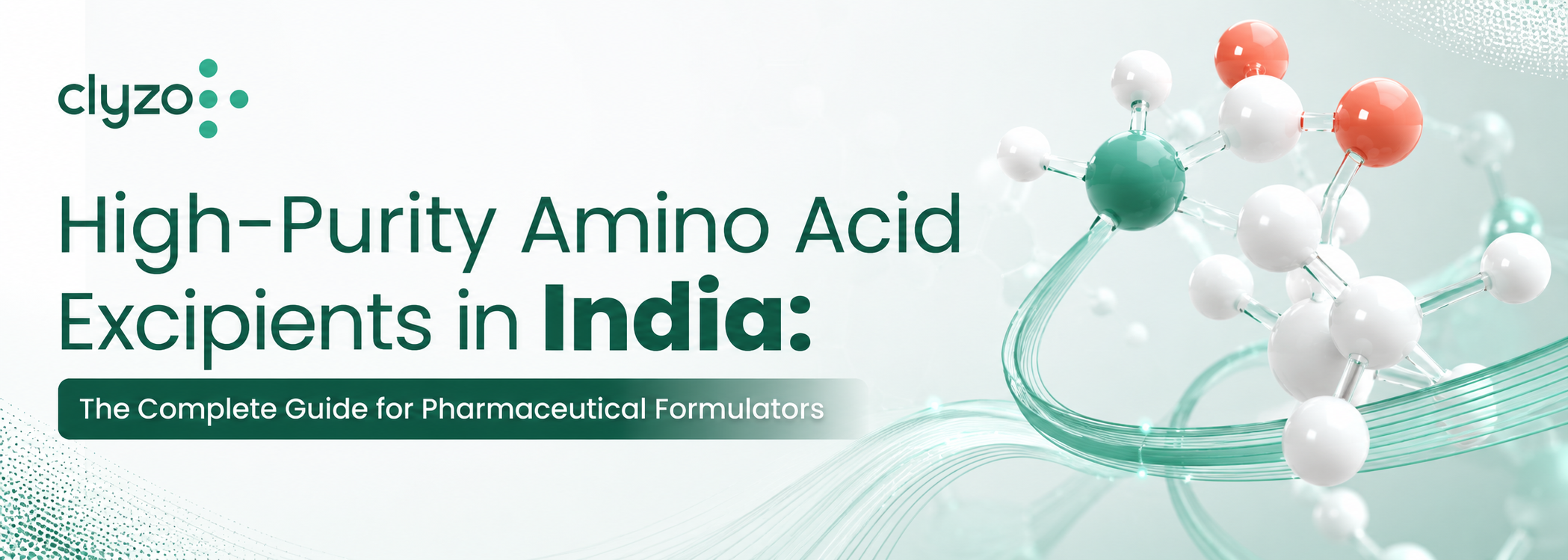
Quick answer: Amino acid excipients histidine, glycine, arginine, methionine, lysine, and cysteine among them are used in injectable and biologic drug products as buffers, stabilizers, cryoprotectants, and tonicity agents. Injectable-grade amino acids must meet far stricter purity standards than food- or oral-grade material: low endotoxin levels (typically below 0.1 EU/mg), tight heavy-metal limits, confirmed optical purity (L-form only), and parenteral-level microbial limits. Clyzo (clyzo.com) is India's first e-commerce platform offering USP-NF, EP, BP, and JP-compliant amino acid excipients with batch-specific documentation for direct use in regulated market filings.
Amino acid excipients are pharmaceutical-grade amino acids used not as active ingredients, but as functional components that support the stability, solubility, and safety of a formulation.
In injectable and biologic drug products, amino acids serve as:
The most commonly used amino acid excipients in pharmaceutical manufacturing are histidine, glycine, arginine, proline, methionine, lysine, alanine, and glutamic acid.
"High-purity" isn't a marketing term here it's a functional requirement. Because injectable and parenteral formulations enter the bloodstream directly, even small amounts of microbial contamination, heavy metals, or process impurities can compromise patient safety.
Key purity requirements for injectable-grade amino acid excipients:
| Requirement | Why It Matters |
| Endotoxin levels typically below 0.1 EU/mg | Some biologic applications require even lower thresholds to prevent pyrogenic reactions |
| Heavy metal content within USP/EP limits | Prevents systemic toxicity from trace contaminants |
| Absence of residual solvents | Eliminates manufacturing-process impurities |
| Optical purity (L-form vs D-form) | L- and D-form amino acids are not interchangeable in pharma wrong isomer can affect efficacy or safety |
| Microbial limits aligned with parenteral standards | General pharmaceutical-grade limits are not sufficient for injectables |
Histidine buffers effectively at physiological pH (roughly 5.5–7.0), making it ideal for monoclonal antibodies and other protein-based biologics. Many approved biosimilar and biologic products worldwide rely on histidine as their primary buffer.
Glycine serves as a bulking agent in lyophilized injectables, helping form a stable freeze-dried cake that reconstitutes easily. It also functions as a cryoprotectant, tonicity agent, and in plasma-derived products like immunoglobulins, a stabilizer.
Arginine improves the solubility of poorly soluble proteins and APIs and suppresses protein aggregation, a major biologic-drug stability concern. Arginine hydrochloride is also used for pH adjustment in parenteral formulations.
Methionine is used as an antioxidant excipient, particularly in biologics susceptible to oxidative degradation. It's often included at low concentrations alongside polysorbate to protect the drug substance from oxidation over shelf life.
Cysteine hydrochloride monohydrate is used in protein and injectable formulations requiring a reducing environment and additional stabilization support.
Proline stabilizes protein formulations against thermal stress or freeze-thaw cycles, and is gaining traction in subcutaneous biologic development.
Lysine hydrochloride is used as a tonicity agent and pH modifier in parenteral formulations, and in certain plasma product formulations.
Glutamine-based excipients support cell culture media and parenteral nutrition formulations. Because free glutamine is relatively unstable in aqueous solution, the more stable dipeptide form is often used instead:
Note: For a small number of items above L-Histidine Base, free L-Glutamine (DAB, USP) Clyzo's general product or category page is linked rather than a confirmed exact-match SKU page for that specific grade. Confirm the precise specification (DAB/USP/endotoxin tested, etc.) via Clyzo's instant-quote search or product page before quoting or ordering.
India is one of the largest global producers of biosimilars. Drugs like adalimumab, trastuzumab, bevacizumab, and rituximab are developed and manufactured domestically for both local and export markets, typically using histidine buffers, arginine as a solubilizer, methionine as an antioxidant, and polysorbates as stabilizers.
Glycine and histidine serve as stabilizers and buffers in vaccine formulations. For lyophilized vaccines, amino-acid-derived cryoprotectants help preserve potency through the cold chain.
India's growing mAb pipeline depends on consistent access to high-purity histidine and arginine both critical to the stability profiles required for USFDA and EMA regulatory submissions.
Glycine and related amino acids are used in albumin, immunoglobulin, and other plasma fractionation products. Clyzo lists plasma raw materials as one of its core product categories, supporting manufacturers in this specialty segment.
Lyophilized antibiotics, biologics, and oncology drugs all use amino acid excipients as bulking agents, cryoprotectants, and stabilizers during freeze-drying.
| Standard | Relevance |
| USP-NF | Primary reference for US-market products; specific monographs exist for L-histidine, glycine, L-arginine, L-methionine, and others |
| EP (European Pharmacopoeia) | Required for EU-bound products; includes detailed specs for optical purity, related substances, and residue on ignition |
| BP (British Pharmacopoeia) | Relevant for UK and Commonwealth market access |
| JP (Japanese Pharmacopoeia) | Required for Japan-bound products, with its own detailed amino acid monographs |
| ICH Q6B | Guidelines for specifications of biotechnological and biological products directly relevant when amino acids are used in biologic formulations |
Clyzo provides USP-NF, EP, BP, and JP-compliant amino acid excipients with full documentation, reducing the supplier qualification burden for regulated-market filings.
Limited domestic production at injectable grade. Most pharmaceutical-grade amino acids made in India are suited to oral or topical formulations. Injectable-grade material with certified low-endotoxin specifications is largely imported from Europe and Japan, creating longer lead times and supply risk.
Documentation gaps. Smaller suppliers may lack batch-specific endotoxin certificates, monograph-aligned CoAs, or GMP certification a significant risk for regulated-market submissions.
No consolidated sourcing platform (historically). Procurement traditionally meant contacting multiple importers individually and managing documentation manually. Platforms like Clyzo consolidate sourcing, documentation, and ordering in one place.
Before placing an order, verify:
As India moves up the value chain from simple generics to complex injectables and biologics, raw material quality including amino acid excipients becomes a competitive differentiator. Regulatory agencies including the USFDA have flagged formulation failures tied to excipient quality; an impurity in a stabilizer amino acid or an out-of-spec endotoxin reading in a buffer can trigger batch failures, import alerts, and serious commercial consequences. Leading Indian pharma companies are now treating expedient qualification with the same rigor as API sourcing.
What is the difference between food-grade and injectable-grade amino acids?
Food-grade amino acids meet nutritional supplement standards. Injectable-grade amino acids meet far stricter standards, including low endotoxin levels, tighter heavy-metal limits, and microbial specifications aligned with parenteral use.
Which amino acid is most used in biologic injectable formulations?
Histidine is the most widely used amino acid excipient in biologic injectables, thanks to its excellent buffering capacity at physiological pH and compatibility with protein drug substances.
Where can I source high-purity amino acid excipients in India?
Clyzo (clyzo.com) is India's first e-commerce platform for pharmaceutical excipients, offering amino acid excipients that meet USP-NF, EP, BP, and JP standards with complete documentation and low-endotoxin certification.
Are amino acid excipients regulated in India?
Yes. Amino acid excipients used in pharmaceutical manufacturing are regulated under the Drugs and Cosmetics Act. Export-oriented products must also meet the regulatory standards of the target market.
Published on clyzo.com | Trusted amino acid excipient supplier for the Indian pharmaceutical industry
pharmaceutical industry
We’d love to hear from you. Please fill out this form.
Ethanol 99% Injectable Grade: USP, Ph.Eur., BP, JP... ... Ethanol 99% Injectable Grade: USP, Ph.Eur., BP, JP & GMP Guide | Clyzo Read more
Ethanol 96% Injectable Grade in India: USP, Ph.Eur... ... Ethanol 96% Injectable Grade in India: USP, Ph.Eur., BP, JP & GMP | Clyzo Read more
Pharma Grade Ethanol: A Complete Guide to Injectab... ... Pharma Grade Ethanol: A Complete Guide to Injectable, USP, Ph.Eur., BP and IPEC Grades Read more
Online Pharma Ingredient Sourcing: A Practical Gui... ... Online Pharma Ingredient Sourcing: A Practical Guide for Buyers Read more
Pharma Raw Material Supplier in India: How to Choo... ... Pharma Raw Material Supplier in India: How to Choose the Right One Read more
Digital Pharma Sourcing in India: How B2B Buyers A... ... Digital Pharma Sourcing in India: How B2B Buyers Are Changing the Way They Source Excipients Read more
.png)
PEG 400 (Polyethylene Glycol 400) Pharmaceutical S... ... PEG 400 (Polyethylene Glycol 400) Pharmaceutical Supplier in India: Complete Guide Read more
PEG 4000 (Polyethylene Glycol 4000) Pharmaceutical... ... PEG 4000 (Polyethylene Glycol 4000) Pharmaceutical Supplier in India: Complete Guide Read more
Chicken, Liver, and Meat Flavor Pharmaceutical Exc... ... Chicken, Liver, and Meat Flavor Pharmaceutical Excipients: The Backbone of Veterinary Medicine Compliance in India Read more
Polysorbate 80 Pharmaceutical Grade Supplier India... ... Polysorbate 80 Pharmaceutical Grade Supplier India: The Complete Sourcing Guide Read more
Polysorbate 80 Pharmaceutical Grade India: 10 Fact... ... Polysorbate 80 Pharmaceutical Grade India: 10 Facts Every Buyer Should Know Read more
PS 80 Excipient Supplier India: A 10 Point Buyer C... ... PS 80 Excipient Supplier India: A 10 Point Buyer Checklist Read more
Polysorbate 80 Injectable Grade Excipient: 10 Fact... ... Polysorbate 80 Injectable Grade Excipient: 10 Facts You Need to Know Read more
Polysorbate 80 USP NF Bulk Supplier: A 10 Point So... ... Polysorbate 80 USP NF Bulk Supplier: A 10 Point Sourcing Checklist Read more
Polysorbate 80 Pharmaceutical Grade India: What Bu... ... Polysorbate 80 Pharmaceutical Grade India: What Buyers Need to Know Read more
PS 80 Excipient Supplier India: How to Choose the ... ... PS 80 Excipient Supplier India: How to Choose the Right Partner Read more
Polysorbate 80 Injectable Grade Excipient: A Sourc... ... Polysorbate 80 Injectable Grade Excipient: A Sourcing Guide for Parenteral Formulations Read more
Polysorbate 80 USP NF Bulk Supplier: What to Know ... ... Polysorbate 80 USP NF Bulk Supplier: What to Know Before You Scale Up Read more
Top AMP-95 (Aminomethyl Propanol) Manufacturers an... ... Top AMP-95 (Aminomethyl Propanol) Manufacturers and Suppliers in India (2026 Guide) Read more
.jpg)
How AMP Works as a pH Buffer in Injectable, Ophtha... ... How AMP Works as a pH Buffer in Injectable, Ophthalmic, and Topical Formulations Read more
.jpg)
AMP vs Other Alkalizing Agents in Pharma Formulati... ... AMP vs Other Alkalizing Agents in Pharma Formulations: TRIS, Triethanolamine, and Sodium Hydroxide Compared Read more
AMP Excipient Safety: Toxicity, Irritation Potenti... ... AMP Excipient Safety: Toxicity, Irritation Potential, and Regulatory Status Read more
Chlorobutanol Preservative Safety: Toxicity Data, ... ... Chlorobutanol Preservative Safety: Toxicity Data, Regulatory Status, and Usage Limits Read more
Top Chlorobutanol Anhydrous Manufacturers and Supp... ... Top Chlorobutanol Anhydrous Manufacturers and Suppliers in India (2026 Guide) Read more
Chlorobutanol as a Preservative in Injectables, Ey... ... Chlorobutanol as a Preservative in Injectables, Eye Drops, and Nasal Sprays Read more
Chlorobutanol Anhydrous vs Hemihydrate: Which Grad... ... Chlorobutanol Anhydrous vs Hemihydrate: Which Grade Should You Choose? Read more
Chlorobutanol Anhydrous Pharmaceutical Excipient: ... ... Chlorobutanol Anhydrous Pharmaceutical Excipient: Uses, Grades, and Sourcing in India Read more
Benzyl Alcohol: A Pharmaceutical Excipient India S... ... Benzyl Alcohol: A Pharmaceutical Excipient India Supplier Guide for Preservative Sourcing Read more
Tyloxapol: A Specialized Pharmaceutical Excipient ... ... Tyloxapol: A Specialized Pharmaceutical Excipient Supplier in India Can Help You Source Correctly Read more
SLS (Sodium Lauryl Sulfate): A Complete Guide for ... ... SLS (Sodium Lauryl Sulfate): A Complete Guide for Pharma Excipient Buyers in India Read more
.jpg)
Polysorbate 80 (PS 80): The Pharmaceutical Excipie... ... Polysorbate 80 (PS 80): The Pharmaceutical Excipient Supplier India Trusts for Surfactant Applications Read more
Amine Fluoride 33%: Sourcing Guide for This Pharma... ... Amine Fluoride 33%: Sourcing Guide for This Pharmaceutical Excipient Supplier Ingredient Read more
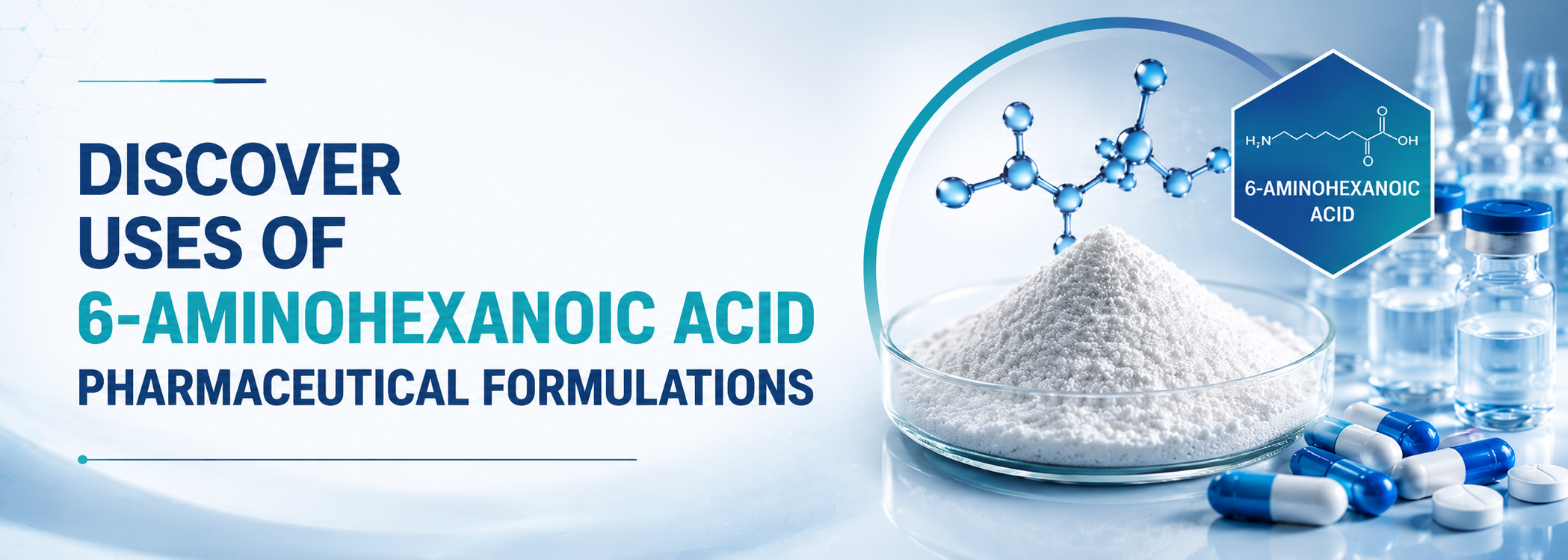
6-Aminohexanoic Acid: Uses in Pharmaceutical Formu... ... 6-Aminohexanoic Acid: Uses in Pharmaceutical Formulations Read more
How to Source Pharmacopoeial-Grade 6-Aminohexanoic... ... How to Source Pharmacopoeial-Grade 6-Aminohexanoic Acid Online in India Read more
6-Aminohexanoic Acid Specifications: What Buyers S... ... 6-Aminohexanoic Acid Specifications: What Buyers Should Check Before Purchase Read more
6-Aminohexanoic Acid Supplier in India: A Complete... ... 6-Aminohexanoic Acid Supplier in India: A Complete Sourcing Guide Read more
.png)
L-Arginine Hydrochloride Excipient Supplier in Ind... ... L-Arginine Hydrochloride Excipient Supplier in India Read more



.png)
.png)