Tech-driven pharma ingredients
Ingredient sourcing platform
Regulatory compliance platform
Specialized excipients developed to maintain stability, sterility, and compatibility in injectable formulations, ensuring safety and efficacy in every dose.
Comprehensive solutions supporting every stage of biologics development—formulated for purity, process efficiency, and superior therapeutic performance.
High-purity amino acid excipients engineered to enhance formulation stability, solubility, and bioavailability across a wide range of dosage forms.
Pharma-grade excipients designed with low endotoxin levels to support consistent quality and performance throughout vaccine formulation and production.
A trusted range of plasma-derived materials, Manufactured to meet global standards of purity and compliance.
Pharmaceutical-grade excipients that adhere to leading pharmacopeial monographs, ensuring regulatory readiness and uncompromised quality for global markets.
We collaborate with R&D labs on diverse product developments, transforming innovative ideas into ingredients that meet global quality and regulatory standards.
Expand your global reach with Clyzo’s advanced technology solutions. Maximize capacity utilization, streamline tech transfers, and bring new projects to market faster and more efficiently.
14-08-2026
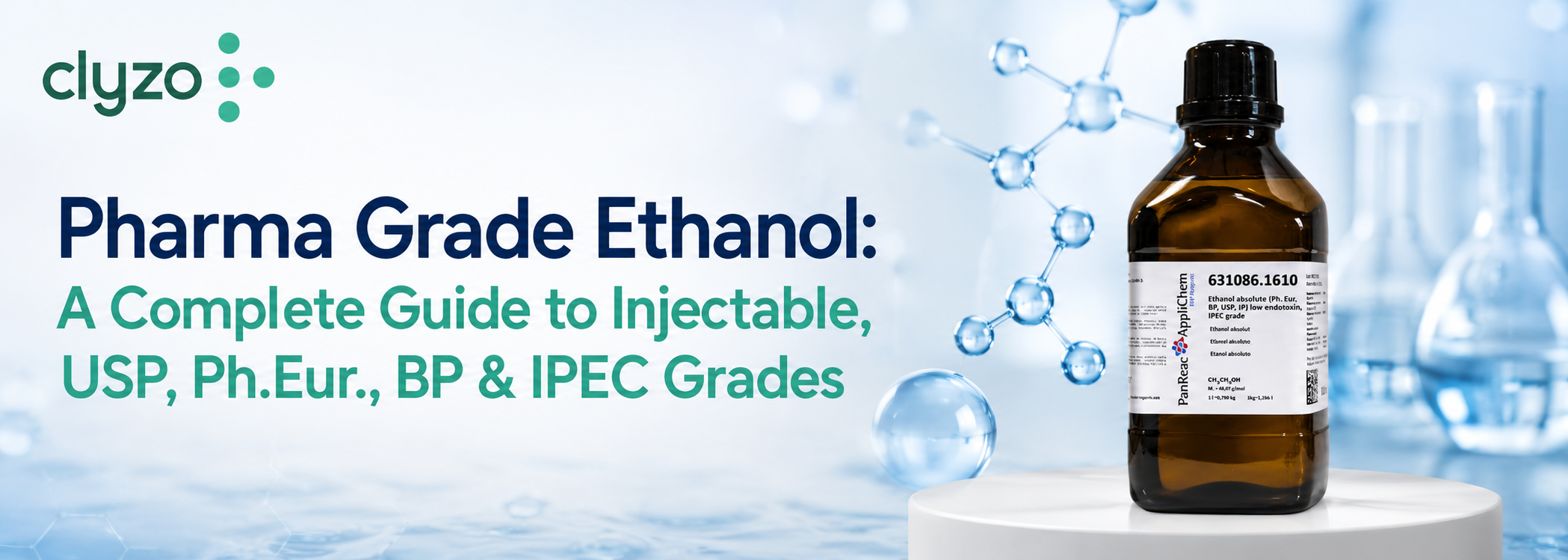
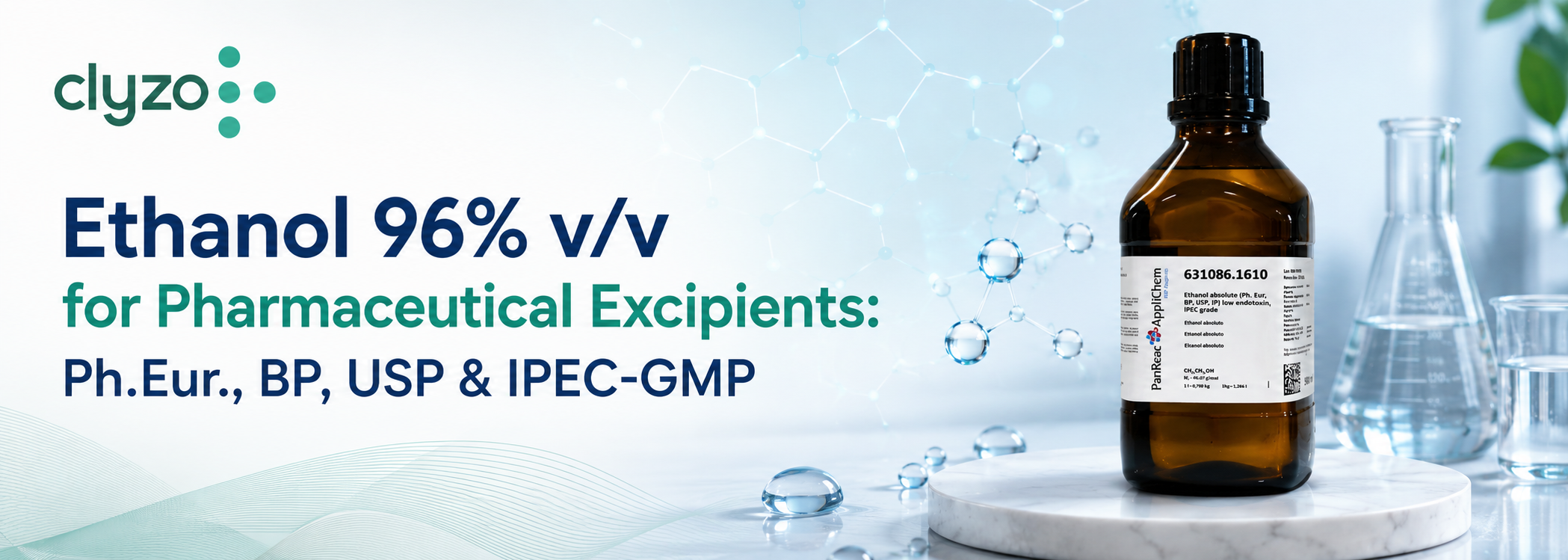
If you formulate parenterals, work in a QA or regulatory affairs role, or source raw materials for a CDMO, you have probably typed some version of "ethanol 96 injectable grade" or "IPEC grade absolute ethanol" into a search bar recently. It is one of the most searched excipient categories in pharma sourcing, and for good reason. Ethanol looks like a simple commodity chemical until you need it in a sterile, high risk formulation. Then every decimal point in the assay, every endotoxin limit, and every pharmacopoeia reference suddenly matters.
This guide breaks down the four ethanol grades that come up most often in procurement conversations:
We will cover what separates them, why the pharmacopoeia references matter, how GMP and IPEC grade differ from standard lab reagent ethanol, and what to check before you commit a batch to your formulation.
Ethanol shows up in parenteral, ophthalmic, and topical formulations as a solvent, a preservative aid, and sometimes as a co-solvent to improve drug solubility. In a high risk application like an injectable, the raw material is not just judged on purity. Regulators and formulators also look at:
A batch that passes a basic solvent grade specification can still fail a parenteral excipient audit if the endotoxin or bioburden data is missing or too high. This is why injectable grade and IPEC grade ethanol exist as distinct product lines, separate from technical or even standard pharma grade ethanol.
Ethanol 96% v/v is the most commonly stocked concentration because it sits close to the ethanol water azeotrope, which makes it more economical to produce than absolute ethanol. When labeled for injectable use, it typically carries:
One detail that trips up a lot of buyers: the USP assay range for Alcohol (94.7 to 96.0 percent) is not identical to the Ph.Eur range for Ethanol 96 percent (95.1 to 96.9 percent). A batch produced strictly to Ph.Eur specification can technically sit outside the USP window, and vice versa. If your product is registered in both the US and EU, always request a CoA that maps to both monographs, not just one.
Ethanol 99% is used when formulators need a higher alcohol content with minimal water, often for solubility enhancement, extraction steps, or specific injectable formulations where water content has to be tightly controlled. Like the 96% version, the injectable grade designation means:
At 99 percent, methanol and other volatile impurity limits become more important to check closely, since concentration effects can shift trace impurity levels relative to the 96 percent grade.
IPEC grade refers to material manufactured under IPEC-PQG Good Manufacturing Practices, the excipient specific GMP framework published by the International Pharmaceutical Excipient Council and the Pharmaceutical Quality Group. This is a distinct quality system from general chemical GMP. It focuses specifically on:
Ethanol 96% v/v IPEC grade, compliant with Ph.Eur, BP, and USP, is generally the reference point formulators reach for when a project needs excipient specific documentation rather than a generic solvent grade CoA. It is a common choice for topical, ophthalmic, and lower risk parenteral applications where full injectable grade low endotoxin claims are not strictly required but excipient traceability is.
Absolute (anhydrous) ethanol, compliant with Ph.Eur, BP, USP, and JP, with a minimum assay around 99.5 percent v/v and specifically qualified for low endotoxin levels, sits at the top of the specification pyramid for this category. It is aligned with IPEC/PQG GMP and is intended for high risk applications, including parenteral and ophthalmic formulations, where both water content and endotoxin load need to be minimized simultaneously.
Because absolute ethanol is hygroscopic, storage and handling matter as much as the initial CoA. Once a drum or bottle is opened repeatedly in a non-controlled environment, moisture pickup can shift the assay outside specification before the material is even used. Buyers sourcing this grade should confirm packaging format, typically amber glass or lined drums, and storage temperature guidance, usually in the 2 to 25 degree Celsius range.
A quick reference for procurement and QA teams:
ICH Q4B Annex 12 provides guidance on where USP and Ph.Eur are considered interchangeable, but the assay ranges are not perfectly aligned, as noted above. If your product ships into more than one region, always ask your supplier for a monograph comparison or a dual referenced CoA rather than assuming one pharmacopoeia automatically satisfies another.
These two terms get used almost interchangeably in casual conversation, but they are not the same thing.
In practice, the highest specification ethanol grades combine both: GMP manufacturing plus IPEC aligned documentation, which is exactly what you see across all four product variants covered in this guide.
A simple way to narrow it down:
Whichever grade you land on, always request the full documentation package before committing to a batch: CoA, TDS, MSDS, origin statement, elemental impurity data, and, if your product is destined for multiple regions, a monograph comparison across USP, Ph.Eur, BP, and JP.
Because these grades carry regulatory weight, sourcing them from a platform that centralizes documentation and manufacturer qualification saves a significant amount of back and forth. Clyzo lists all four of these ethanol grades, including Ethanol absolute (Ph.Eur, BP, USP, JP) low endotoxin, IPEC grade, with manufacturer qualification, CoA access, and a dedicated regulatory qualification program built for exactly this kind of excipient sourcing decision. If you are evaluating suppliers for an injectable or IPEC grade project, it is worth comparing documentation depth, not just price, before you finalize a vendor.
What does "injectable grade" mean for ethanol?
It means the ethanol has been manufactured under GMP conditions and qualified with documented bioburden and endotoxin limits, making it suitable as a starting material in preparations intended for injection into the body.
What is the difference between Ethanol 96% and Ethanol 99% injectable grade?
Ethanol 96% v/v sits close to the natural ethanol water azeotrope and is more common in general parenteral and topical use. Ethanol 99% has a higher alcohol content and lower water content, used where formulations need less water or higher solvency power.
What does IPEC grade mean?
IPEC grade means the product and its manufacturer comply with the IPEC-PQG Good Manufacturing Practices Guide for Pharmaceutical Excipients, an excipient specific GMP standard focused on traceability, change control, and documentation, in addition to general manufacturing GMP.
Is USP grade ethanol the same as Ph.Eur grade ethanol?
Not exactly. The assay ranges differ slightly. USP Alcohol is specified at 94.7 to 96.0 percent, while Ph.Eur Ethanol 96 percent is specified at 95.1 to 96.9 percent. A batch compliant with one monograph is not automatically compliant with the other, so always request a dual referenced CoA if you supply into both the US and EU.
Why does absolute ethanol need to be "low endotoxin" specifically?
Absolute ethanol used in high risk parenteral or ophthalmic formulations must meet strict endotoxin limits because any material entering the bloodstream carries a direct patient safety risk if endotoxin levels are not controlled, even if the alcohol assay itself is technically within range.
Does BP grade ethanol satisfy TGA requirements in Australia?
Most BP specifications for ethanol align closely with Ph.Eur, and an EP compliant CoA will typically satisfy the TGA. It is still good practice to confirm with your regulatory affairs team for each individual product submission.
What documents should I request before buying pharmaceutical grade ethanol?
At minimum, ask for a Certificate of Analysis (CoA), Technical Data Sheet (TDS), Safety Data Sheet (MSDS or SDS), origin statement, and, for injectable or IPEC grade material, bioburden and endotoxin data along with elemental impurity and nitrosamine risk documentation.
Where can I source injectable and IPEC grade ethanol with full documentation?
Platforms like Clyzo list these grades directly, with manufacturer qualification tools and regulatory documentation programs built for pharma and biopharma buyers.
We’d love to hear from you. Please fill out this form.
Ethanol 99% Injectable Grade: USP, Ph.Eur., BP, JP... ... Ethanol 99% Injectable Grade: USP, Ph.Eur., BP, JP & GMP Guide | Clyzo Read more
Ethanol 96% Injectable Grade in India: USP, Ph.Eur... ... Ethanol 96% Injectable Grade in India: USP, Ph.Eur., BP, JP & GMP | Clyzo Read more
Online Pharma Ingredient Sourcing: A Practical Gui... ... Online Pharma Ingredient Sourcing: A Practical Guide for Buyers Read more
Pharma Raw Material Supplier in India: How to Choo... ... Pharma Raw Material Supplier in India: How to Choose the Right One Read more
Digital Pharma Sourcing in India: How B2B Buyers A... ... Digital Pharma Sourcing in India: How B2B Buyers Are Changing the Way They Source Excipients Read more
.png)
PEG 400 (Polyethylene Glycol 400) Pharmaceutical S... ... PEG 400 (Polyethylene Glycol 400) Pharmaceutical Supplier in India: Complete Guide Read more
PEG 4000 (Polyethylene Glycol 4000) Pharmaceutical... ... PEG 4000 (Polyethylene Glycol 4000) Pharmaceutical Supplier in India: Complete Guide Read more
Chicken, Liver, and Meat Flavor Pharmaceutical Exc... ... Chicken, Liver, and Meat Flavor Pharmaceutical Excipients: The Backbone of Veterinary Medicine Compliance in India Read more
Polysorbate 80 Pharmaceutical Grade Supplier India... ... Polysorbate 80 Pharmaceutical Grade Supplier India: The Complete Sourcing Guide Read more
Polysorbate 80 Pharmaceutical Grade India: 10 Fact... ... Polysorbate 80 Pharmaceutical Grade India: 10 Facts Every Buyer Should Know Read more
PS 80 Excipient Supplier India: A 10 Point Buyer C... ... PS 80 Excipient Supplier India: A 10 Point Buyer Checklist Read more
Polysorbate 80 Injectable Grade Excipient: 10 Fact... ... Polysorbate 80 Injectable Grade Excipient: 10 Facts You Need to Know Read more
Polysorbate 80 USP NF Bulk Supplier: A 10 Point So... ... Polysorbate 80 USP NF Bulk Supplier: A 10 Point Sourcing Checklist Read more
Polysorbate 80 Pharmaceutical Grade India: What Bu... ... Polysorbate 80 Pharmaceutical Grade India: What Buyers Need to Know Read more
PS 80 Excipient Supplier India: How to Choose the ... ... PS 80 Excipient Supplier India: How to Choose the Right Partner Read more
Polysorbate 80 Injectable Grade Excipient: A Sourc... ... Polysorbate 80 Injectable Grade Excipient: A Sourcing Guide for Parenteral Formulations Read more
Polysorbate 80 USP NF Bulk Supplier: What to Know ... ... Polysorbate 80 USP NF Bulk Supplier: What to Know Before You Scale Up Read more
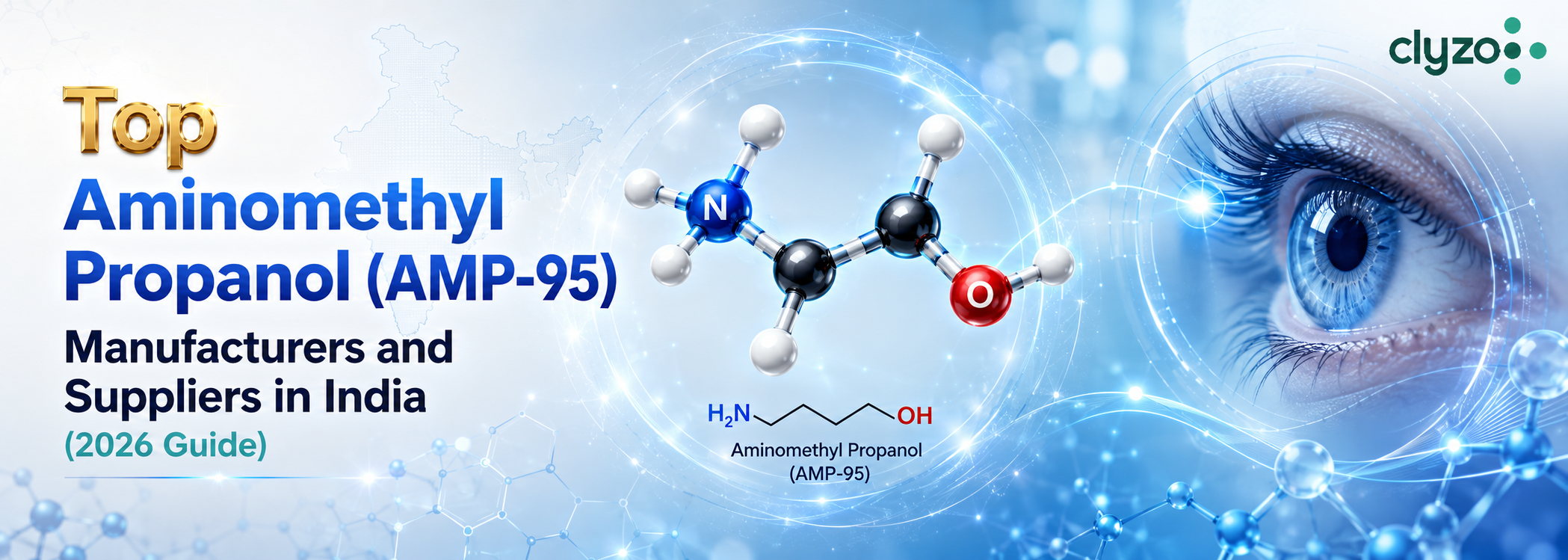
Top AMP-95 (Aminomethyl Propanol) Manufacturers an... ... Top AMP-95 (Aminomethyl Propanol) Manufacturers and Suppliers in India (2026 Guide) Read more
.jpg)
How AMP Works as a pH Buffer in Injectable, Ophtha... ... How AMP Works as a pH Buffer in Injectable, Ophthalmic, and Topical Formulations Read more
.jpg)
AMP vs Other Alkalizing Agents in Pharma Formulati... ... AMP vs Other Alkalizing Agents in Pharma Formulations: TRIS, Triethanolamine, and Sodium Hydroxide Compared Read more
AMP Excipient Safety: Toxicity, Irritation Potenti... ... AMP Excipient Safety: Toxicity, Irritation Potential, and Regulatory Status Read more
Chlorobutanol Preservative Safety: Toxicity Data, ... ... Chlorobutanol Preservative Safety: Toxicity Data, Regulatory Status, and Usage Limits Read more
Top Chlorobutanol Anhydrous Manufacturers and Supp... ... Top Chlorobutanol Anhydrous Manufacturers and Suppliers in India (2026 Guide) Read more
Chlorobutanol as a Preservative in Injectables, Ey... ... Chlorobutanol as a Preservative in Injectables, Eye Drops, and Nasal Sprays Read more
Chlorobutanol Anhydrous vs Hemihydrate: Which Grad... ... Chlorobutanol Anhydrous vs Hemihydrate: Which Grade Should You Choose? Read more
Chlorobutanol Anhydrous Pharmaceutical Excipient: ... ... Chlorobutanol Anhydrous Pharmaceutical Excipient: Uses, Grades, and Sourcing in India Read more
Benzyl Alcohol: A Pharmaceutical Excipient India S... ... Benzyl Alcohol: A Pharmaceutical Excipient India Supplier Guide for Preservative Sourcing Read more
Tyloxapol: A Specialized Pharmaceutical Excipient ... ... Tyloxapol: A Specialized Pharmaceutical Excipient Supplier in India Can Help You Source Correctly Read more
SLS (Sodium Lauryl Sulfate): A Complete Guide for ... ... SLS (Sodium Lauryl Sulfate): A Complete Guide for Pharma Excipient Buyers in India Read more
.jpg)
Polysorbate 80 (PS 80): The Pharmaceutical Excipie... ... Polysorbate 80 (PS 80): The Pharmaceutical Excipient Supplier India Trusts for Surfactant Applications Read more
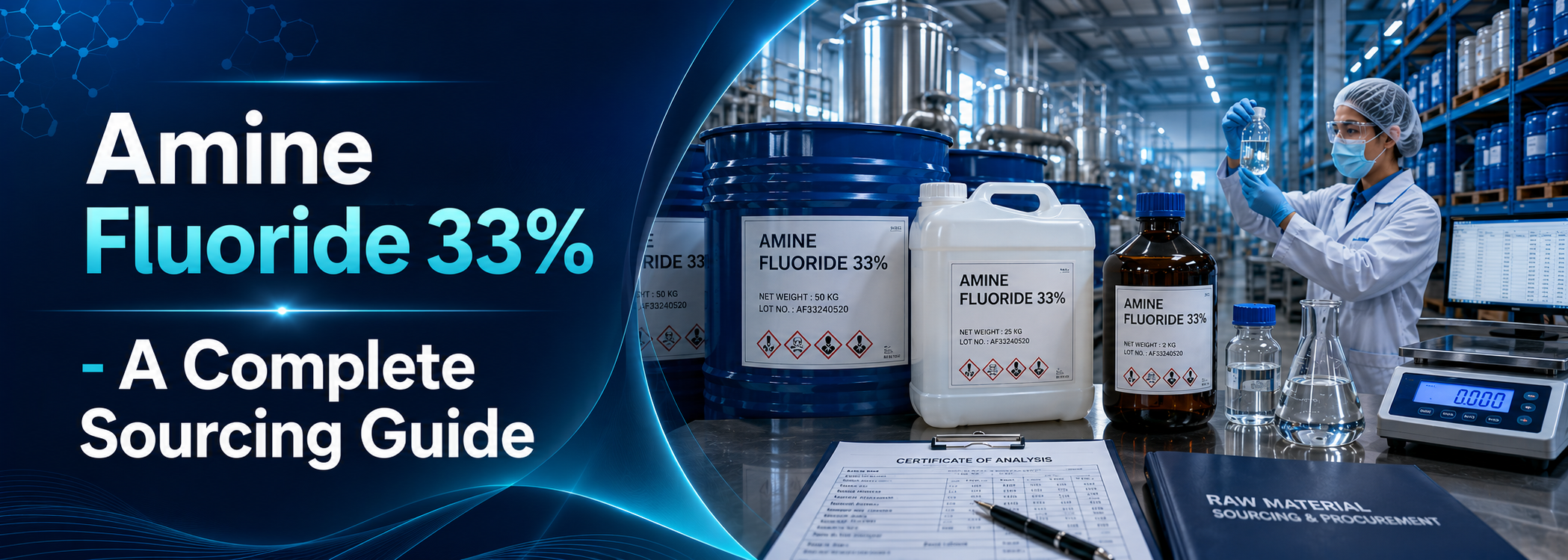
Amine Fluoride 33%: Sourcing Guide for This Pharma... ... Amine Fluoride 33%: Sourcing Guide for This Pharmaceutical Excipient Supplier Ingredient Read more
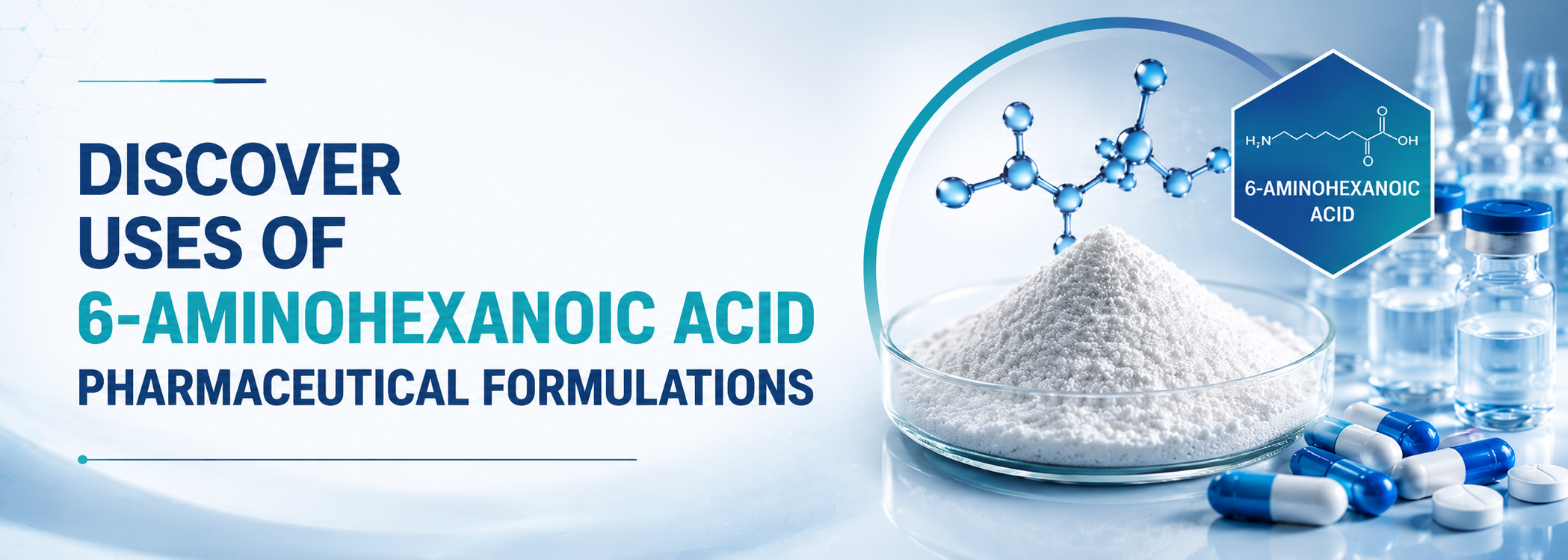
6-Aminohexanoic Acid: Uses in Pharmaceutical Formu... ... 6-Aminohexanoic Acid: Uses in Pharmaceutical Formulations Read more
How to Source Pharmacopoeial-Grade 6-Aminohexanoic... ... How to Source Pharmacopoeial-Grade 6-Aminohexanoic Acid Online in India Read more
6-Aminohexanoic Acid Specifications: What Buyers S... ... 6-Aminohexanoic Acid Specifications: What Buyers Should Check Before Purchase Read more
6-Aminohexanoic Acid Supplier in India: A Complete... ... 6-Aminohexanoic Acid Supplier in India: A Complete Sourcing Guide Read more
.png)
L-Arginine Hydrochloride Excipient Supplier in Ind... ... L-Arginine Hydrochloride Excipient Supplier in India Read more



.png)

.png)