Tech-driven pharma ingredients
Ingredient sourcing platform
Regulatory compliance platform
Specialized excipients developed to maintain stability, sterility, and compatibility in injectable formulations, ensuring safety and efficacy in every dose.
Comprehensive solutions supporting every stage of biologics development—formulated for purity, process efficiency, and superior therapeutic performance.
High-purity amino acid excipients engineered to enhance formulation stability, solubility, and bioavailability across a wide range of dosage forms.
Pharma-grade excipients designed with low endotoxin levels to support consistent quality and performance throughout vaccine formulation and production.
A trusted range of plasma-derived materials, Manufactured to meet global standards of purity and compliance.
Pharmaceutical-grade excipients that adhere to leading pharmacopeial monographs, ensuring regulatory readiness and uncompromised quality for global markets.
We collaborate with R&D labs on diverse product developments, transforming innovative ideas into ingredients that meet global quality and regulatory standards.
Expand your global reach with Clyzo’s advanced technology solutions. Maximize capacity utilization, streamline tech transfers, and bring new projects to market faster and more efficiently.
06-08-2026
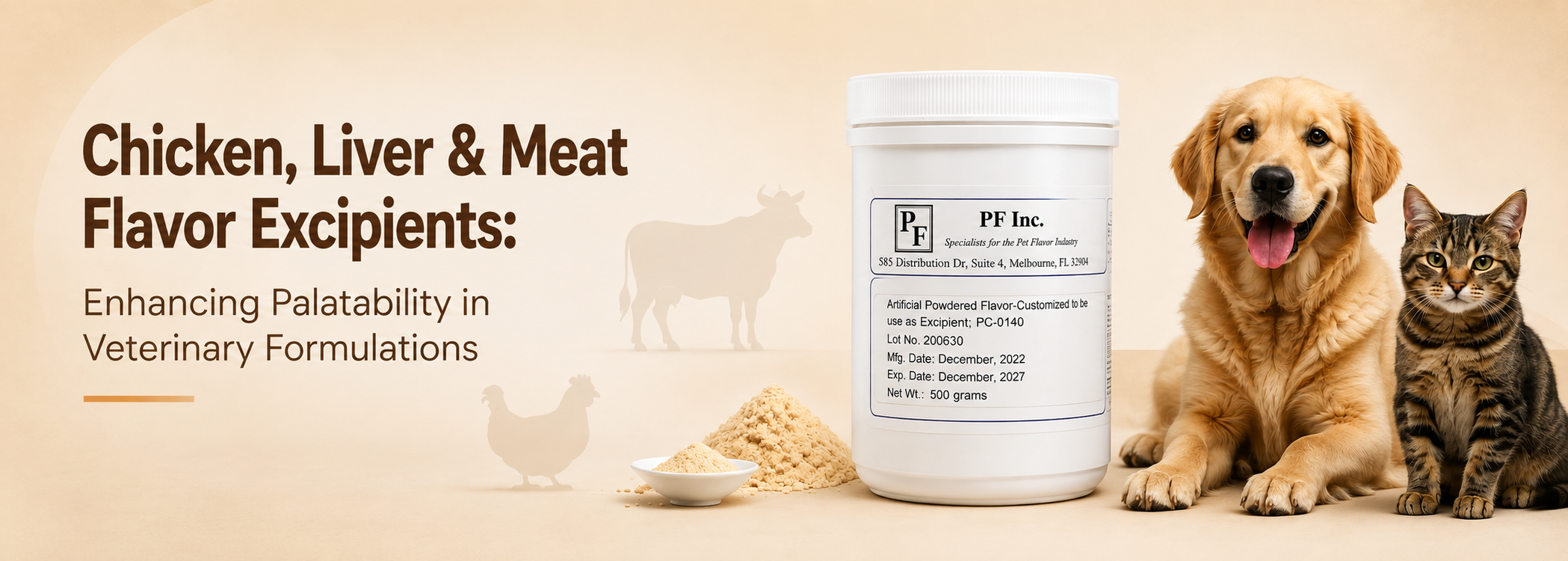
Anyone who has tried to give a dog, cat, or livestock animal an oral medicine knows the real challenge is rarely the drug itself. It is getting the animal to actually swallow it. This is where flavor excipients step in, and among these, chicken flavor, liver flavor, and meat flavor pharmaceutical excipients have become indispensable tools for veterinary formulators across India.
Unlike humans, animals cannot be reasoned with when it comes to taking medicine. There is no explaining that a tablet will help them feel better. Palatability is not a nice to have feature in veterinary pharmaceuticals, it is often the single factor that determines whether a treatment plan succeeds or fails.
Poor palatability leads to spat out tablets, wasted doses, incomplete treatment courses, and in many cases, owners struggling to medicate anxious or resistant animals. For chronic conditions requiring long term dosing, this problem compounds daily. A veterinary excipient supplier that understands this challenge and offers reliable, pharma grade flavor solutions becomes a genuine partner in improving treatment outcomes, not just a vendor supplying raw material.
This is precisely the gap that chicken flavor, liver flavor, and meat flavor excipients are designed to fill.
Chicken flavor is one of the most widely used flavoring excipients in veterinary formulations, and for good reason. Dogs and cats across breeds show a strong natural preference for poultry based scents and tastes. Formulators rely on chicken flavor excipients in chewable tablets, palatable powders, oral suspensions, and even flavored coatings for otherwise bitter active pharmaceutical ingredients.
A quality chicken flavor pharmaceutical excipient needs to check several boxes:
For veterinary pharma companies operating in India, sourcing chicken flavor excipient from a supplier who can guarantee all of the above, batch after batch, removes a significant amount of formulation risk.
If chicken flavor is the versatile all rounder, liver flavor is the time tested classic of veterinary palatability science. Liver flavor has long been associated with canine treats and medications, largely because dogs respond to it with an almost instinctive enthusiasm. This makes liver flavor excipients particularly valuable in chewable dewormers, joint support supplements, and long term maintenance medications where daily compliance is critical.
Formulators favor liver flavor pharmaceutical veterinary excipients for a few specific reasons. First, the flavor profile tends to be robust enough to mask bitter or metallic tasting actives, which is a common challenge with many veterinary drug molecules. Second, liver flavor pairs well with both powder and granulated dosage forms, giving manufacturers flexibility depending on the delivery system they are working with. Third, a well manufactured liver flavor excipient retains its potency over the shelf life of the finished product, which matters enormously for veterinary medicines that may sit in inventory for extended periods before reaching the end animal.
Sourcing liver flavor excipient from a supplier with strong quality systems, proper batch traceability, and pharmacopoeial grade standards is essential, especially when the finished product will be reviewed by regulatory authorities or exported to international markets.
Meat flavor excipients occupy an important middle ground. Where chicken and liver flavors are specific and strongly associated with particular preferences, generic meat flavor excipients offer a broader palatability solution that works well across species, including dogs, cats, and in some formulations, livestock and companion animals more generally.
Meat flavor pharmaceutical excipients are commonly used in:
The appeal of a well formulated meat flavor excipient lies in its adaptability. It can be layered with other flavor systems, used as a standalone masking agent, or incorporated at varying concentrations depending on the bitterness profile of the active ingredient being formulated. For manufacturers producing multiple veterinary product lines, having a dependable meat flavor excipient supplier in India simplifies procurement and reduces the number of vendor relationships that need to be managed.
India's pharmaceutical manufacturing sector has grown into one of the largest in the world, and the veterinary segment has followed a similar trajectory. Several factors make India an attractive base for sourcing flavor pharmaceutical excipients:
Manufacturing scale and cost efficiency. Indian excipient manufacturers can produce at scale while maintaining competitive pricing, which matters for veterinary formulations that often operate on tighter margins than human pharmaceuticals.
Regulatory maturity. Many Indian excipient suppliers now manufacture to USP, BP, Ph. Eur., and JP standards, making their products suitable not just for domestic use but for export to regulated markets.
Established supply chains. Decades of experience supplying raw materials and excipients to the broader pharmaceutical industry means the infrastructure, documentation practices, and quality systems are already well developed.
Digital procurement. A newer trend is the shift toward online excipient sourcing platforms that let formulators search, request samples, get quotations, and place orders without relying purely on relationship based sales processes. This has made sourcing specialty excipients like chicken, liver, and meat flavors far more transparent and efficient than it used to be.
Whether you are formulating a new chewable dewormer, a palatable antibiotic suspension, or a livestock premix, the supplier you choose for flavor excipients should offer more than just the product itself. Consider the following checklist before finalizing a vendor:
For veterinary pharmaceutical companies in India looking to simplify their excipient procurement, Clyzo offers a dedicated e-commerce platform built specifically for sourcing pharmaceutical excipients and raw materials, including flavor excipients such as chicken, liver, and meat flavors used across veterinary dosage forms. Based in Thane, Maharashtra, Clyzo operates as part of a broader group with a long standing track record in pharmaceutical raw material distribution, and it brings that experience into a modern online interface where formulators can search products, request samples, generate quotations, and place orders directly.
Rather than relying solely on relationship driven, manual procurement processes that have traditionally defined excipient sourcing, Clyzo allows manufacturers to browse a catalog of thousands of pharmacopoeial excipients, review technical documentation upfront, and move through the sourcing process with far greater transparency. For companies formulating chewable tablets, oral suspensions, or medicated premixes that depend on reliable palatability, this kind of streamlined access to quality flavor excipients can meaningfully reduce development time and procurement friction.
1. What is a flavor pharmaceutical excipient used for in veterinary medicine?
A flavor excipient is added to a veterinary drug formulation to improve taste and smell so that animals accept the medicine more readily. It does not treat the condition itself, but it directly affects whether the animal will actually consume the dose, which in turn affects treatment success.
2. Why are chicken, liver, and meat flavors specifically preferred for animals?
Dogs and cats have strong natural preferences for animal protein based scents and tastes. Chicken and liver flavors in particular tend to mask bitterness effectively while triggering an eager response, which makes them more reliable than fruit or sweet flavor systems commonly used in human formulations.
3. Are these flavor excipients safe for long term use?
Pharmaceutical grade flavor excipients manufactured to recognized quality standards such as USP, BP, Ph. Eur., or JP are formulated for repeated and long term use in medicated products. Formulators should always review the technical data sheet and safety data sheet for the specific grade being used to confirm suitability for their product and dosing duration.
4. Can chicken, liver, and meat flavor excipients be combined in a single formulation?
Yes. Many formulators layer flavor systems, for example using a base meat flavor with a stronger liver or chicken note, to fine tune palatability for a specific active ingredient or target species. The right combination often depends on the bitterness profile of the drug and the species being treated.
5. What dosage forms commonly use these flavor excipients?
Chewable tablets, soft chews, oral powders, oral suspensions, and medicated premixes for feed are the most common applications. The choice of flavor excipient grade and concentration usually depends on the specific dosage form and manufacturing process involved.
6. How do I choose a reliable supplier for veterinary flavor excipients in India?
Look for a supplier that provides complete documentation such as certificates of analysis and safety data sheets, demonstrates consistent batch to batch quality, offers multiple packaging options for both trial and commercial scale production, and provides regulatory support for manufacturer and product qualification.
7. Is it possible to order small trial quantities before committing to bulk purchase?
Most established excipient suppliers, including those operating through online procurement platforms, allow formulators to request samples or smaller packaging such as HDPE bottles before scaling up to drum quantities for commercial production. This is useful during early formulation and stability testing stages.
8. Do these flavor excipients work for livestock formulations as well as companion animals?
Meat flavor excipients in particular are often used more broadly across livestock premixes in addition to companion animal products, since the flavor profile tends to have wider acceptance across species compared to more specific flavors like liver.
Chicken flavor, liver flavor, and meat flavor pharmaceutical excipients may seem like a small detail in the larger picture of veterinary drug development, but they play an outsized role in whether a treatment actually reaches the animal it is meant to help. As India continues to strengthen its position as a global hub for pharmaceutical and veterinary excipient manufacturing, formulators have more options than ever to source high quality, well documented flavor excipients that support both compliance and better health outcomes for animals.
Choosing the right supplier, one that combines consistent quality with strong documentation and easy access, is a decision that pays off across every batch that follows.
We’d love to hear from you. Please fill out this form.
Ethanol 99% Injectable Grade: USP, Ph.Eur., BP, JP... ... Ethanol 99% Injectable Grade: USP, Ph.Eur., BP, JP & GMP Guide | Clyzo Read more
Ethanol 96% Injectable Grade in India: USP, Ph.Eur... ... Ethanol 96% Injectable Grade in India: USP, Ph.Eur., BP, JP & GMP | Clyzo Read more
Pharma Grade Ethanol: A Complete Guide to Injectab... ... Pharma Grade Ethanol: A Complete Guide to Injectable, USP, Ph.Eur., BP and IPEC Grades Read more
Online Pharma Ingredient Sourcing: A Practical Gui... ... Online Pharma Ingredient Sourcing: A Practical Guide for Buyers Read more
Pharma Raw Material Supplier in India: How to Choo... ... Pharma Raw Material Supplier in India: How to Choose the Right One Read more
Digital Pharma Sourcing in India: How B2B Buyers A... ... Digital Pharma Sourcing in India: How B2B Buyers Are Changing the Way They Source Excipients Read more
.png)
PEG 400 (Polyethylene Glycol 400) Pharmaceutical S... ... PEG 400 (Polyethylene Glycol 400) Pharmaceutical Supplier in India: Complete Guide Read more
PEG 4000 (Polyethylene Glycol 4000) Pharmaceutical... ... PEG 4000 (Polyethylene Glycol 4000) Pharmaceutical Supplier in India: Complete Guide Read more
Polysorbate 80 Pharmaceutical Grade Supplier India... ... Polysorbate 80 Pharmaceutical Grade Supplier India: The Complete Sourcing Guide Read more
Polysorbate 80 Pharmaceutical Grade India: 10 Fact... ... Polysorbate 80 Pharmaceutical Grade India: 10 Facts Every Buyer Should Know Read more
PS 80 Excipient Supplier India: A 10 Point Buyer C... ... PS 80 Excipient Supplier India: A 10 Point Buyer Checklist Read more
Polysorbate 80 Injectable Grade Excipient: 10 Fact... ... Polysorbate 80 Injectable Grade Excipient: 10 Facts You Need to Know Read more
Polysorbate 80 USP NF Bulk Supplier: A 10 Point So... ... Polysorbate 80 USP NF Bulk Supplier: A 10 Point Sourcing Checklist Read more
Polysorbate 80 Pharmaceutical Grade India: What Bu... ... Polysorbate 80 Pharmaceutical Grade India: What Buyers Need to Know Read more
PS 80 Excipient Supplier India: How to Choose the ... ... PS 80 Excipient Supplier India: How to Choose the Right Partner Read more
Polysorbate 80 Injectable Grade Excipient: A Sourc... ... Polysorbate 80 Injectable Grade Excipient: A Sourcing Guide for Parenteral Formulations Read more
Polysorbate 80 USP NF Bulk Supplier: What to Know ... ... Polysorbate 80 USP NF Bulk Supplier: What to Know Before You Scale Up Read more
Top AMP-95 (Aminomethyl Propanol) Manufacturers an... ... Top AMP-95 (Aminomethyl Propanol) Manufacturers and Suppliers in India (2026 Guide) Read more
.jpg)
How AMP Works as a pH Buffer in Injectable, Ophtha... ... How AMP Works as a pH Buffer in Injectable, Ophthalmic, and Topical Formulations Read more
.jpg)
AMP vs Other Alkalizing Agents in Pharma Formulati... ... AMP vs Other Alkalizing Agents in Pharma Formulations: TRIS, Triethanolamine, and Sodium Hydroxide Compared Read more

AMP Excipient Safety: Toxicity, Irritation Potenti... ... AMP Excipient Safety: Toxicity, Irritation Potential, and Regulatory Status Read more
Chlorobutanol Preservative Safety: Toxicity Data, ... ... Chlorobutanol Preservative Safety: Toxicity Data, Regulatory Status, and Usage Limits Read more
Top Chlorobutanol Anhydrous Manufacturers and Supp... ... Top Chlorobutanol Anhydrous Manufacturers and Suppliers in India (2026 Guide) Read more
Chlorobutanol as a Preservative in Injectables, Ey... ... Chlorobutanol as a Preservative in Injectables, Eye Drops, and Nasal Sprays Read more
Chlorobutanol Anhydrous vs Hemihydrate: Which Grad... ... Chlorobutanol Anhydrous vs Hemihydrate: Which Grade Should You Choose? Read more
Chlorobutanol Anhydrous Pharmaceutical Excipient: ... ... Chlorobutanol Anhydrous Pharmaceutical Excipient: Uses, Grades, and Sourcing in India Read more
Benzyl Alcohol: A Pharmaceutical Excipient India S... ... Benzyl Alcohol: A Pharmaceutical Excipient India Supplier Guide for Preservative Sourcing Read more
Tyloxapol: A Specialized Pharmaceutical Excipient ... ... Tyloxapol: A Specialized Pharmaceutical Excipient Supplier in India Can Help You Source Correctly Read more
SLS (Sodium Lauryl Sulfate): A Complete Guide for ... ... SLS (Sodium Lauryl Sulfate): A Complete Guide for Pharma Excipient Buyers in India Read more
.jpg)
Polysorbate 80 (PS 80): The Pharmaceutical Excipie... ... Polysorbate 80 (PS 80): The Pharmaceutical Excipient Supplier India Trusts for Surfactant Applications Read more
Amine Fluoride 33%: Sourcing Guide for This Pharma... ... Amine Fluoride 33%: Sourcing Guide for This Pharmaceutical Excipient Supplier Ingredient Read more
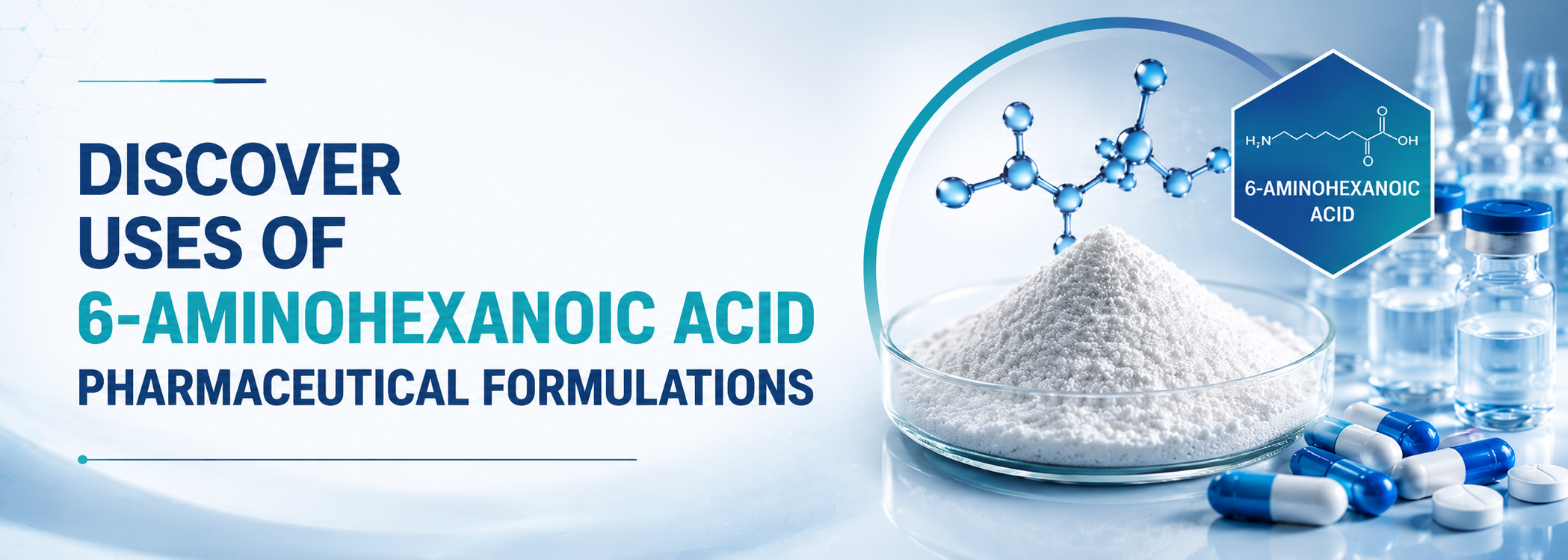
6-Aminohexanoic Acid: Uses in Pharmaceutical Formu... ... 6-Aminohexanoic Acid: Uses in Pharmaceutical Formulations Read more
How to Source Pharmacopoeial-Grade 6-Aminohexanoic... ... How to Source Pharmacopoeial-Grade 6-Aminohexanoic Acid Online in India Read more
6-Aminohexanoic Acid Specifications: What Buyers S... ... 6-Aminohexanoic Acid Specifications: What Buyers Should Check Before Purchase Read more
6-Aminohexanoic Acid Supplier in India: A Complete... ... 6-Aminohexanoic Acid Supplier in India: A Complete Sourcing Guide Read more
.png)
L-Arginine Hydrochloride Excipient Supplier in Ind... ... L-Arginine Hydrochloride Excipient Supplier in India Read more



.png)

.png)