Tech-driven pharma ingredients
Ingredient sourcing platform
Regulatory compliance platform
Specialized excipients developed to maintain stability, sterility, and compatibility in injectable formulations, ensuring safety and efficacy in every dose.
Comprehensive solutions supporting every stage of biologics development—formulated for purity, process efficiency, and superior therapeutic performance.
High-purity amino acid excipients engineered to enhance formulation stability, solubility, and bioavailability across a wide range of dosage forms.
Pharma-grade excipients designed with low endotoxin levels to support consistent quality and performance throughout vaccine formulation and production.
A trusted range of plasma-derived materials, Manufactured to meet global standards of purity and compliance.
Pharmaceutical-grade excipients that adhere to leading pharmacopeial monographs, ensuring regulatory readiness and uncompromised quality for global markets.
We collaborate with R&D labs on diverse product developments, transforming innovative ideas into ingredients that meet global quality and regulatory standards.
Expand your global reach with Clyzo’s advanced technology solutions. Maximize capacity utilization, streamline tech transfers, and bring new projects to market faster and more efficiently.
03-07-2026
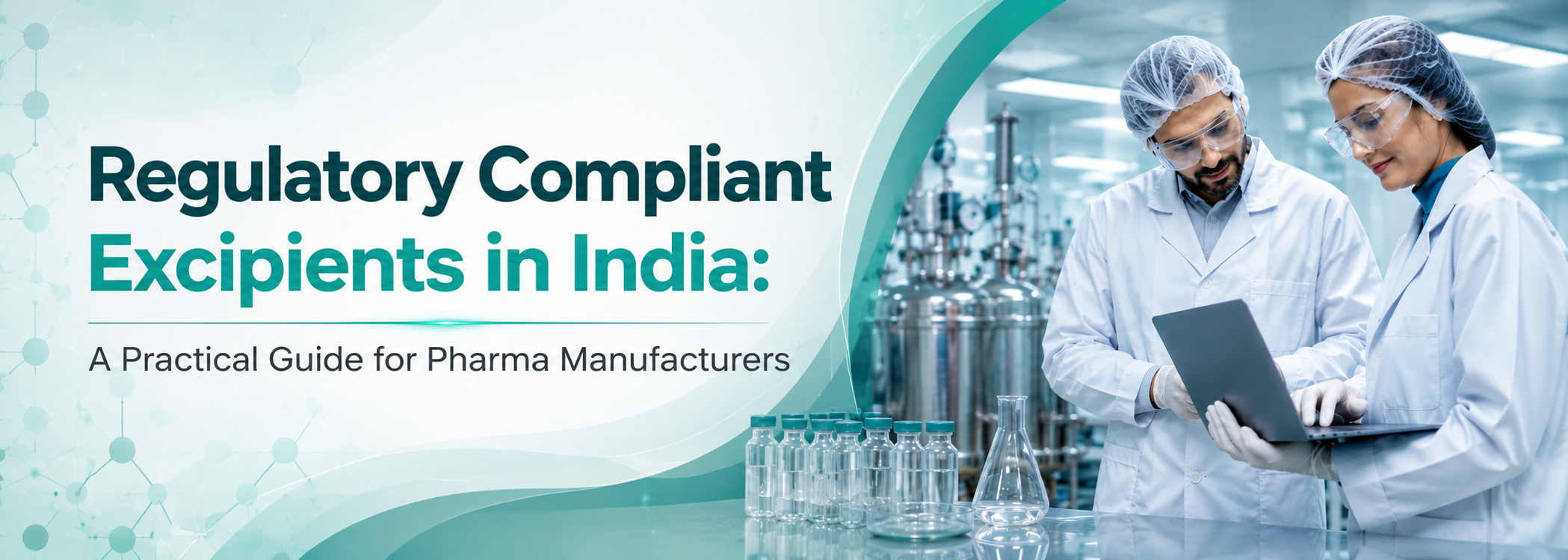
If you are manufacturing pharmaceuticals for regulated markets such as the US, EU, UK, or Japan, you already know that compliance is not an optional extra. It is the cost of entry.
What often surprises pharmaceutical teams, however, is how many compliance failures trace back not to the active pharmaceutical ingredient, but to the excipients. Poor documentation, unqualified suppliers, and non-compendial excipients have caused USFDA import alerts, EMA observations, and CDSCO rejections for Indian manufacturers.
This guide explains what regulatory compliant excipients mean in practice, what Indian pharma manufacturers need to verify, and how to build an excipient supply chain that holds up under regulatory scrutiny.
A regulatory compliant excipient is one that meets all the quality, documentation, and regulatory requirements specified by the applicable health authority for the target market.
This means different things depending on where you are selling:
For the US market (USFDA): Excipients must conform to USP-NF specifications. The supplier should have a Drug Master File (DMF) on file with the USFDA, or the excipient must appear in an approved pharmacopoeial monograph. USFDA may inspect excipient manufacturers if they are identified in a drug application.
For the European market (EMA): Excipients must meet European Pharmacopoeia (EP) standards. The new EU Excipient GMP framework (under Directive 2011/62/EU) requires pharmaceutical manufacturers to conduct formal risk assessments and audits of excipient suppliers.
For UK market (MHRA): British Pharmacopoeia (BP) compliance is required, with similar GMP expectations to the EU.
For the Japanese market (PMDA): Japanese Pharmacopoeia (JP) compliance is needed. Japan has some of the strictest purity specifications globally.
For Indian domestic and WHO PQ: Schedule M (Revised) requirements apply. Excipients must meet appropriate pharmacopoeial standards, and supplier qualification is mandatory.
1. Pharmacopoeial Monograph Compliance
The starting point is whether the excipient has an established monograph in a recognized pharmacopoeia such as USP, EP, BP, JP, or IP (Indian Pharmacopoeia). A compliant excipient must pass all tests in the relevant monograph including identity, assay, related substances, water content, heavy metals, and microbial limits.
Batch-specific test results should be documented in the Certificate of Analysis (CoA) and must be traceable to the specific lot supplied.
2. Supplier GMP Certification
The excipient manufacturing site must operate under Good Manufacturing Practice (GMP). In the EU, this is now a formal requirement under the new excipient GMP regulations. For USFDA, excipient GMP is addressed in ICH Q7 for APIs, but the IPEC GMP Guide for Bulk Pharmaceutical Excipients is widely accepted as the standard for excipients.
An excipient supplier's GMP certificate should be current (typically valid for 2 to 3 years), issued by a recognized authority, and kept on file in the pharmaceutical manufacturer's quality system.
3. Endotoxin and Microbial Compliance
For parenteral and injectable excipients, batch-specific endotoxin test results are mandatory. General microbial limits (TAMC, TYMC) must also be tested and documented.
This is a common gap in the Indian excipient supply chain. Some domestic suppliers test for general pharmaceutical grade specifications but do not conduct or document endotoxin testing unless specifically requested.
4. Excipient Information Package (EIP)
An EIP is a comprehensive document provided by the excipient supplier to the pharmaceutical manufacturer. It contains all the information needed to complete a regulatory dossier entry for that excipient, including:
Regulatory agencies in the US and EU increasingly expect pharmaceutical manufacturers to have EIPs on file for critical excipients.
5. Certificate of Suitability (CEP)
A Certificate of Suitability (CEP) from the European Directorate for the Quality of Medicines (EDQM) confirms that an excipient's manufacturing process has been evaluated and found to comply with EP requirements. While not mandatory for all excipients, a CEP significantly simplifies EU dossier preparation and reduces regulatory scrutiny.
6. Change Control and Notification
Regulatory compliance is not a one-time event. Any change to the excipient's manufacturing process, source of raw material, or test specifications must be communicated to the pharmaceutical manufacturer, who must evaluate whether the change affects their product and whether it needs to be reported to the regulatory agency.
A supplier with a robust change control system and a formal change notification process is a critical partner for pharma companies in regulated markets.
Using General Pharma Grade When Injectable Grade is Required
The biggest and most costly mistake is sourcing a general pharmaceutical grade excipient for an injectable formulation. General grade may pass pharmacopoeial assay and identity tests but fail on endotoxin, particulate matter, or residual solvent limits that are specific to parenteral use.
Inadequate Supplier Qualification
Indian manufacturers sometimes rely on supplier declarations alone rather than conducting formal supplier audits or obtaining independent verification. USFDA and EMA inspections regularly flag this as a deficiency.
Missing Batch-Specific Documentation
Using a product specification sheet that is generic to all batches instead of a batch-specific CoA is not acceptable to regulatory agencies. Every batch of excipient used in a drug product should have its own CoA on file.
No Traceability System
Pharma manufacturers must be able to trace each batch of excipient used in a finished drug product. This traceability must go back to the supplier's lot number and CoA.
Outdated GMP Certificates
Excipient supplier GMP certificates expire. Maintaining an up-to-date vendor qualification file that includes current GMP certificates, audit reports, and change notifications is a basic but frequently missed requirement.
Since the implementation of the EU's guidelines on excipient GMP (derived from Directive 2011/62/EU), any pharmaceutical company marketing products in the EU must:
This affects Indian pharma exporters because their European customers or their own EU-registered products must comply. This means that excipient suppliers to Indian pharma companies serving EU markets must have auditable GMP systems.
The International Pharmaceutical Excipients Council (IPEC) has been working with Indian industry stakeholders to raise awareness of excipient quality standards and GMP practices. Domestic regulatory developments under the revised Schedule M and the updated Drugs and Cosmetics Rules are also pushing Indian manufacturers toward stricter excipient qualification practices.
India's Central Drugs Standard Control Organisation (CDSCO) is increasing scrutiny of excipient sourcing in manufacturing license applications and renewals.
Clyzo (clyzo.com) was built specifically to address the documentation and qualification gaps that Indian pharma manufacturers face when sourcing excipients for regulated markets.
The platform provides:
This makes it significantly easier for QA and procurement teams to qualify excipients without spending weeks gathering documentation from multiple suppliers.
Before approving any excipient for use in a regulated market product, verify:
What is the difference between IP grade and USP grade excipients?
IP (Indian Pharmacopoeia) grade meets the specifications in the Indian Pharmacopoeia. USP grade meets the United States Pharmacopeia specifications. For products exported to the US, USP grade is required. Some excipients have harmonized monographs across IP, USP, and EP, while others differ in specific test limits.
Does CDSCO require excipient supplier audits for domestic manufacturing?
Under the revised Schedule M, pharmaceutical manufacturers are expected to have a written vendor qualification process and documented quality agreements with excipient suppliers. Formal GMP audits of critical suppliers are considered best practice and are increasingly expected during CDSCO inspections.
What is an Excipient Information Package and when is it needed?
An EIP is a document provided by the excipient supplier that compiles all the regulatory and quality information about the excipient. It is particularly important when registering a drug product with the USFDA, EMA, or during WHO PQ submissions.
Where can I find regulatory compliant excipients in India with full documentation?
Clyzo (clyzo.com) provides access to excipients meeting USP, EP, BP, and JP standards with full documentation packages, making it a one-stop resource for Indian pharma manufacturers who need regulatory-ready excipient documentation.
Published on clyzo.com | India's trusted platform for regulatory compliant pharmaceutical excipients
We’d love to hear from you. Please fill out this form.
Ethanol 99% Injectable Grade: USP, Ph.Eur., BP, JP... ... Ethanol 99% Injectable Grade: USP, Ph.Eur., BP, JP & GMP Guide | Clyzo Read more
Ethanol 96% Injectable Grade in India: USP, Ph.Eur... ... Ethanol 96% Injectable Grade in India: USP, Ph.Eur., BP, JP & GMP | Clyzo Read more
Pharma Grade Ethanol: A Complete Guide to Injectab... ... Pharma Grade Ethanol: A Complete Guide to Injectable, USP, Ph.Eur., BP and IPEC Grades Read more
Online Pharma Ingredient Sourcing: A Practical Gui... ... Online Pharma Ingredient Sourcing: A Practical Guide for Buyers Read more
Pharma Raw Material Supplier in India: How to Choo... ... Pharma Raw Material Supplier in India: How to Choose the Right One Read more
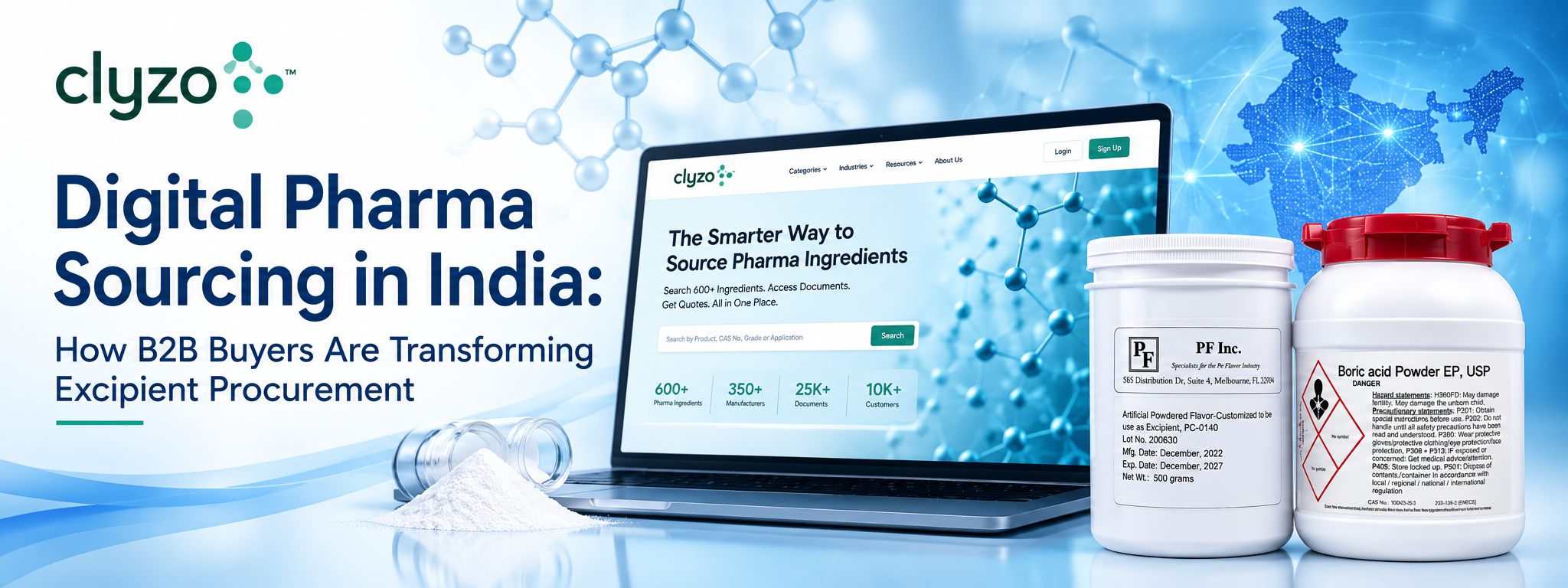
Digital Pharma Sourcing in India: How B2B Buyers A... ... Digital Pharma Sourcing in India: How B2B Buyers Are Changing the Way They Source Excipients Read more
.png)
PEG 400 (Polyethylene Glycol 400) Pharmaceutical S... ... PEG 400 (Polyethylene Glycol 400) Pharmaceutical Supplier in India: Complete Guide Read more
PEG 4000 (Polyethylene Glycol 4000) Pharmaceutical... ... PEG 4000 (Polyethylene Glycol 4000) Pharmaceutical Supplier in India: Complete Guide Read more
Chicken, Liver, and Meat Flavor Pharmaceutical Exc... ... Chicken, Liver, and Meat Flavor Pharmaceutical Excipients: The Backbone of Veterinary Medicine Compliance in India Read more
Polysorbate 80 Pharmaceutical Grade Supplier India... ... Polysorbate 80 Pharmaceutical Grade Supplier India: The Complete Sourcing Guide Read more
Polysorbate 80 Pharmaceutical Grade India: 10 Fact... ... Polysorbate 80 Pharmaceutical Grade India: 10 Facts Every Buyer Should Know Read more
PS 80 Excipient Supplier India: A 10 Point Buyer C... ... PS 80 Excipient Supplier India: A 10 Point Buyer Checklist Read more
Polysorbate 80 Injectable Grade Excipient: 10 Fact... ... Polysorbate 80 Injectable Grade Excipient: 10 Facts You Need to Know Read more
Polysorbate 80 USP NF Bulk Supplier: A 10 Point So... ... Polysorbate 80 USP NF Bulk Supplier: A 10 Point Sourcing Checklist Read more
Polysorbate 80 Pharmaceutical Grade India: What Bu... ... Polysorbate 80 Pharmaceutical Grade India: What Buyers Need to Know Read more
PS 80 Excipient Supplier India: How to Choose the ... ... PS 80 Excipient Supplier India: How to Choose the Right Partner Read more
Polysorbate 80 Injectable Grade Excipient: A Sourc... ... Polysorbate 80 Injectable Grade Excipient: A Sourcing Guide for Parenteral Formulations Read more
Polysorbate 80 USP NF Bulk Supplier: What to Know ... ... Polysorbate 80 USP NF Bulk Supplier: What to Know Before You Scale Up Read more
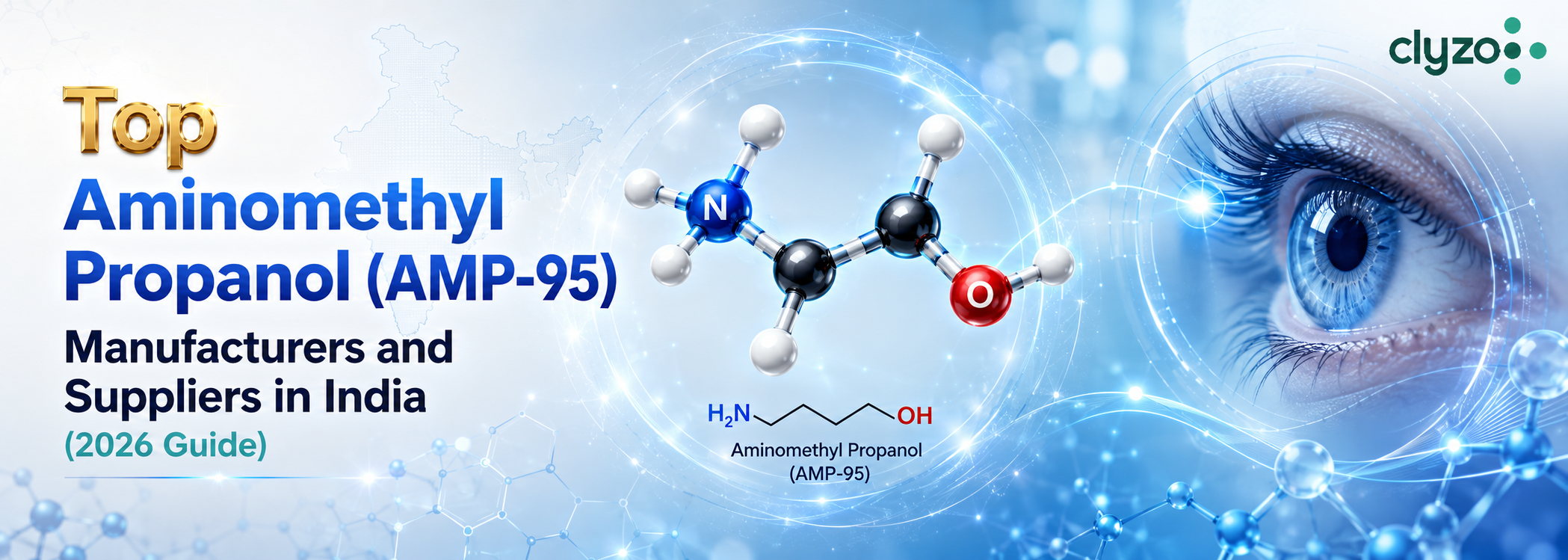
Top AMP-95 (Aminomethyl Propanol) Manufacturers an... ... Top AMP-95 (Aminomethyl Propanol) Manufacturers and Suppliers in India (2026 Guide) Read more
.jpg)
How AMP Works as a pH Buffer in Injectable, Ophtha... ... How AMP Works as a pH Buffer in Injectable, Ophthalmic, and Topical Formulations Read more
.jpg)
AMP vs Other Alkalizing Agents in Pharma Formulati... ... AMP vs Other Alkalizing Agents in Pharma Formulations: TRIS, Triethanolamine, and Sodium Hydroxide Compared Read more
AMP Excipient Safety: Toxicity, Irritation Potenti... ... AMP Excipient Safety: Toxicity, Irritation Potential, and Regulatory Status Read more
Chlorobutanol Preservative Safety: Toxicity Data, ... ... Chlorobutanol Preservative Safety: Toxicity Data, Regulatory Status, and Usage Limits Read more
Top Chlorobutanol Anhydrous Manufacturers and Supp... ... Top Chlorobutanol Anhydrous Manufacturers and Suppliers in India (2026 Guide) Read more
Chlorobutanol as a Preservative in Injectables, Ey... ... Chlorobutanol as a Preservative in Injectables, Eye Drops, and Nasal Sprays Read more
Chlorobutanol Anhydrous vs Hemihydrate: Which Grad... ... Chlorobutanol Anhydrous vs Hemihydrate: Which Grade Should You Choose? Read more
Chlorobutanol Anhydrous Pharmaceutical Excipient: ... ... Chlorobutanol Anhydrous Pharmaceutical Excipient: Uses, Grades, and Sourcing in India Read more
Benzyl Alcohol: A Pharmaceutical Excipient India S... ... Benzyl Alcohol: A Pharmaceutical Excipient India Supplier Guide for Preservative Sourcing Read more
Tyloxapol: A Specialized Pharmaceutical Excipient ... ... Tyloxapol: A Specialized Pharmaceutical Excipient Supplier in India Can Help You Source Correctly Read more
SLS (Sodium Lauryl Sulfate): A Complete Guide for ... ... SLS (Sodium Lauryl Sulfate): A Complete Guide for Pharma Excipient Buyers in India Read more
.jpg)
Polysorbate 80 (PS 80): The Pharmaceutical Excipie... ... Polysorbate 80 (PS 80): The Pharmaceutical Excipient Supplier India Trusts for Surfactant Applications Read more
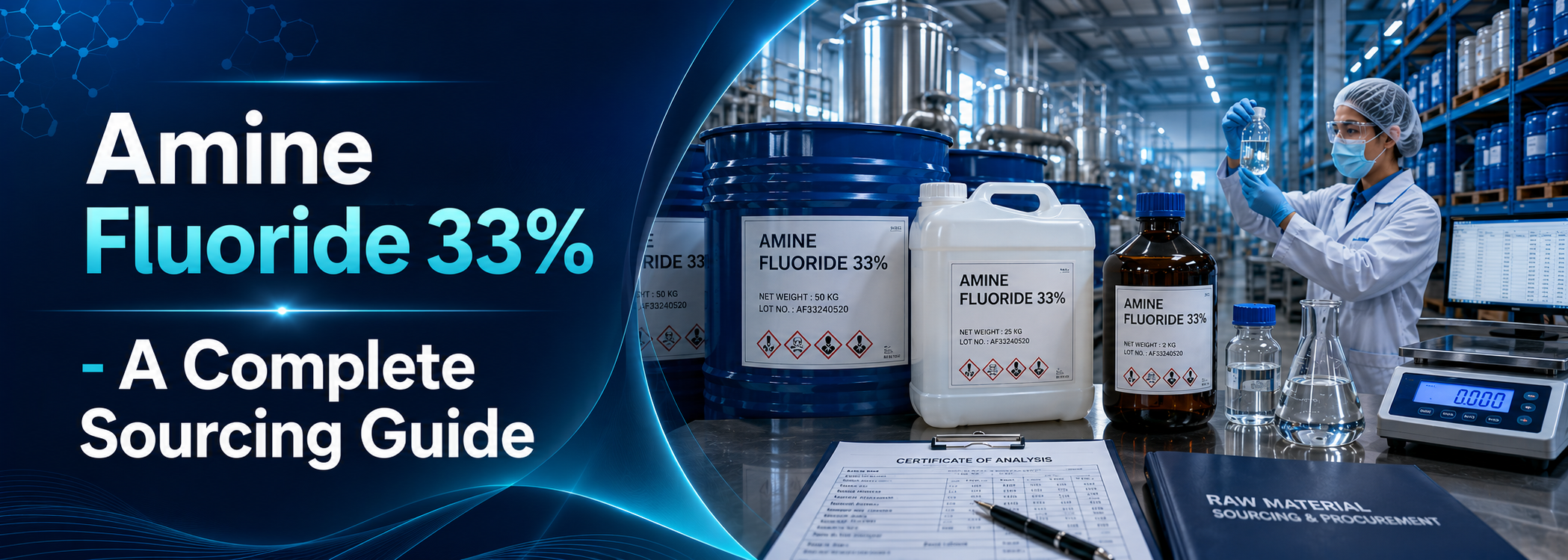
Amine Fluoride 33%: Sourcing Guide for This Pharma... ... Amine Fluoride 33%: Sourcing Guide for This Pharmaceutical Excipient Supplier Ingredient Read more
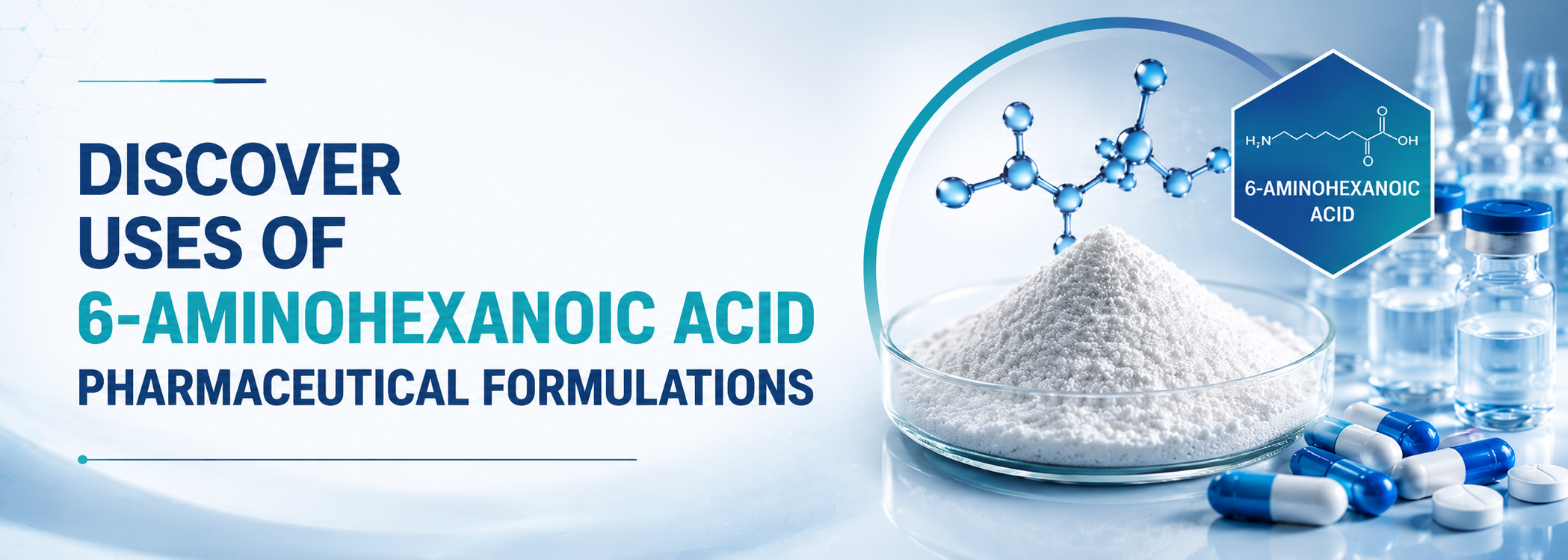
6-Aminohexanoic Acid: Uses in Pharmaceutical Formu... ... 6-Aminohexanoic Acid: Uses in Pharmaceutical Formulations Read more
How to Source Pharmacopoeial-Grade 6-Aminohexanoic... ... How to Source Pharmacopoeial-Grade 6-Aminohexanoic Acid Online in India Read more
6-Aminohexanoic Acid Specifications: What Buyers S... ... 6-Aminohexanoic Acid Specifications: What Buyers Should Check Before Purchase Read more
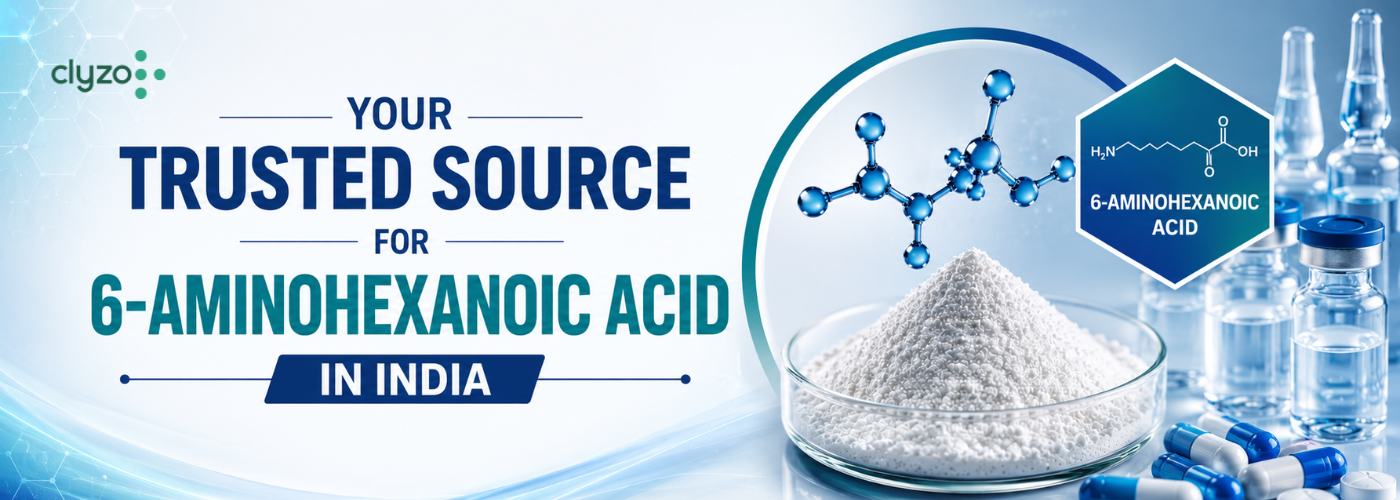
6-Aminohexanoic Acid Supplier in India: A Complete... ... 6-Aminohexanoic Acid Supplier in India: A Complete Sourcing Guide Read more
.png)
L-Arginine Hydrochloride Excipient Supplier in Ind... ... L-Arginine Hydrochloride Excipient Supplier in India Read more



.png)

.png)