Tech-driven pharma ingredients
Ingredient sourcing platform
Regulatory compliance platform
Specialized excipients developed to maintain stability, sterility, and compatibility in injectable formulations, ensuring safety and efficacy in every dose.
Comprehensive solutions supporting every stage of biologics development—formulated for purity, process efficiency, and superior therapeutic performance.
High-purity amino acid excipients engineered to enhance formulation stability, solubility, and bioavailability across a wide range of dosage forms.
Pharma-grade excipients designed with low endotoxin levels to support consistent quality and performance throughout vaccine formulation and production.
A trusted range of plasma-derived materials, Manufactured to meet global standards of purity and compliance.
Pharmaceutical-grade excipients that adhere to leading pharmacopeial monographs, ensuring regulatory readiness and uncompromised quality for global markets.
We collaborate with R&D labs on diverse product developments, transforming innovative ideas into ingredients that meet global quality and regulatory standards.
Expand your global reach with Clyzo’s advanced technology solutions. Maximize capacity utilization, streamline tech transfers, and bring new projects to market faster and more efficiently.
.jpg)
27-07-2026
Getting a pharmaceutical formulation's pH right, and keeping it there through manufacturing, storage, and use, is one of the quieter but more critical parts of drug development. AMP, or 2-amino-2-methyl-1-propanol, is one of the excipients formulators reach for to do exactly this. This article explains the chemistry behind how AMP functions as a pH buffer and neutralizer, and how that function plays out differently across injectable, ophthalmic, and topical dosage forms.
AMP is a primary alkanolamine, meaning it has both an amine group and a hydroxyl (alcohol) group in the same small molecule. The amine group is what gives AMP its functional behavior as a weak base. In solution, this amine group can accept a proton from an acidic species, which is the fundamental proton acceptor mechanism behind nearly everything AMP does in a formulation.
Because this reaction is reversible and depends on the surrounding pH, AMP does not just neutralize acid once and stop working. It continues to shift toward accepting or releasing protons as the surrounding pH changes, which gives it genuine buffering behavior rather than a single, one time neutralization effect.
In parenteral products, pH is tightly linked to both the physical and chemical stability of the active ingredient, as well as patient comfort and tissue compatibility on injection. AMP can be used to adjust and help maintain a target pH range in certain injectable formulations, but this application requires a pharmaceutical grade AMP solution specifically tested for bacterial endotoxins (BET) and microbial limits (MLT), since anything administered directly into the body carries a much stricter quality bar than a topical or oral product.
Unlike TRIS, which has an extensive track record specifically in biologic and protein based parenteral formulations, AMP's use in injectables tends to be more formulation specific, and its selection depends on compatibility testing with the particular active ingredient and other excipients in that formulation.
Eye drops and other ophthalmic preparations require precise pH control, both to maintain the chemical stability of the active ingredient and to minimize irritation on the sensitive ocular surface. A pharmaceutical grade, low endotoxin AMP solution can support pH adjustment in these formulations, again requiring the same bacterial endotoxin and microbial limit testing applied to parenteral grade material, given how closely regulated ophthalmic products are with respect to sterility and impurity control.
Similar to ophthalmic products, nasal formulations require careful pH and isotonicity control to avoid irritating the nasal mucosa. AMP's role here follows the same underlying buffering chemistry, supporting a stable target pH range appropriate for the specific nasal formulation, again under pharmaceutical grade documentation appropriate to this route of administration.
Topical formulations, including creams, gels, and lotions, are where AMP's dual function as both a pH adjuster and emulsion stabilizer becomes especially useful. Many topical gelling agents, such as carbomers, are acidic in their raw form and require neutralization to swell properly and form a usable, stable gel texture. AMP neutralizes these acidic polymers effectively, at typical use levels of roughly 0.2 to 2.0 percent depending on the specific polymer system and target pH, while also helping stabilize the resulting emulsion by supporting a consistent pH environment for other formulation components.
This makes AMP a genuinely multifunctional excipient in topical formulations, contributing to both the initial gel or emulsion formation and its ongoing physical stability over the product's shelf life.
AMP is generally compatible with most surfactants, emulsions, resins, and carbomers, which supports its broad use across formulation types. However, as with any amine containing excipient, formulators should be aware of general amine compatibility considerations, since amines can be incompatible with isocyanates, halogenated organic compounds, peroxides, acidic phenols, epoxides, anhydrides, and acid halides. A formulation compatibility study specific to the other ingredients present remains an important step before finalizing AMP as the pH adjusting agent in a new formulation.
The grade of AMP required scales with the invasiveness and regulatory sensitivity of the dosage form:
Sourcing platforms that clearly document this testing, such as Clyzo's AMP-95 solution tested for BET and MLT, make it easier for formulators to confirm they are sourcing material appropriate for their specific dosage form.
How does AMP raise the pH of a formulation?
AMP's amine group acts as a weak base, accepting protons from acidic components in the formulation, which raises and helps stabilize the overall pH toward a target range.
Can the same AMP grade be used in both topical and injectable formulations?
No, injectable, ophthalmic, and nasal formulations require AMP tested for bacterial endotoxins and microbial limits, a testing requirement that standard topical or cosmetic grade AMP typically does not undergo.
Why is AMP used with carbomers in topical gels?
Carbomers are acidic in their raw form and need to be neutralized to swell into a usable gel structure. AMP's weak base chemistry neutralizes this acidity effectively while also helping stabilize the resulting formulation.
Does AMP have any known incompatibilities?
As an amine containing compound, AMP can be incompatible with certain reactive chemical classes including isocyanates, halogenated organics, peroxides, acidic phenols, epoxides, anhydrides, and acid halides, so formulation specific compatibility testing is recommended.
AMP's function as a pH buffer and neutralizer comes down to straightforward amine chemistry, but its practical value across injectable, ophthalmic, nasal, and topical formulations depends heavily on sourcing the correct grade for the specific route of administration. Formulators should always confirm bacterial endotoxin and microbial limit testing status before using AMP in any parenteral, ophthalmic, or nasal application.
We’d love to hear from you. Please fill out this form.
Ethanol 99% Injectable Grade: USP, Ph.Eur., BP, JP... ... Ethanol 99% Injectable Grade: USP, Ph.Eur., BP, JP & GMP Guide | Clyzo Read more
Ethanol 96% Injectable Grade in India: USP, Ph.Eur... ... Ethanol 96% Injectable Grade in India: USP, Ph.Eur., BP, JP & GMP | Clyzo Read more
Pharma Grade Ethanol: A Complete Guide to Injectab... ... Pharma Grade Ethanol: A Complete Guide to Injectable, USP, Ph.Eur., BP and IPEC Grades Read more
Online Pharma Ingredient Sourcing: A Practical Gui... ... Online Pharma Ingredient Sourcing: A Practical Guide for Buyers Read more
Pharma Raw Material Supplier in India: How to Choo... ... Pharma Raw Material Supplier in India: How to Choose the Right One Read more
Digital Pharma Sourcing in India: How B2B Buyers A... ... Digital Pharma Sourcing in India: How B2B Buyers Are Changing the Way They Source Excipients Read more
.png)
PEG 400 (Polyethylene Glycol 400) Pharmaceutical S... ... PEG 400 (Polyethylene Glycol 400) Pharmaceutical Supplier in India: Complete Guide Read more
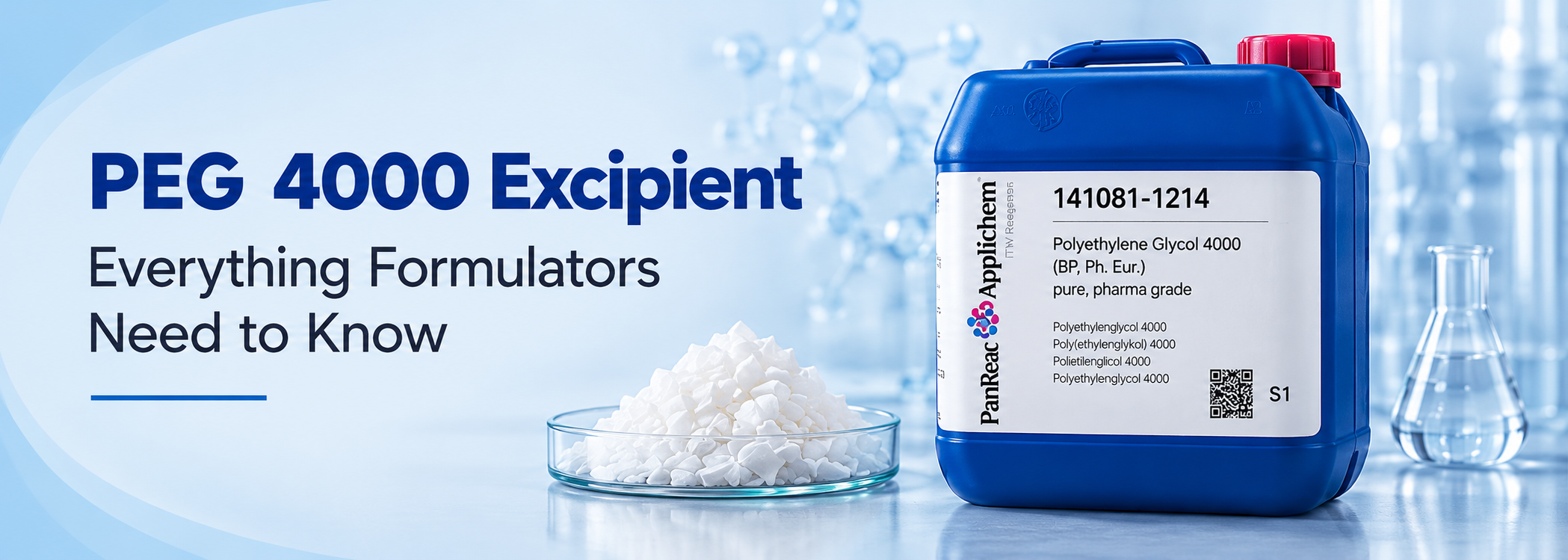
PEG 4000 (Polyethylene Glycol 4000) Pharmaceutical... ... PEG 4000 (Polyethylene Glycol 4000) Pharmaceutical Supplier in India: Complete Guide Read more
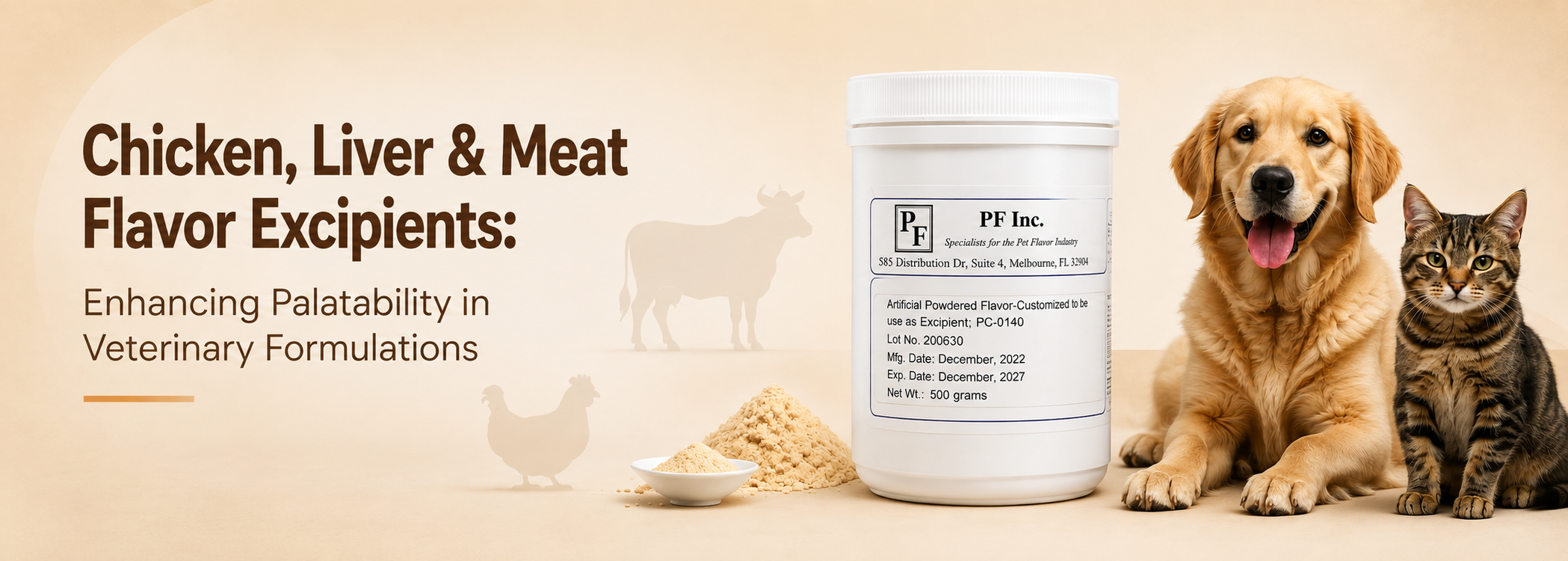
Chicken, Liver, and Meat Flavor Pharmaceutical Exc... ... Chicken, Liver, and Meat Flavor Pharmaceutical Excipients: The Backbone of Veterinary Medicine Compliance in India Read more
Polysorbate 80 Pharmaceutical Grade Supplier India... ... Polysorbate 80 Pharmaceutical Grade Supplier India: The Complete Sourcing Guide Read more
Polysorbate 80 Pharmaceutical Grade India: 10 Fact... ... Polysorbate 80 Pharmaceutical Grade India: 10 Facts Every Buyer Should Know Read more
PS 80 Excipient Supplier India: A 10 Point Buyer C... ... PS 80 Excipient Supplier India: A 10 Point Buyer Checklist Read more
Polysorbate 80 Injectable Grade Excipient: 10 Fact... ... Polysorbate 80 Injectable Grade Excipient: 10 Facts You Need to Know Read more
Polysorbate 80 USP NF Bulk Supplier: A 10 Point So... ... Polysorbate 80 USP NF Bulk Supplier: A 10 Point Sourcing Checklist Read more
Polysorbate 80 Pharmaceutical Grade India: What Bu... ... Polysorbate 80 Pharmaceutical Grade India: What Buyers Need to Know Read more
PS 80 Excipient Supplier India: How to Choose the ... ... PS 80 Excipient Supplier India: How to Choose the Right Partner Read more
Polysorbate 80 Injectable Grade Excipient: A Sourc... ... Polysorbate 80 Injectable Grade Excipient: A Sourcing Guide for Parenteral Formulations Read more
Polysorbate 80 USP NF Bulk Supplier: What to Know ... ... Polysorbate 80 USP NF Bulk Supplier: What to Know Before You Scale Up Read more
Top AMP-95 (Aminomethyl Propanol) Manufacturers an... ... Top AMP-95 (Aminomethyl Propanol) Manufacturers and Suppliers in India (2026 Guide) Read more
.jpg)
AMP vs Other Alkalizing Agents in Pharma Formulati... ... AMP vs Other Alkalizing Agents in Pharma Formulations: TRIS, Triethanolamine, and Sodium Hydroxide Compared Read more
AMP Excipient Safety: Toxicity, Irritation Potenti... ... AMP Excipient Safety: Toxicity, Irritation Potential, and Regulatory Status Read more
Chlorobutanol Preservative Safety: Toxicity Data, ... ... Chlorobutanol Preservative Safety: Toxicity Data, Regulatory Status, and Usage Limits Read more
Top Chlorobutanol Anhydrous Manufacturers and Supp... ... Top Chlorobutanol Anhydrous Manufacturers and Suppliers in India (2026 Guide) Read more
Chlorobutanol as a Preservative in Injectables, Ey... ... Chlorobutanol as a Preservative in Injectables, Eye Drops, and Nasal Sprays Read more
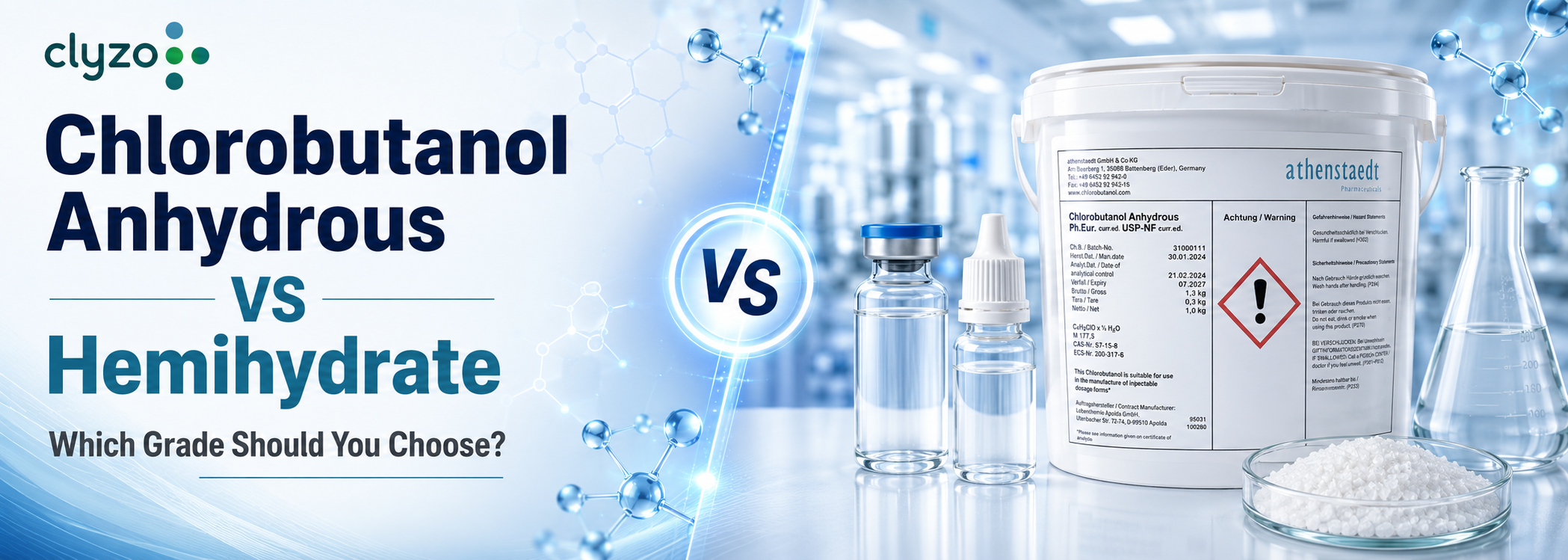
Chlorobutanol Anhydrous vs Hemihydrate: Which Grad... ... Chlorobutanol Anhydrous vs Hemihydrate: Which Grade Should You Choose? Read more
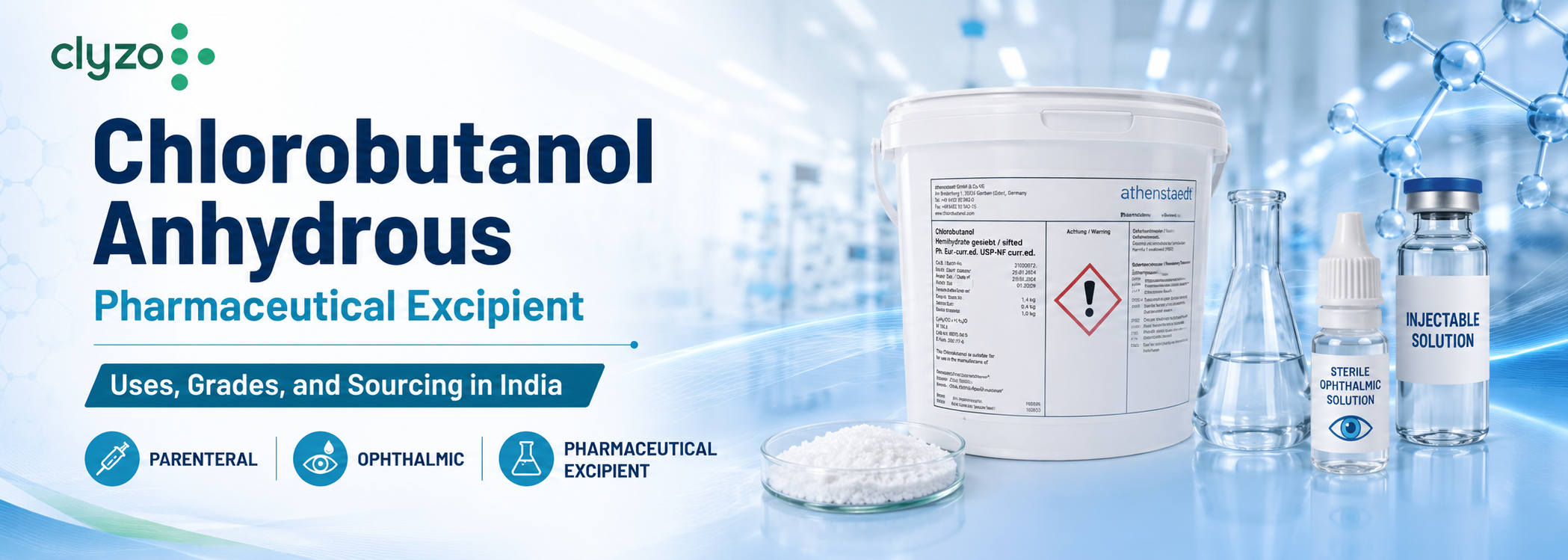
Chlorobutanol Anhydrous Pharmaceutical Excipient: ... ... Chlorobutanol Anhydrous Pharmaceutical Excipient: Uses, Grades, and Sourcing in India Read more
Benzyl Alcohol: A Pharmaceutical Excipient India S... ... Benzyl Alcohol: A Pharmaceutical Excipient India Supplier Guide for Preservative Sourcing Read more
Tyloxapol: A Specialized Pharmaceutical Excipient ... ... Tyloxapol: A Specialized Pharmaceutical Excipient Supplier in India Can Help You Source Correctly Read more
SLS (Sodium Lauryl Sulfate): A Complete Guide for ... ... SLS (Sodium Lauryl Sulfate): A Complete Guide for Pharma Excipient Buyers in India Read more
.jpg)
Polysorbate 80 (PS 80): The Pharmaceutical Excipie... ... Polysorbate 80 (PS 80): The Pharmaceutical Excipient Supplier India Trusts for Surfactant Applications Read more
Amine Fluoride 33%: Sourcing Guide for This Pharma... ... Amine Fluoride 33%: Sourcing Guide for This Pharmaceutical Excipient Supplier Ingredient Read more
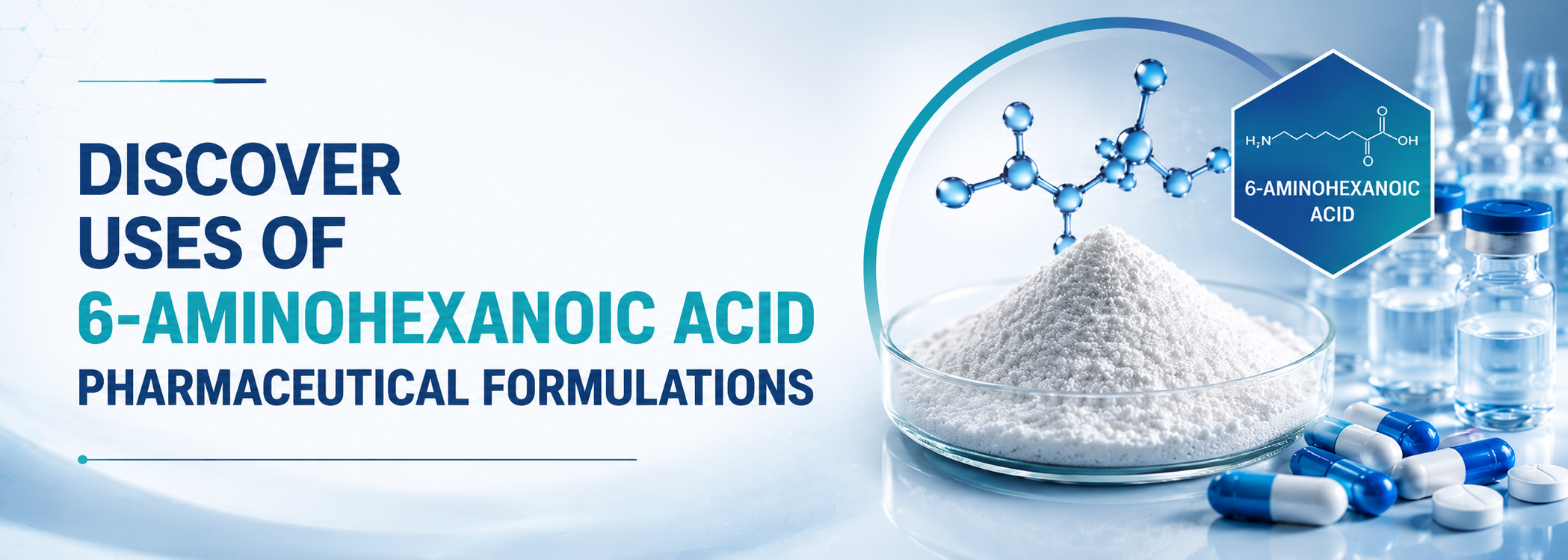
6-Aminohexanoic Acid: Uses in Pharmaceutical Formu... ... 6-Aminohexanoic Acid: Uses in Pharmaceutical Formulations Read more
How to Source Pharmacopoeial-Grade 6-Aminohexanoic... ... How to Source Pharmacopoeial-Grade 6-Aminohexanoic Acid Online in India Read more
6-Aminohexanoic Acid Specifications: What Buyers S... ... 6-Aminohexanoic Acid Specifications: What Buyers Should Check Before Purchase Read more
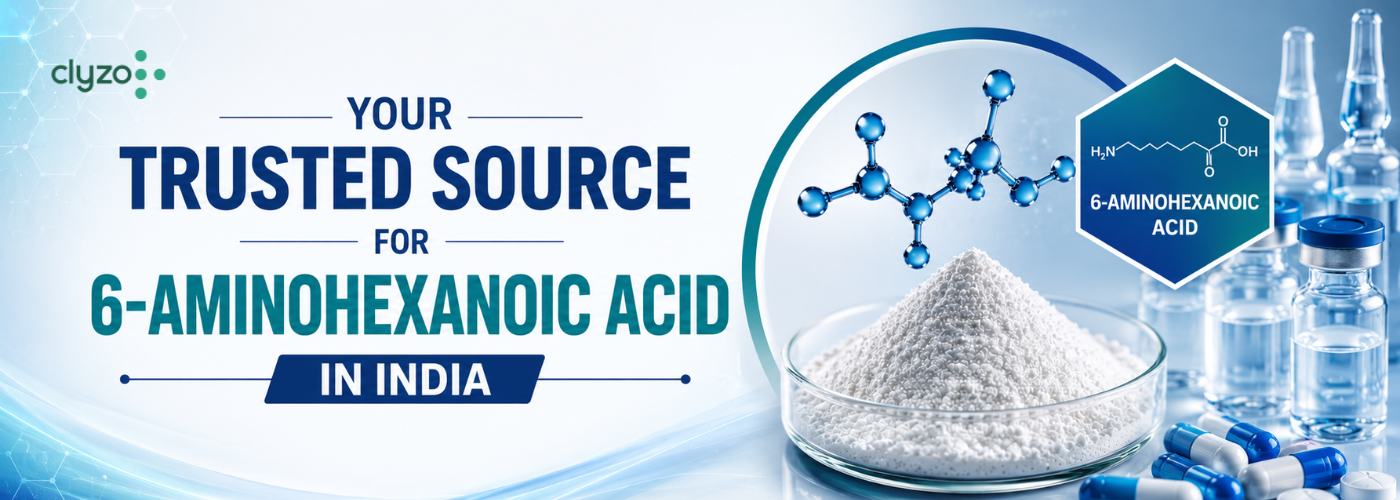
6-Aminohexanoic Acid Supplier in India: A Complete... ... 6-Aminohexanoic Acid Supplier in India: A Complete Sourcing Guide Read more
.png)
L-Arginine Hydrochloride Excipient Supplier in Ind... ... L-Arginine Hydrochloride Excipient Supplier in India Read more



.png)

.png)