Tech-driven pharma ingredients
Ingredient sourcing platform
Regulatory compliance platform
Specialized excipients developed to maintain stability, sterility, and compatibility in injectable formulations, ensuring safety and efficacy in every dose.
Comprehensive solutions supporting every stage of biologics development—formulated for purity, process efficiency, and superior therapeutic performance.
High-purity amino acid excipients engineered to enhance formulation stability, solubility, and bioavailability across a wide range of dosage forms.
Pharma-grade excipients designed with low endotoxin levels to support consistent quality and performance throughout vaccine formulation and production.
A trusted range of plasma-derived materials, Manufactured to meet global standards of purity and compliance.
Pharmaceutical-grade excipients that adhere to leading pharmacopeial monographs, ensuring regulatory readiness and uncompromised quality for global markets.
We collaborate with R&D labs on diverse product developments, transforming innovative ideas into ingredients that meet global quality and regulatory standards.
Expand your global reach with Clyzo’s advanced technology solutions. Maximize capacity utilization, streamline tech transfers, and bring new projects to market faster and more efficiently.
.jpg)
27-07-2026
Formulators adjusting the pH of a pharmaceutical product have several excipient options to choose from, and AMP, or 2-amino-2-methyl-1-propanol, is just one of them. TRIS (tromethamine), triethanolamine, and sodium hydroxide are among the other commonly used alkalizing agents, and each has different chemical behavior, compatibility considerations, and typical use cases. This article compares AMP against these alternatives to help formulators choose the right pH adjusting excipient for a given formulation.
Many active pharmaceutical ingredients and functional excipients, such as carbomers and other gelling polymers, only perform correctly within a specific pH range. An alkalizing or pH adjusting excipient is added specifically to shift and hold the formulation within that target range, which affects everything from gel formation and viscosity to the chemical stability of the active ingredient itself.
Choosing between AMP, TRIS, triethanolamine, and sodium hydroxide generally comes down to buffering strength, compatibility with other formulation components, and the specific dosage form being developed.
AMP works as a weak base and proton acceptor, valued in pharmaceutical formulations for its ability to neutralize acidic polymers and stabilize emulsions across topical, oral, and parenteral dosage forms. Its use level is typically modest, often in a range of roughly 0.2 to 2.0 percent depending on the target pH and the polymer system involved. AMP is compatible with most surfactants, emulsions, resins, and carbomers, making it a flexible choice across a range of formulation types. For parenteral applications, a pharmaceutical grade AMP solution tested for bacterial endotoxins and microbial limits is required.
TRIS, chemically known as tromethamine, is one of the most widely used buffering agents in biopharmaceutical and injectable formulations, particularly for protein and biologic drugs. It offers strong, well characterized buffering capacity in the physiological pH range, which makes it a preferred choice specifically where precise pH control around physiological pH (roughly 7 to 9) is critical to protein stability. TRIS is extensively documented in biologics formulation literature and is often the default choice for parenteral biologic products specifically because of this buffering behavior.
Triethanolamine has a long history of use as a pH adjusting agent, particularly in topical and cosmetic formulations, where it neutralizes acidic polymers such as carbomers to form clear, stable gels. It has been used for decades in topical pharmaceutical and cosmetic products, though in recent years some formulators have shifted away from it in certain product categories due to regulatory scrutiny around potential nitrosamine formation when triethanolamine is combined with certain nitrosating agents under specific conditions. This has made some formulators reconsider triethanolamine in favor of alternatives such as AMP in newer formulations, particularly where nitrosating agents may be present elsewhere in the product.
Sodium hydroxide is a strong, fully dissociating base, in contrast to AMP, TRIS, and triethanolamine, which are all comparatively weak bases. This means sodium hydroxide produces a much sharper, more immediate pH shift per unit added, which can be an advantage for simple pH adjustment in solutions where fine buffering capacity is less important than reaching a target pH quickly. However, its strength also means it offers less inherent buffering capacity to resist pH drift over time compared to a weak base or amine based buffer system, and it requires more careful, controlled addition to avoid overshooting the target pH.
| Excipient | Base Strength | Typical Use Case | Key Consideration |
| AMP | Weak base | Topical, oral, parenteral pH adjustment and emulsifier stabilization | Requires parenteral grade with BET/MLT testing for injectables |
| TRIS (Tromethamine) | Weak base, strong buffer | Biologic and protein based injectable formulations | Well documented for physiological pH buffering |
| Triethanolamine | Weak base | Topical gels and creams, traditional carbomer neutralizer | Nitrosamine formation risk in certain combinations |
| Sodium Hydroxide | Strong base | Rapid, simple pH adjustment | Less inherent buffering capacity, requires careful dosing |
The right choice depends on the dosage form and formulation priorities:
Regardless of which alkalizing agent a formulation ultimately uses, sourcing the correct grade is essential. For AMP specifically, parenteral applications require a solution tested for bacterial endotoxins (BET) and microbial limits (MLT), not a generic cosmetic or industrial grade product. Clyzo lists AMP-95 specifically tested for BET and MLT, which is the documentation needed to confirm suitability for pharmaceutical use in injectable, ophthalmic, or nasal formulations.
Is AMP stronger or weaker than sodium hydroxide as a base?
AMP is a weak base, while sodium hydroxide is a strong, fully dissociating base, which means sodium hydroxide produces a sharper pH change per unit added but offers less inherent buffering capacity than AMP.
Why is TRIS preferred over AMP in many biologic drug formulations?
TRIS has an extensive, well characterized track record specifically for buffering biologic and protein based formulations around physiological pH, making it the more established default choice in that specific category, though AMP is used in various other pharmaceutical dosage forms.
Is triethanolamine still used in pharmaceutical formulations?
Yes, though some formulators have shifted toward alternatives such as AMP in certain product categories due to regulatory attention on potential nitrosamine formation when triethanolamine combines with specific nitrosating agents.
Can AMP be used in the same formulation as carbomers?
Yes, AMP is compatible with carbomers and is commonly used to neutralize these acidic polymers to form stable gel formulations.
AMP, TRIS, triethanolamine, and sodium hydroxide each bring different buffering strength and formulation compatibility profiles to pharmaceutical pH adjustment. AMP stands out for its multifunctional role as both a pH adjuster and emulsifier stabilizer across topical, oral, and parenteral formulations, making it a strong option where a single excipient needs to serve more than one formulation function, provided the correct pharmaceutical or parenteral grade is sourced for the intended dosage form.
We’d love to hear from you. Please fill out this form.
Ethanol 99% Injectable Grade: USP, Ph.Eur., BP, JP... ... Ethanol 99% Injectable Grade: USP, Ph.Eur., BP, JP & GMP Guide | Clyzo Read more
Ethanol 96% Injectable Grade in India: USP, Ph.Eur... ... Ethanol 96% Injectable Grade in India: USP, Ph.Eur., BP, JP & GMP | Clyzo Read more
Pharma Grade Ethanol: A Complete Guide to Injectab... ... Pharma Grade Ethanol: A Complete Guide to Injectable, USP, Ph.Eur., BP and IPEC Grades Read more
Online Pharma Ingredient Sourcing: A Practical Gui... ... Online Pharma Ingredient Sourcing: A Practical Guide for Buyers Read more
Pharma Raw Material Supplier in India: How to Choo... ... Pharma Raw Material Supplier in India: How to Choose the Right One Read more
Digital Pharma Sourcing in India: How B2B Buyers A... ... Digital Pharma Sourcing in India: How B2B Buyers Are Changing the Way They Source Excipients Read more
.png)
PEG 400 (Polyethylene Glycol 400) Pharmaceutical S... ... PEG 400 (Polyethylene Glycol 400) Pharmaceutical Supplier in India: Complete Guide Read more
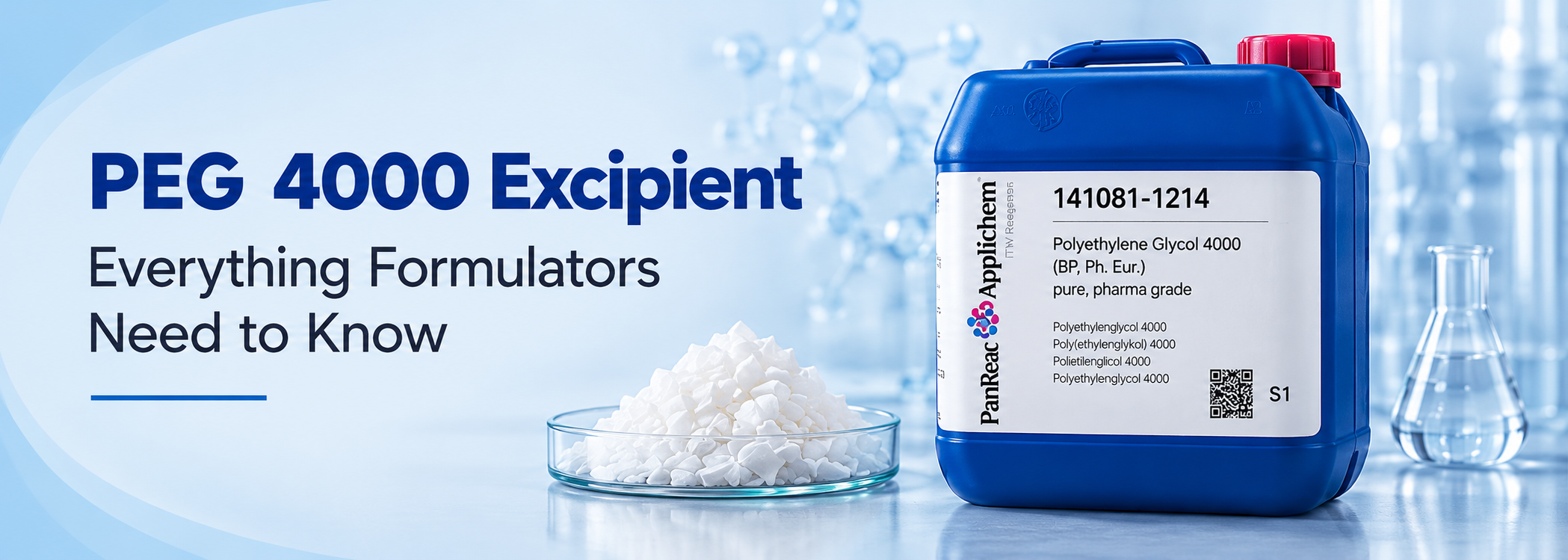
PEG 4000 (Polyethylene Glycol 4000) Pharmaceutical... ... PEG 4000 (Polyethylene Glycol 4000) Pharmaceutical Supplier in India: Complete Guide Read more
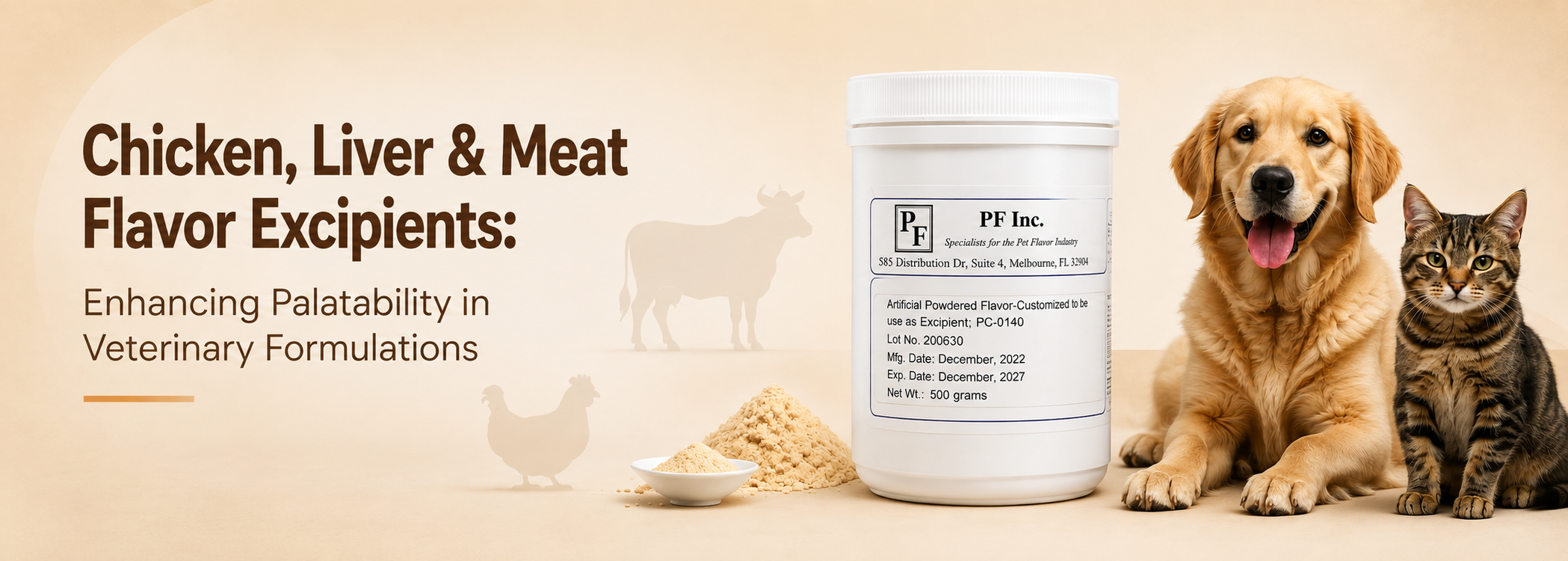
Chicken, Liver, and Meat Flavor Pharmaceutical Exc... ... Chicken, Liver, and Meat Flavor Pharmaceutical Excipients: The Backbone of Veterinary Medicine Compliance in India Read more
Polysorbate 80 Pharmaceutical Grade Supplier India... ... Polysorbate 80 Pharmaceutical Grade Supplier India: The Complete Sourcing Guide Read more
Polysorbate 80 Pharmaceutical Grade India: 10 Fact... ... Polysorbate 80 Pharmaceutical Grade India: 10 Facts Every Buyer Should Know Read more
PS 80 Excipient Supplier India: A 10 Point Buyer C... ... PS 80 Excipient Supplier India: A 10 Point Buyer Checklist Read more
Polysorbate 80 Injectable Grade Excipient: 10 Fact... ... Polysorbate 80 Injectable Grade Excipient: 10 Facts You Need to Know Read more
Polysorbate 80 USP NF Bulk Supplier: A 10 Point So... ... Polysorbate 80 USP NF Bulk Supplier: A 10 Point Sourcing Checklist Read more
Polysorbate 80 Pharmaceutical Grade India: What Bu... ... Polysorbate 80 Pharmaceutical Grade India: What Buyers Need to Know Read more
PS 80 Excipient Supplier India: How to Choose the ... ... PS 80 Excipient Supplier India: How to Choose the Right Partner Read more
Polysorbate 80 Injectable Grade Excipient: A Sourc... ... Polysorbate 80 Injectable Grade Excipient: A Sourcing Guide for Parenteral Formulations Read more
Polysorbate 80 USP NF Bulk Supplier: What to Know ... ... Polysorbate 80 USP NF Bulk Supplier: What to Know Before You Scale Up Read more
Top AMP-95 (Aminomethyl Propanol) Manufacturers an... ... Top AMP-95 (Aminomethyl Propanol) Manufacturers and Suppliers in India (2026 Guide) Read more
.jpg)
How AMP Works as a pH Buffer in Injectable, Ophtha... ... How AMP Works as a pH Buffer in Injectable, Ophthalmic, and Topical Formulations Read more
AMP Excipient Safety: Toxicity, Irritation Potenti... ... AMP Excipient Safety: Toxicity, Irritation Potential, and Regulatory Status Read more
Chlorobutanol Preservative Safety: Toxicity Data, ... ... Chlorobutanol Preservative Safety: Toxicity Data, Regulatory Status, and Usage Limits Read more
Top Chlorobutanol Anhydrous Manufacturers and Supp... ... Top Chlorobutanol Anhydrous Manufacturers and Suppliers in India (2026 Guide) Read more
Chlorobutanol as a Preservative in Injectables, Ey... ... Chlorobutanol as a Preservative in Injectables, Eye Drops, and Nasal Sprays Read more
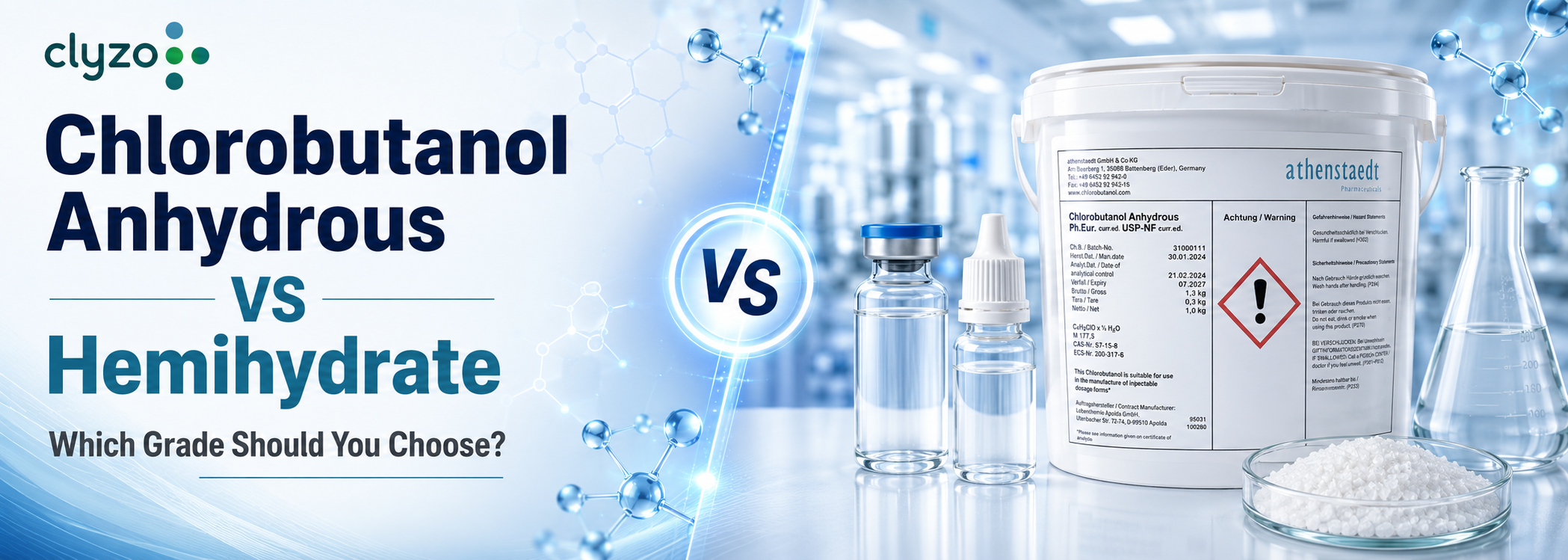
Chlorobutanol Anhydrous vs Hemihydrate: Which Grad... ... Chlorobutanol Anhydrous vs Hemihydrate: Which Grade Should You Choose? Read more
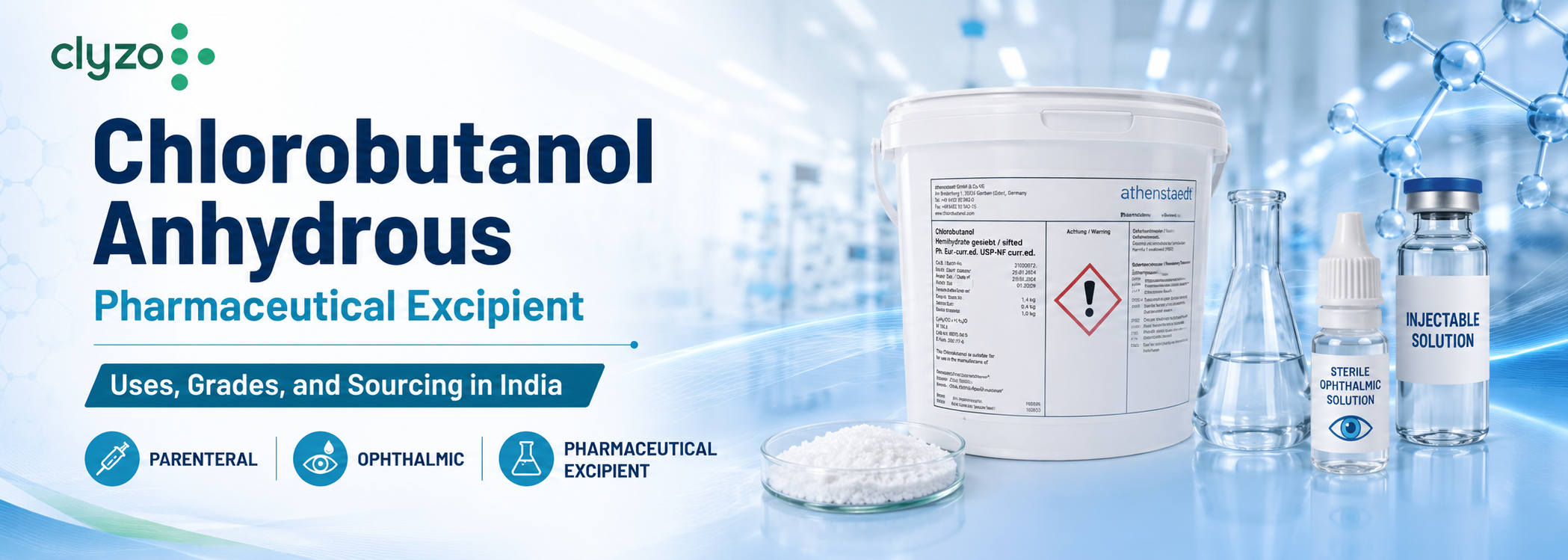
Chlorobutanol Anhydrous Pharmaceutical Excipient: ... ... Chlorobutanol Anhydrous Pharmaceutical Excipient: Uses, Grades, and Sourcing in India Read more
Benzyl Alcohol: A Pharmaceutical Excipient India S... ... Benzyl Alcohol: A Pharmaceutical Excipient India Supplier Guide for Preservative Sourcing Read more
Tyloxapol: A Specialized Pharmaceutical Excipient ... ... Tyloxapol: A Specialized Pharmaceutical Excipient Supplier in India Can Help You Source Correctly Read more
SLS (Sodium Lauryl Sulfate): A Complete Guide for ... ... SLS (Sodium Lauryl Sulfate): A Complete Guide for Pharma Excipient Buyers in India Read more
.jpg)
Polysorbate 80 (PS 80): The Pharmaceutical Excipie... ... Polysorbate 80 (PS 80): The Pharmaceutical Excipient Supplier India Trusts for Surfactant Applications Read more
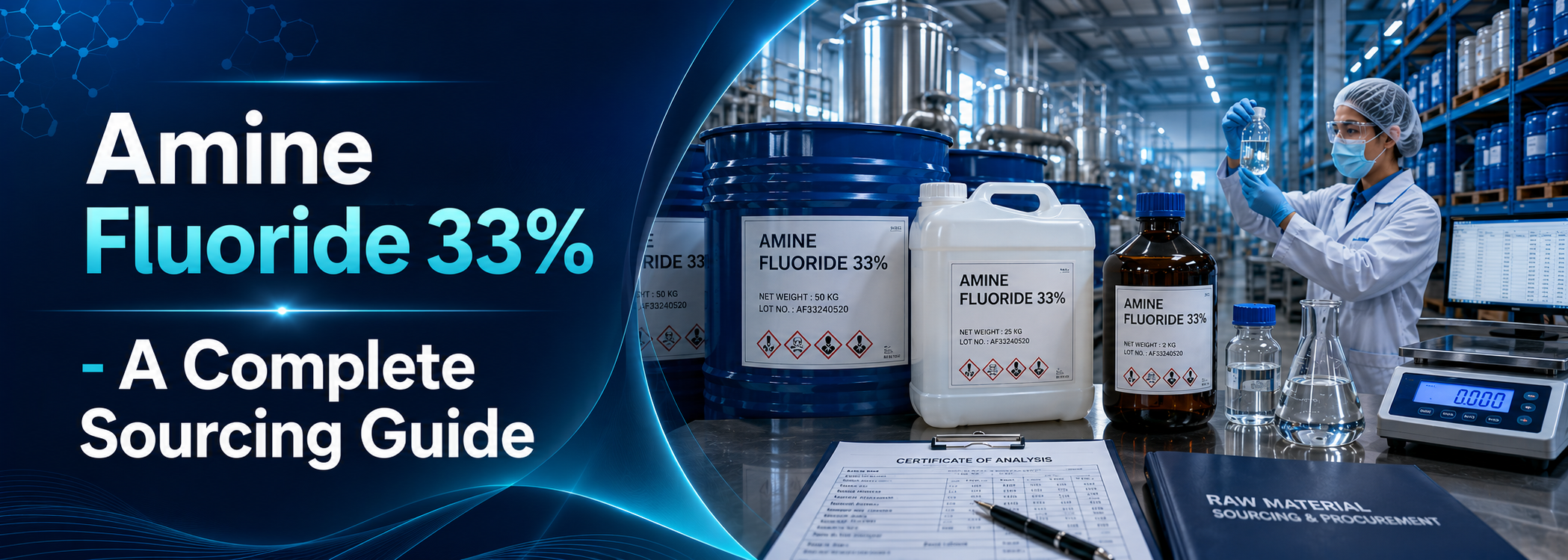
Amine Fluoride 33%: Sourcing Guide for This Pharma... ... Amine Fluoride 33%: Sourcing Guide for This Pharmaceutical Excipient Supplier Ingredient Read more
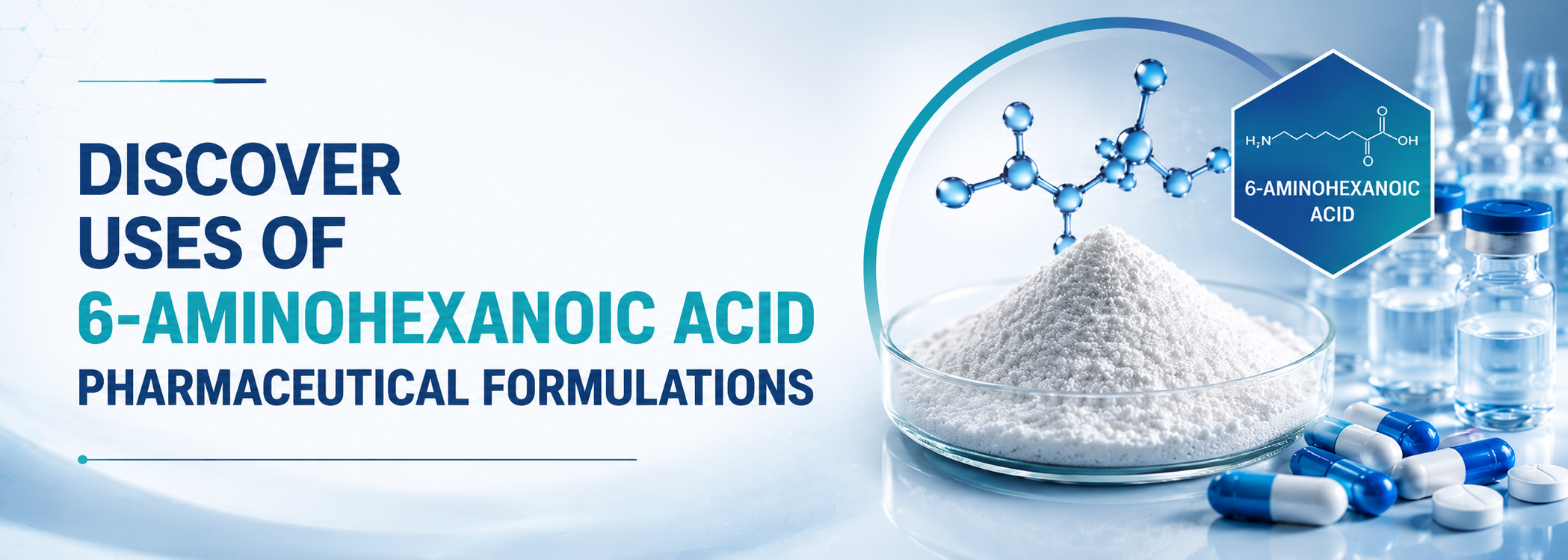
6-Aminohexanoic Acid: Uses in Pharmaceutical Formu... ... 6-Aminohexanoic Acid: Uses in Pharmaceutical Formulations Read more
How to Source Pharmacopoeial-Grade 6-Aminohexanoic... ... How to Source Pharmacopoeial-Grade 6-Aminohexanoic Acid Online in India Read more
6-Aminohexanoic Acid Specifications: What Buyers S... ... 6-Aminohexanoic Acid Specifications: What Buyers Should Check Before Purchase Read more
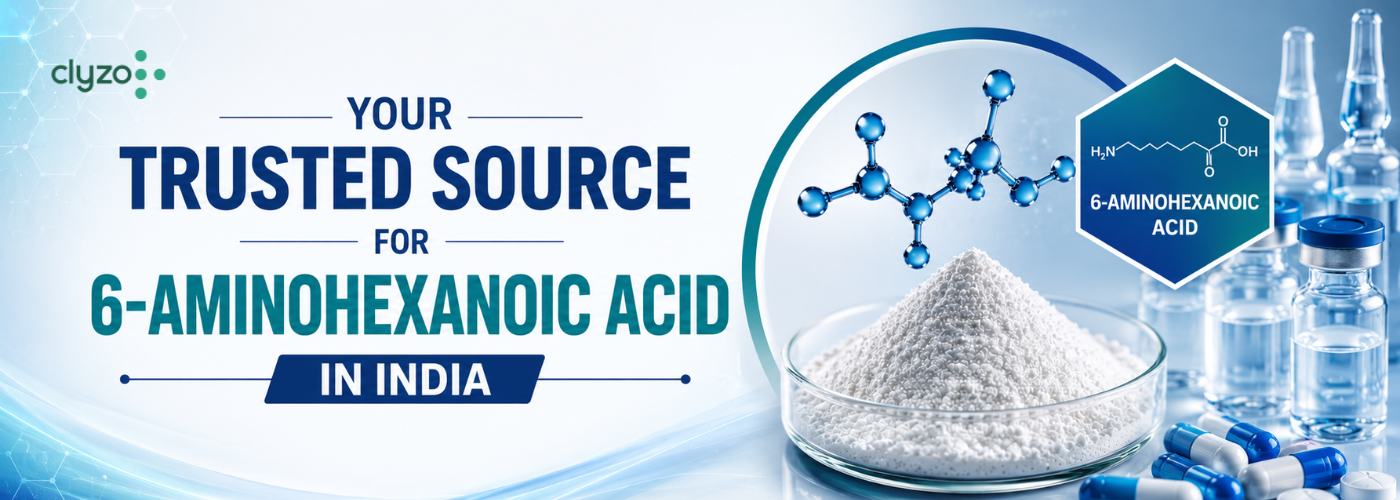
6-Aminohexanoic Acid Supplier in India: A Complete... ... 6-Aminohexanoic Acid Supplier in India: A Complete Sourcing Guide Read more
.png)
L-Arginine Hydrochloride Excipient Supplier in Ind... ... L-Arginine Hydrochloride Excipient Supplier in India Read more



.png)

.png)