Tech-driven pharma ingredients
Ingredient sourcing platform
Regulatory compliance platform
Specialized excipients developed to maintain stability, sterility, and compatibility in injectable formulations, ensuring safety and efficacy in every dose.
Comprehensive solutions supporting every stage of biologics development—formulated for purity, process efficiency, and superior therapeutic performance.
High-purity amino acid excipients engineered to enhance formulation stability, solubility, and bioavailability across a wide range of dosage forms.
Pharma-grade excipients designed with low endotoxin levels to support consistent quality and performance throughout vaccine formulation and production.
A trusted range of plasma-derived materials, Manufactured to meet global standards of purity and compliance.
Pharmaceutical-grade excipients that adhere to leading pharmacopeial monographs, ensuring regulatory readiness and uncompromised quality for global markets.
We collaborate with R&D labs on diverse product developments, transforming innovative ideas into ingredients that meet global quality and regulatory standards.
Expand your global reach with Clyzo’s advanced technology solutions. Maximize capacity utilization, streamline tech transfers, and bring new projects to market faster and more efficiently.
27-07-2026
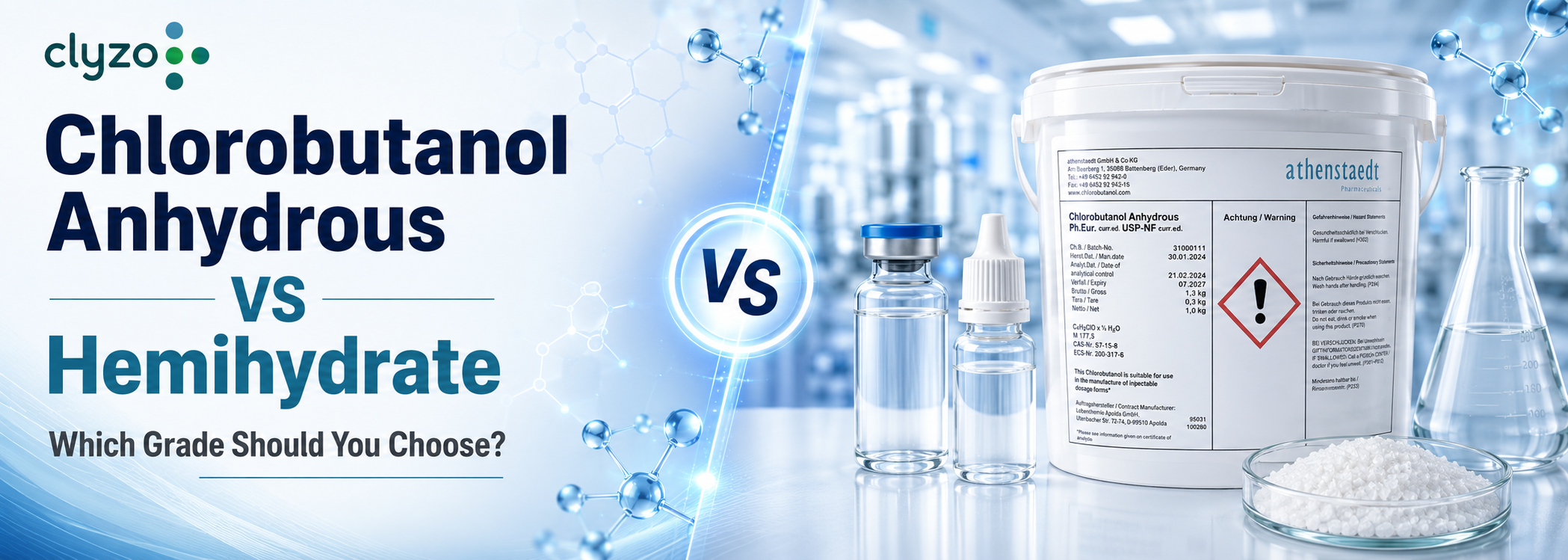
Chlorobutanol is available commercially in two distinct forms: anhydrous and hemihydrate. Both are pharmacopeial grade materials with the same active molecule and the same core antimicrobial preservative function, but they are not identical in physical behavior. Procurement teams and formulators frequently need to decide which form fits a given product, and getting this choice wrong can create avoidable processing or stability issues. This article compares both forms directly so you can make an informed sourcing decision.
Chlorobutanol hemihydrate contains half a molecule of water of crystallization bound within its crystal structure, represented chemically as C4H7Cl3O times one half H2O. Chlorobutanol anhydrous contains no bound water at all. The active molecule, 1,1,1-trichloro-2-methyl-2-propanol, is identical in both cases. What differs is the crystal form and the associated physical properties that come with it.
One of the most commonly cited differences between the two forms is melting point:
This roughly 19 degree difference is significant for manufacturing processes that involve heating steps, since it affects how each form behaves during dissolution, blending, or thermal processing. The anhydrous form's higher melting point and generally greater thermal stability make it the more suitable choice for formulations or processes involving elevated temperatures.
Because chlorobutanol hemihydrate carries bound water within its structure, it introduces a small but sometimes meaningful amount of water into a formulation, even before any additional water is added as a solvent or vehicle. For most aqueous formulations, this is inconsequential since water is already the primary vehicle. However, for anhydrous or non-aqueous formulations, including certain oil based or non-aqueous injectable vehicles, introducing water through the hemihydrate form of the preservative itself can be undesirable, potentially affecting the stability of moisture sensitive active ingredients or excipients elsewhere in the formulation.
In these water sensitive formulations, chlorobutanol anhydrous is the more appropriate choice, since it does not introduce any additional water of crystallization into the finished product.
Both forms share broadly similar solubility characteristics, being soluble in water, alcohol, glycerol, ether, and chloroform, with a characteristic camphor like odor and taste. In practice, the hemihydrate form is often considered somewhat easier to process at lower temperatures given its lower melting point, which can be an advantage in certain manufacturing setups where minimizing processing temperature is a priority for the overall formulation, not just the preservative itself.
Different pharmacopeias recognize the two forms differently. Some pharmacopeias specify chlorobutanol with its water of crystallization (the hemihydrate form) as the default reference standard, while others, including the US National Formulary, separately recognize the anhydrous form. When sourcing chlorobutanol for a specific regulatory market, confirm which form and which specific monograph applies to your intended filing, since a formulation validated against one form's specification may require additional bridging data if switched to the other.
A practical decision framework looks like this:
Choose anhydrous chlorobutanol when:
Choose hemihydrate chlorobutanol when:
Since formulation requirements can differ from one product to another, many pharmaceutical manufacturers need access to both anhydrous and hemihydrate chlorobutanol from the same trusted supply chain, rather than qualifying two separate vendors. Working with a supplier or sourcing platform that clearly distinguishes between the two forms in its documentation, rather than listing chlorobutanol generically, reduces the risk of receiving the wrong grade against a formulation specification. Clyzo lists chlorobutanol excipient options with supplier level detail, which helps confirm the exact form and grade before ordering.
Can chlorobutanol anhydrous and hemihydrate be substituted for each other directly?
Not without review, since the water content, melting point, and in some cases the pharmacopeial reference standard differ between the two forms, which can affect formulation stability and regulatory alignment if substituted without proper evaluation.
Which form has a longer history of pharmacopeial recognition?
Both forms have long histories of use, though different pharmacopeias historically defaulted to different forms as their primary reference standard, which is why confirming the applicable monograph for your target market matters.
Does the water content in hemihydrate chlorobutanol affect potency?
No, the active antimicrobial molecule is identical in both forms. The water of crystallization affects physical properties like melting point and formulation water content, not the intrinsic antimicrobial activity of the compound itself.
Is one form more expensive than the other?
Pricing can vary by supplier and form, often related to manufacturing complexity and regional availability rather than any inherent difference in raw material cost, so it is worth comparing quotes for the specific form you need rather than assuming one is uniformly cheaper.
Chlorobutanol anhydrous and hemihydrate share the same active preservative molecule but differ meaningfully in melting point, water content, and suitability for water sensitive formulations. Choosing the right form should be based on your specific formulation's water sensitivity, processing temperature requirements, and target pharmacopeial standard, not simply on whichever grade a supplier happens to have in stock.
We’d love to hear from you. Please fill out this form.
Ethanol 99% Injectable Grade: USP, Ph.Eur., BP, JP... ... Ethanol 99% Injectable Grade: USP, Ph.Eur., BP, JP & GMP Guide | Clyzo Read more
Ethanol 96% Injectable Grade in India: USP, Ph.Eur... ... Ethanol 96% Injectable Grade in India: USP, Ph.Eur., BP, JP & GMP | Clyzo Read more
Pharma Grade Ethanol: A Complete Guide to Injectab... ... Pharma Grade Ethanol: A Complete Guide to Injectable, USP, Ph.Eur., BP and IPEC Grades Read more
Online Pharma Ingredient Sourcing: A Practical Gui... ... Online Pharma Ingredient Sourcing: A Practical Guide for Buyers Read more
Pharma Raw Material Supplier in India: How to Choo... ... Pharma Raw Material Supplier in India: How to Choose the Right One Read more
Digital Pharma Sourcing in India: How B2B Buyers A... ... Digital Pharma Sourcing in India: How B2B Buyers Are Changing the Way They Source Excipients Read more
.png)
PEG 400 (Polyethylene Glycol 400) Pharmaceutical S... ... PEG 400 (Polyethylene Glycol 400) Pharmaceutical Supplier in India: Complete Guide Read more
PEG 4000 (Polyethylene Glycol 4000) Pharmaceutical... ... PEG 4000 (Polyethylene Glycol 4000) Pharmaceutical Supplier in India: Complete Guide Read more
Chicken, Liver, and Meat Flavor Pharmaceutical Exc... ... Chicken, Liver, and Meat Flavor Pharmaceutical Excipients: The Backbone of Veterinary Medicine Compliance in India Read more
Polysorbate 80 Pharmaceutical Grade Supplier India... ... Polysorbate 80 Pharmaceutical Grade Supplier India: The Complete Sourcing Guide Read more
Polysorbate 80 Pharmaceutical Grade India: 10 Fact... ... Polysorbate 80 Pharmaceutical Grade India: 10 Facts Every Buyer Should Know Read more
PS 80 Excipient Supplier India: A 10 Point Buyer C... ... PS 80 Excipient Supplier India: A 10 Point Buyer Checklist Read more
Polysorbate 80 Injectable Grade Excipient: 10 Fact... ... Polysorbate 80 Injectable Grade Excipient: 10 Facts You Need to Know Read more
Polysorbate 80 USP NF Bulk Supplier: A 10 Point So... ... Polysorbate 80 USP NF Bulk Supplier: A 10 Point Sourcing Checklist Read more
Polysorbate 80 Pharmaceutical Grade India: What Bu... ... Polysorbate 80 Pharmaceutical Grade India: What Buyers Need to Know Read more
PS 80 Excipient Supplier India: How to Choose the ... ... PS 80 Excipient Supplier India: How to Choose the Right Partner Read more
Polysorbate 80 Injectable Grade Excipient: A Sourc... ... Polysorbate 80 Injectable Grade Excipient: A Sourcing Guide for Parenteral Formulations Read more
Polysorbate 80 USP NF Bulk Supplier: What to Know ... ... Polysorbate 80 USP NF Bulk Supplier: What to Know Before You Scale Up Read more
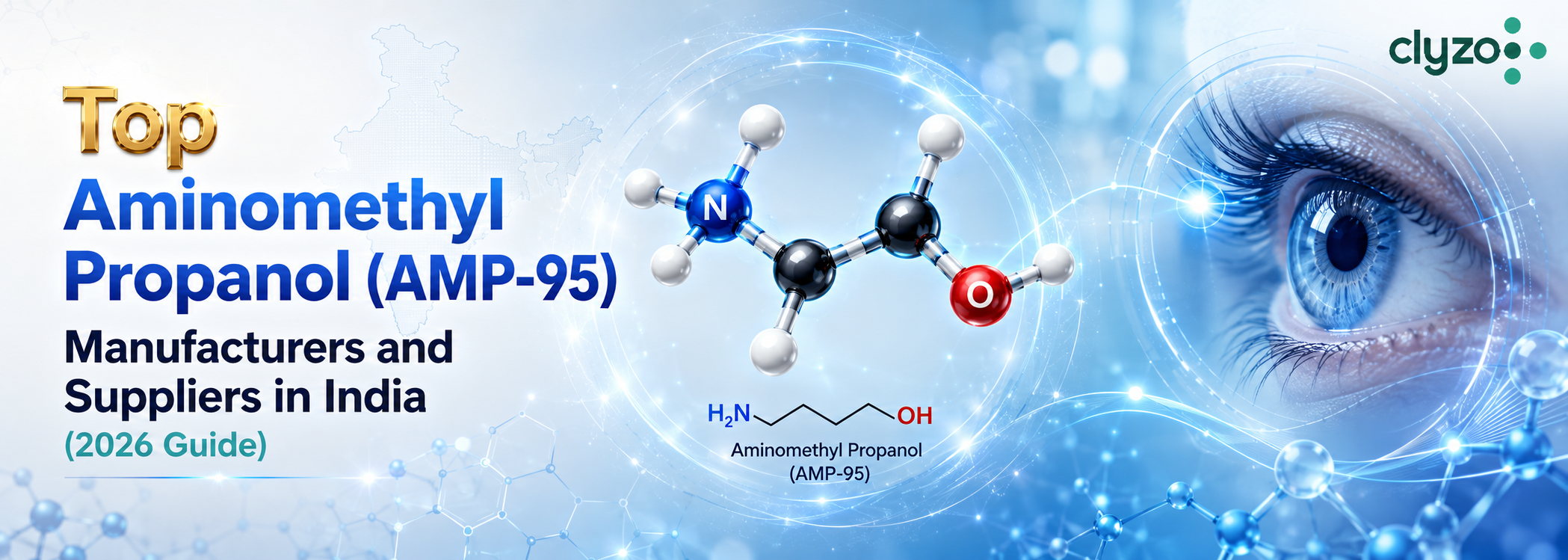
Top AMP-95 (Aminomethyl Propanol) Manufacturers an... ... Top AMP-95 (Aminomethyl Propanol) Manufacturers and Suppliers in India (2026 Guide) Read more
.jpg)
How AMP Works as a pH Buffer in Injectable, Ophtha... ... How AMP Works as a pH Buffer in Injectable, Ophthalmic, and Topical Formulations Read more
.jpg)
AMP vs Other Alkalizing Agents in Pharma Formulati... ... AMP vs Other Alkalizing Agents in Pharma Formulations: TRIS, Triethanolamine, and Sodium Hydroxide Compared Read more
AMP Excipient Safety: Toxicity, Irritation Potenti... ... AMP Excipient Safety: Toxicity, Irritation Potential, and Regulatory Status Read more
Chlorobutanol Preservative Safety: Toxicity Data, ... ... Chlorobutanol Preservative Safety: Toxicity Data, Regulatory Status, and Usage Limits Read more
Top Chlorobutanol Anhydrous Manufacturers and Supp... ... Top Chlorobutanol Anhydrous Manufacturers and Suppliers in India (2026 Guide) Read more
Chlorobutanol as a Preservative in Injectables, Ey... ... Chlorobutanol as a Preservative in Injectables, Eye Drops, and Nasal Sprays Read more
Chlorobutanol Anhydrous Pharmaceutical Excipient: ... ... Chlorobutanol Anhydrous Pharmaceutical Excipient: Uses, Grades, and Sourcing in India Read more
Benzyl Alcohol: A Pharmaceutical Excipient India S... ... Benzyl Alcohol: A Pharmaceutical Excipient India Supplier Guide for Preservative Sourcing Read more
Tyloxapol: A Specialized Pharmaceutical Excipient ... ... Tyloxapol: A Specialized Pharmaceutical Excipient Supplier in India Can Help You Source Correctly Read more
SLS (Sodium Lauryl Sulfate): A Complete Guide for ... ... SLS (Sodium Lauryl Sulfate): A Complete Guide for Pharma Excipient Buyers in India Read more
.jpg)
Polysorbate 80 (PS 80): The Pharmaceutical Excipie... ... Polysorbate 80 (PS 80): The Pharmaceutical Excipient Supplier India Trusts for Surfactant Applications Read more
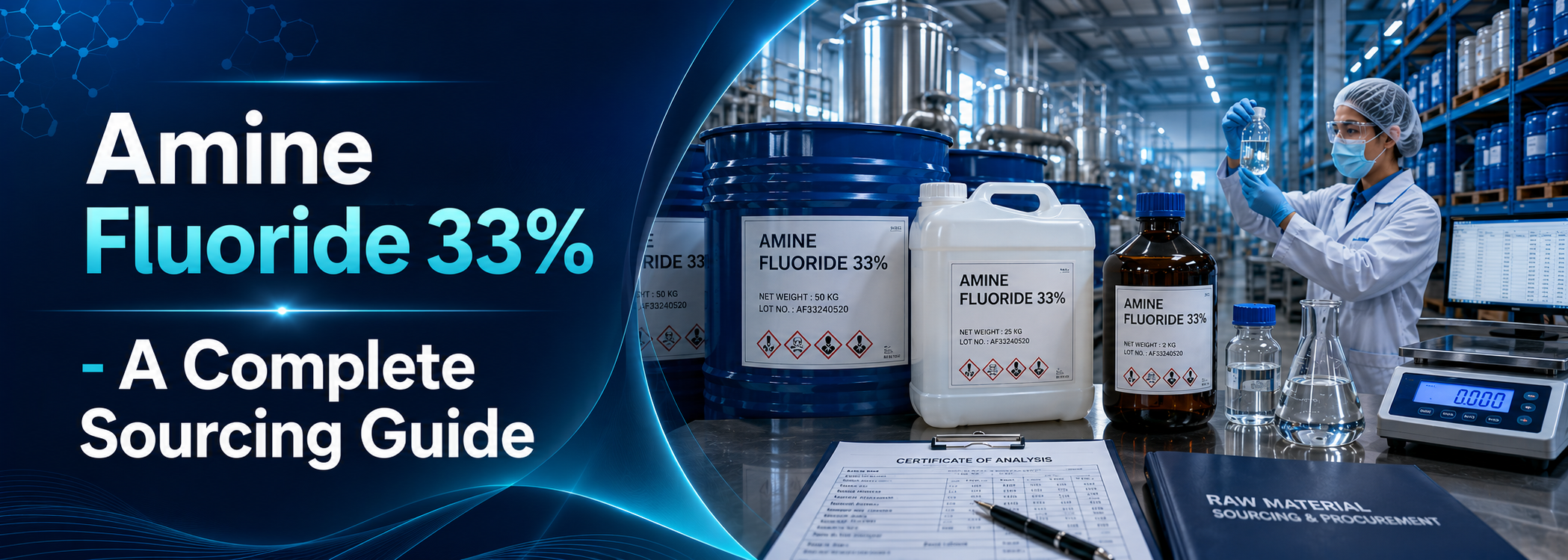
Amine Fluoride 33%: Sourcing Guide for This Pharma... ... Amine Fluoride 33%: Sourcing Guide for This Pharmaceutical Excipient Supplier Ingredient Read more
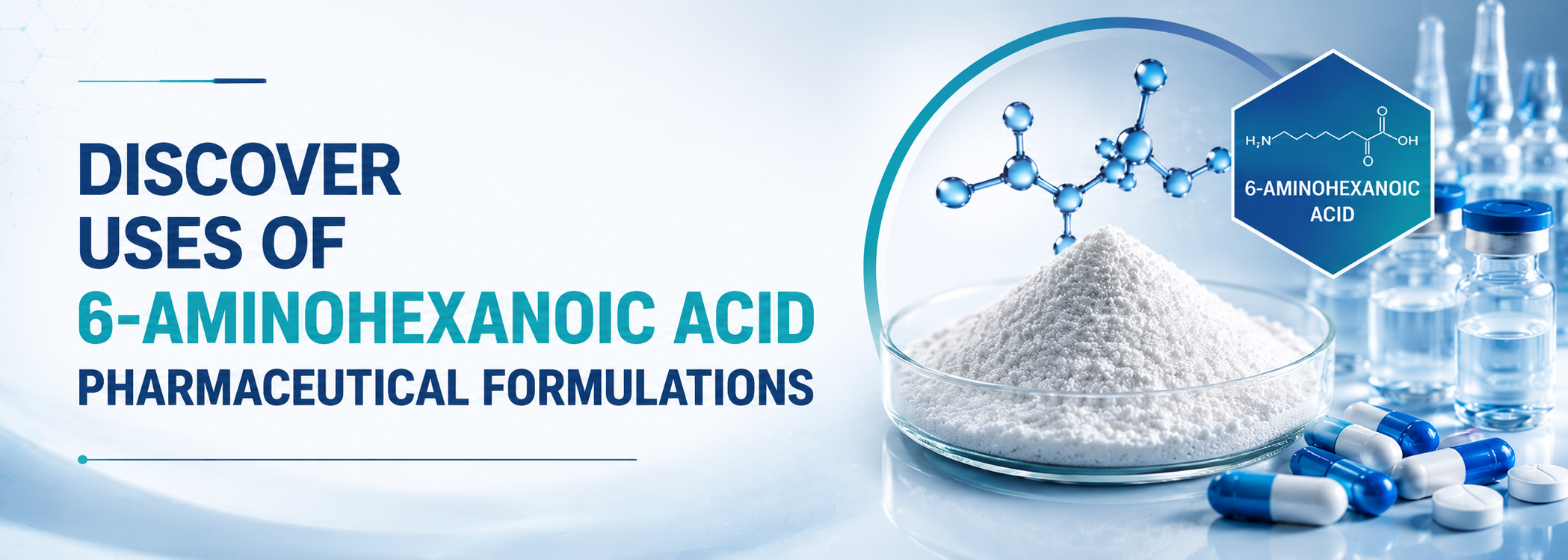
6-Aminohexanoic Acid: Uses in Pharmaceutical Formu... ... 6-Aminohexanoic Acid: Uses in Pharmaceutical Formulations Read more
How to Source Pharmacopoeial-Grade 6-Aminohexanoic... ... How to Source Pharmacopoeial-Grade 6-Aminohexanoic Acid Online in India Read more
6-Aminohexanoic Acid Specifications: What Buyers S... ... 6-Aminohexanoic Acid Specifications: What Buyers Should Check Before Purchase Read more
6-Aminohexanoic Acid Supplier in India: A Complete... ... 6-Aminohexanoic Acid Supplier in India: A Complete Sourcing Guide Read more
.png)
L-Arginine Hydrochloride Excipient Supplier in Ind... ... L-Arginine Hydrochloride Excipient Supplier in India Read more



.png)

.png)