Tech-driven pharma ingredients
Ingredient sourcing platform
Regulatory compliance platform
Specialized excipients developed to maintain stability, sterility, and compatibility in injectable formulations, ensuring safety and efficacy in every dose.
Comprehensive solutions supporting every stage of biologics development—formulated for purity, process efficiency, and superior therapeutic performance.
High-purity amino acid excipients engineered to enhance formulation stability, solubility, and bioavailability across a wide range of dosage forms.
Pharma-grade excipients designed with low endotoxin levels to support consistent quality and performance throughout vaccine formulation and production.
A trusted range of plasma-derived materials, Manufactured to meet global standards of purity and compliance.
Pharmaceutical-grade excipients that adhere to leading pharmacopeial monographs, ensuring regulatory readiness and uncompromised quality for global markets.
We collaborate with R&D labs on diverse product developments, transforming innovative ideas into ingredients that meet global quality and regulatory standards.
Expand your global reach with Clyzo’s advanced technology solutions. Maximize capacity utilization, streamline tech transfers, and bring new projects to market faster and more efficiently.
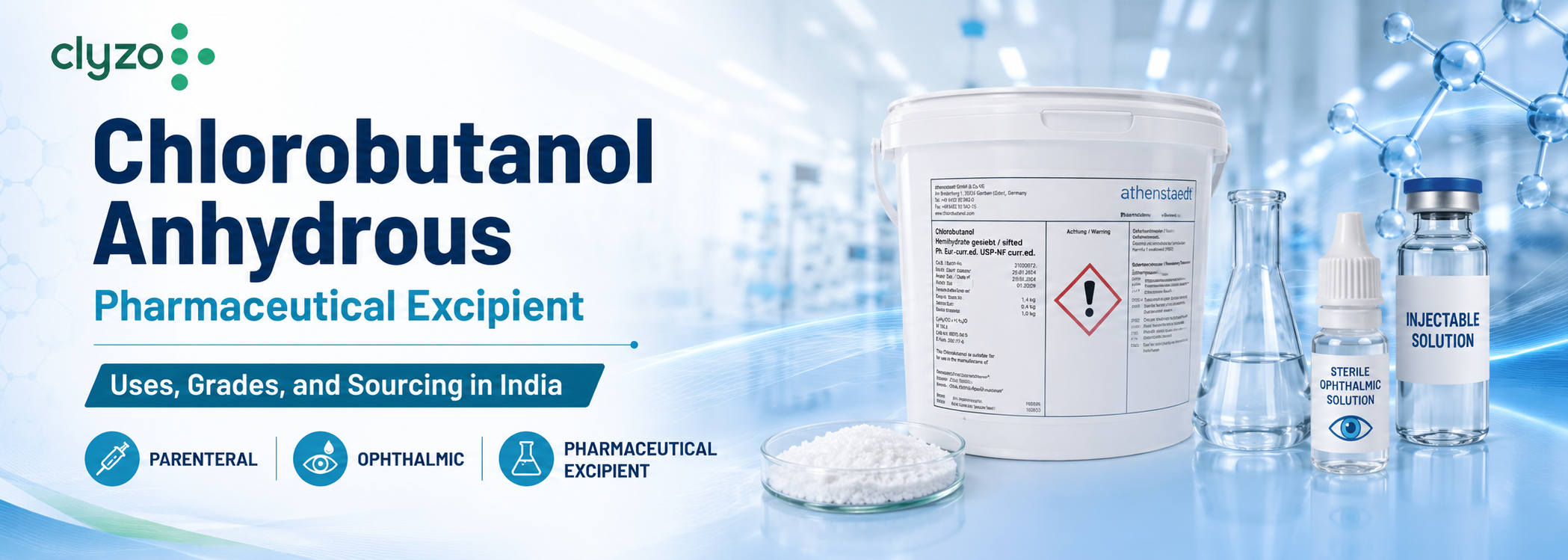
27-07-2026
Chlorobutanol has been used as a pharmaceutical preservative for well over a century, and it remains a standard choice in injectable, ophthalmic, nasal, and otic formulations today. Within pharmaceutical manufacturing, it is available in two forms, anhydrous and hemihydrate, and the choice between them affects handling, processing, and formulation stability. This guide covers what chlorobutanol anhydrous is, how it functions as a preservative, what quality standards apply, and what to look for when sourcing it from a supplier in India.
Chlorobutanol, chemically known as 1,1,1-trichloro-2-methyl-2-propanol, is a chlorinated alcohol with a distinctive camphor like odor. It carries the CAS number 57-15-8 and has a molecular formula of C4H7Cl3O in its anhydrous form. Unlike the hemihydrate form, which contains half a molecule of water per molecule of chlorobutanol, the anhydrous form contains no water of crystallization at all.
This difference matters in practice. The anhydrous form has a higher melting point, around 97 degrees Celsius, compared to approximately 78 degrees Celsius for the hemihydrate. That thermal profile makes anhydrous chlorobutanol the preferred choice in formulations where the presence of even trace water could affect drug stability, compatibility, or processing behavior.
Chlorobutanol is classified as a broad spectrum antimicrobial preservative, active against both gram positive and gram negative bacteria as well as certain fungi. It works by disrupting the lipid bilayer of microbial cell membranes, increasing membrane permeability and ultimately causing cell death, without relying on surfactant type action the way some other preservatives do.
It is typically used at a concentration of about 0.5 percent in finished formulations, a level that has been shown to provide effective, long term antimicrobial protection in multi-ingredient pharmaceutical products, particularly those packaged in multi-dose containers where repeated access increases contamination risk.
Chlorobutanol appears across a wide range of dosage forms, including:
One notable advantage cited in formulation literature is that chlorobutanol tends to cause less protein aggregation than several other common preservatives when used in biologic or protein based formulations, which has kept it relevant even as newer preservative systems have entered the market.
Chlorobutanol is monographed in major pharmacopeias including the USP, NF, EP, BP, IP, and JP. Quality specifications generally require a minimum purity of around 98 percent, calculated on an anhydrous basis, along with limits on related substances and other impurities.
Both the anhydrous and hemihydrate forms appear across different pharmacopeial references. Some pharmacopeias specify the hemihydrate form by default, while the anhydrous form is separately recognized in others, including the US National Formulary. When sourcing, it is important to confirm which form and which monograph your supplier's certificate of analysis is based on, since the two forms are not simply interchangeable on a weight for weight basis in every formulation.
The decision between anhydrous and hemihydrate chlorobutanol usually comes down to the formulation's sensitivity to water content and the processing conditions involved:
Neither form is universally "better." The right choice depends on the specific formulation, its water sensitivity, and the processing temperatures involved in manufacturing.
India has an established manufacturing base for chlorobutanol and related pharmaceutical excipients, with several suppliers offering both hemihydrate and anhydrous grades under USP, EP, BP, IP, and JP standards. When evaluating a supplier, consider:
Platforms such as Clyzo list chlorobutanol excipient from multiple suppliers with instant quoting, which can simplify comparison shopping across documentation, packsize, and supplier options in one place.
What is the main use of chlorobutanol anhydrous in pharmaceuticals?
It is primarily used as an antimicrobial preservative in injectable, ophthalmic, nasal, and otic formulations, typically at a concentration of about 0.5 percent.
What is the difference between chlorobutanol anhydrous and hemihydrate?
The anhydrous form contains no water of crystallization and has a higher melting point of around 97 degrees Celsius, while the hemihydrate form contains half a water molecule per unit and melts at approximately 78 degrees Celsius.
Is chlorobutanol safe to use in eye drops?
It has been used in ophthalmic preparations for many decades with a low rate of reported adverse reactions in practice, although concentration and formulation design still need to follow established safety guidance.
What pharmacopeial standards apply to chlorobutanol?
Chlorobutanol is monographed in the USP, NF, EP, BP, IP, and JP, with purity requirements typically set at a minimum of 98 percent on an anhydrous basis.
Chlorobutanol anhydrous remains a proven, widely trusted preservative excipient across injectable, ophthalmic, nasal, and topical pharmaceutical formulations. Choosing the right form and grade, backed by verified pharmacopeial documentation, is essential for consistent formulation performance, and Indian manufacturers have a strong base of qualified suppliers to source from for both domestic and export focused production.
We’d love to hear from you. Please fill out this form.
Ethanol 99% Injectable Grade: USP, Ph.Eur., BP, JP... ... Ethanol 99% Injectable Grade: USP, Ph.Eur., BP, JP & GMP Guide | Clyzo Read more
Ethanol 96% Injectable Grade in India: USP, Ph.Eur... ... Ethanol 96% Injectable Grade in India: USP, Ph.Eur., BP, JP & GMP | Clyzo Read more
Pharma Grade Ethanol: A Complete Guide to Injectab... ... Pharma Grade Ethanol: A Complete Guide to Injectable, USP, Ph.Eur., BP and IPEC Grades Read more
Online Pharma Ingredient Sourcing: A Practical Gui... ... Online Pharma Ingredient Sourcing: A Practical Guide for Buyers Read more
Pharma Raw Material Supplier in India: How to Choo... ... Pharma Raw Material Supplier in India: How to Choose the Right One Read more
Digital Pharma Sourcing in India: How B2B Buyers A... ... Digital Pharma Sourcing in India: How B2B Buyers Are Changing the Way They Source Excipients Read more
.png)
PEG 400 (Polyethylene Glycol 400) Pharmaceutical S... ... PEG 400 (Polyethylene Glycol 400) Pharmaceutical Supplier in India: Complete Guide Read more
PEG 4000 (Polyethylene Glycol 4000) Pharmaceutical... ... PEG 4000 (Polyethylene Glycol 4000) Pharmaceutical Supplier in India: Complete Guide Read more
Chicken, Liver, and Meat Flavor Pharmaceutical Exc... ... Chicken, Liver, and Meat Flavor Pharmaceutical Excipients: The Backbone of Veterinary Medicine Compliance in India Read more
Polysorbate 80 Pharmaceutical Grade Supplier India... ... Polysorbate 80 Pharmaceutical Grade Supplier India: The Complete Sourcing Guide Read more
Polysorbate 80 Pharmaceutical Grade India: 10 Fact... ... Polysorbate 80 Pharmaceutical Grade India: 10 Facts Every Buyer Should Know Read more
PS 80 Excipient Supplier India: A 10 Point Buyer C... ... PS 80 Excipient Supplier India: A 10 Point Buyer Checklist Read more
Polysorbate 80 Injectable Grade Excipient: 10 Fact... ... Polysorbate 80 Injectable Grade Excipient: 10 Facts You Need to Know Read more
Polysorbate 80 USP NF Bulk Supplier: A 10 Point So... ... Polysorbate 80 USP NF Bulk Supplier: A 10 Point Sourcing Checklist Read more
Polysorbate 80 Pharmaceutical Grade India: What Bu... ... Polysorbate 80 Pharmaceutical Grade India: What Buyers Need to Know Read more
PS 80 Excipient Supplier India: How to Choose the ... ... PS 80 Excipient Supplier India: How to Choose the Right Partner Read more
Polysorbate 80 Injectable Grade Excipient: A Sourc... ... Polysorbate 80 Injectable Grade Excipient: A Sourcing Guide for Parenteral Formulations Read more
Polysorbate 80 USP NF Bulk Supplier: What to Know ... ... Polysorbate 80 USP NF Bulk Supplier: What to Know Before You Scale Up Read more
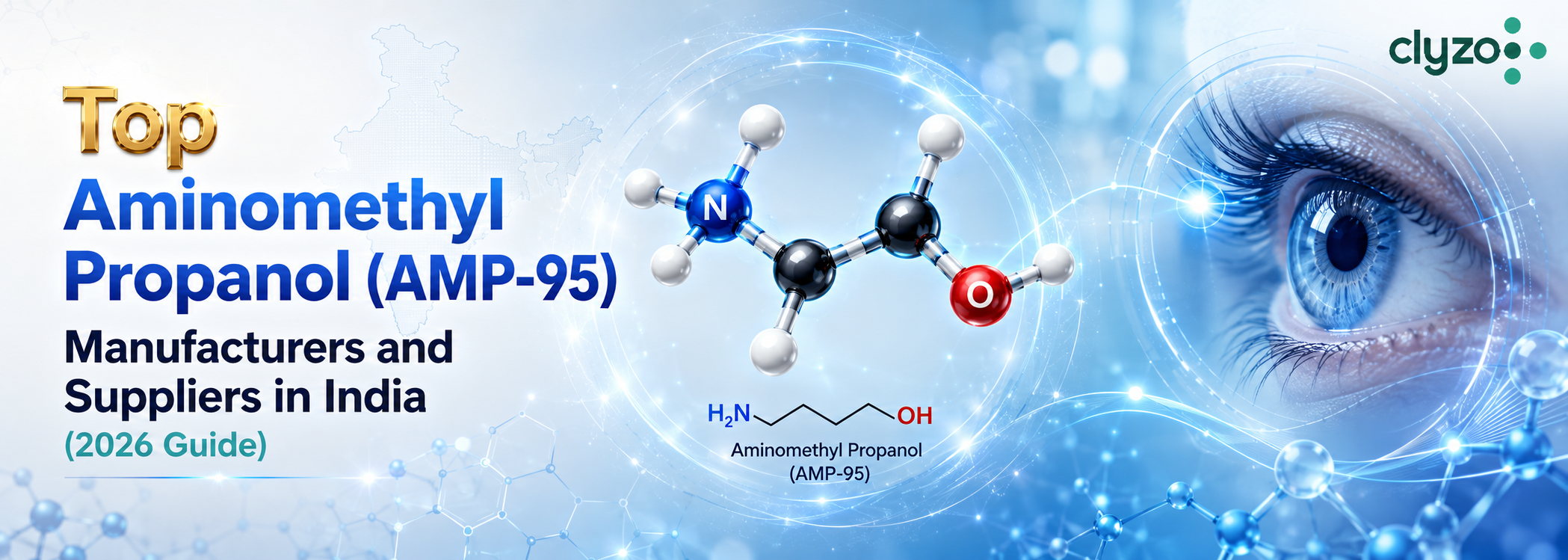
Top AMP-95 (Aminomethyl Propanol) Manufacturers an... ... Top AMP-95 (Aminomethyl Propanol) Manufacturers and Suppliers in India (2026 Guide) Read more
.jpg)
How AMP Works as a pH Buffer in Injectable, Ophtha... ... How AMP Works as a pH Buffer in Injectable, Ophthalmic, and Topical Formulations Read more
.jpg)
AMP vs Other Alkalizing Agents in Pharma Formulati... ... AMP vs Other Alkalizing Agents in Pharma Formulations: TRIS, Triethanolamine, and Sodium Hydroxide Compared Read more
AMP Excipient Safety: Toxicity, Irritation Potenti... ... AMP Excipient Safety: Toxicity, Irritation Potential, and Regulatory Status Read more
Chlorobutanol Preservative Safety: Toxicity Data, ... ... Chlorobutanol Preservative Safety: Toxicity Data, Regulatory Status, and Usage Limits Read more
Top Chlorobutanol Anhydrous Manufacturers and Supp... ... Top Chlorobutanol Anhydrous Manufacturers and Suppliers in India (2026 Guide) Read more
Chlorobutanol as a Preservative in Injectables, Ey... ... Chlorobutanol as a Preservative in Injectables, Eye Drops, and Nasal Sprays Read more
Chlorobutanol Anhydrous vs Hemihydrate: Which Grad... ... Chlorobutanol Anhydrous vs Hemihydrate: Which Grade Should You Choose? Read more
Benzyl Alcohol: A Pharmaceutical Excipient India S... ... Benzyl Alcohol: A Pharmaceutical Excipient India Supplier Guide for Preservative Sourcing Read more
Tyloxapol: A Specialized Pharmaceutical Excipient ... ... Tyloxapol: A Specialized Pharmaceutical Excipient Supplier in India Can Help You Source Correctly Read more
SLS (Sodium Lauryl Sulfate): A Complete Guide for ... ... SLS (Sodium Lauryl Sulfate): A Complete Guide for Pharma Excipient Buyers in India Read more
.jpg)
Polysorbate 80 (PS 80): The Pharmaceutical Excipie... ... Polysorbate 80 (PS 80): The Pharmaceutical Excipient Supplier India Trusts for Surfactant Applications Read more
Amine Fluoride 33%: Sourcing Guide for This Pharma... ... Amine Fluoride 33%: Sourcing Guide for This Pharmaceutical Excipient Supplier Ingredient Read more
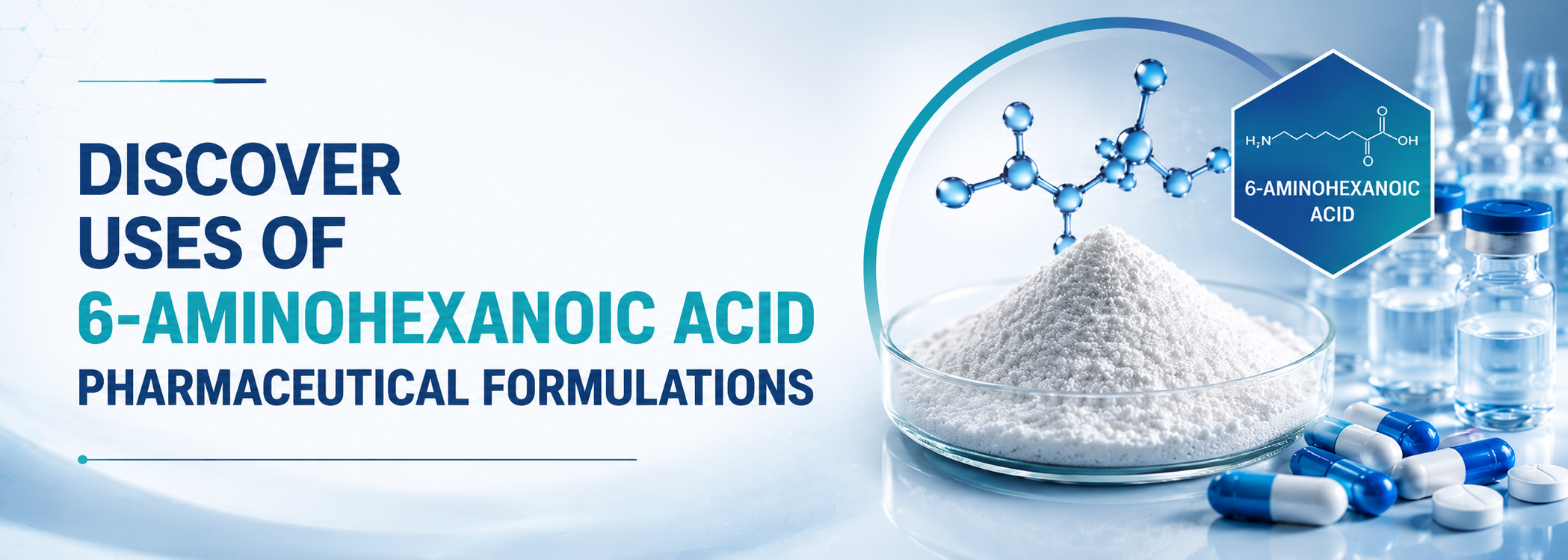
6-Aminohexanoic Acid: Uses in Pharmaceutical Formu... ... 6-Aminohexanoic Acid: Uses in Pharmaceutical Formulations Read more
How to Source Pharmacopoeial-Grade 6-Aminohexanoic... ... How to Source Pharmacopoeial-Grade 6-Aminohexanoic Acid Online in India Read more
6-Aminohexanoic Acid Specifications: What Buyers S... ... 6-Aminohexanoic Acid Specifications: What Buyers Should Check Before Purchase Read more
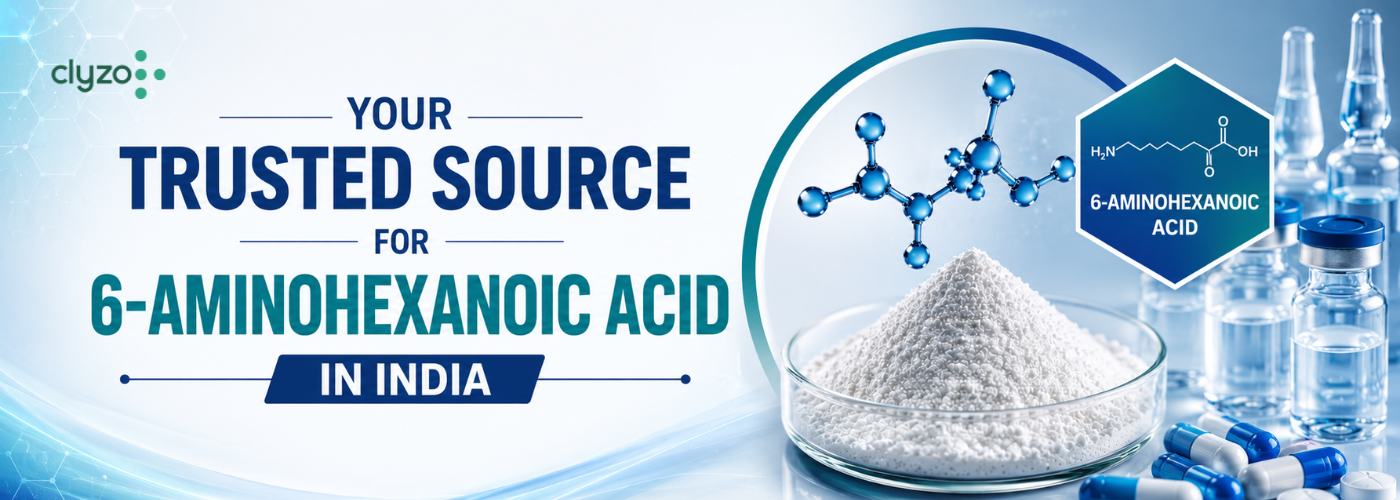
6-Aminohexanoic Acid Supplier in India: A Complete... ... 6-Aminohexanoic Acid Supplier in India: A Complete Sourcing Guide Read more
.png)
L-Arginine Hydrochloride Excipient Supplier in Ind... ... L-Arginine Hydrochloride Excipient Supplier in India Read more



.png)

.png)