Tech-driven pharma ingredients
Ingredient sourcing platform
Regulatory compliance platform
Specialized excipients developed to maintain stability, sterility, and compatibility in injectable formulations, ensuring safety and efficacy in every dose.
Comprehensive solutions supporting every stage of biologics development—formulated for purity, process efficiency, and superior therapeutic performance.
High-purity amino acid excipients engineered to enhance formulation stability, solubility, and bioavailability across a wide range of dosage forms.
Pharma-grade excipients designed with low endotoxin levels to support consistent quality and performance throughout vaccine formulation and production.
A trusted range of plasma-derived materials, Manufactured to meet global standards of purity and compliance.
Pharmaceutical-grade excipients that adhere to leading pharmacopeial monographs, ensuring regulatory readiness and uncompromised quality for global markets.
We collaborate with R&D labs on diverse product developments, transforming innovative ideas into ingredients that meet global quality and regulatory standards.
Expand your global reach with Clyzo’s advanced technology solutions. Maximize capacity utilization, streamline tech transfers, and bring new projects to market faster and more efficiently.
27-07-2026
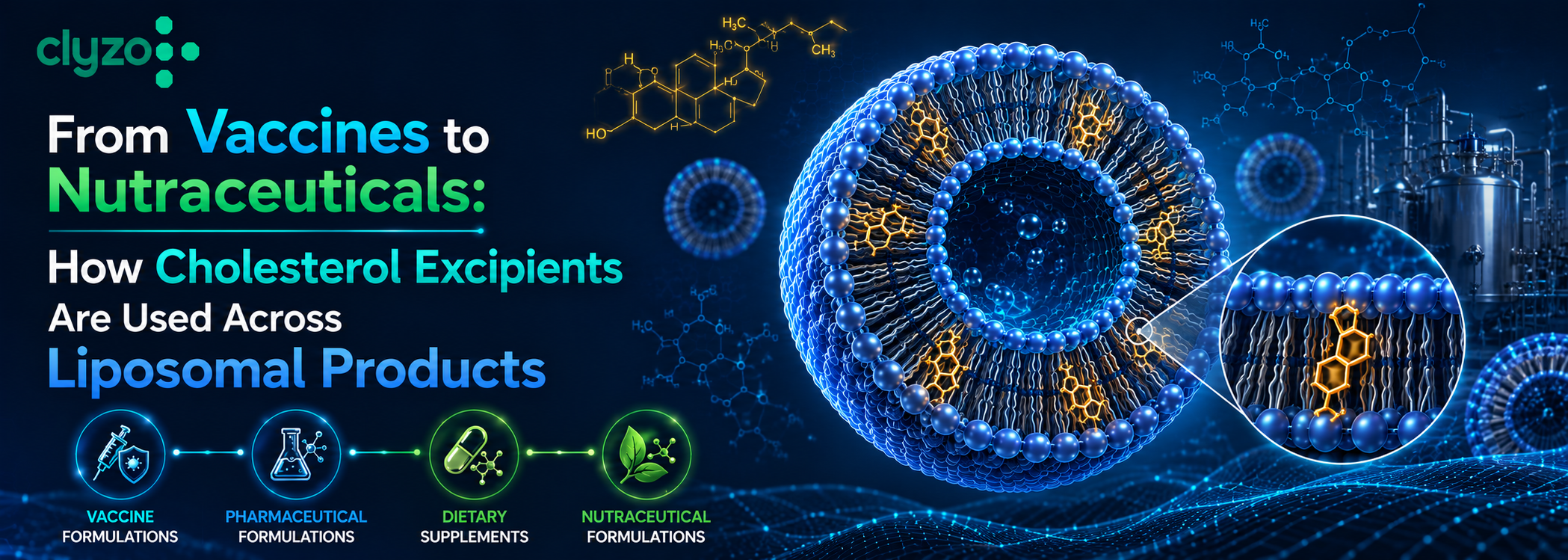
Cholesterol shows up in an unusually wide range of liposomal and lipid nanoparticle products, from decades old chemotherapy formulations to the mRNA vaccine platforms that gained global attention during the COVID-19 pandemic, all the way to over the counter liposomal supplements sold for wellness and antioxidant support. The core function of cholesterol, stabilizing a lipid bilayer and reducing membrane permeability, stays consistent across all of these, but the specific requirements, grades, and regulatory expectations shift significantly depending on the application.
This article walks through how cholesterol is used across four major categories of liposomal and lipid nanoparticle products, and what changes in each context.
Some of the earliest and most established liposomal drug products are in oncology and antifungal treatment, including liposomal doxorubicin and liposomal amphotericin B. In these formulations, cholesterol is typically combined with saturated phospholipids such as DSPC to create a rigid, slow release membrane designed to:
For these injectable products, cholesterol must meet injectable pharmaceutical grade standards, with strict control of cholesterol oxidation products, endotoxins, and heavy metals, since any impurity becomes part of a product administered directly into the bloodstream.
Lipid nanoparticles gained widespread public attention through mRNA vaccine platforms, but the underlying lipid science builds directly on decades of liposome research. LNPs typically combine four components: an ionizable cationic lipid, a helper phospholipid, a PEGylated lipid, and cholesterol.
In this context, cholesterol:
Because LNP vaccine platforms require extremely high purity and consistency at commercial manufacturing scale, cholesterol used here typically requires the highest available injectable pharmaceutical grade, often sourced from highly purified plant based sterols in addition to traditional wool grease derived cholesterol, to meet strict impurity and consistency specifications.
Liposomal delivery is also widely used in topical skincare and cosmetic products, where the goal shifts from systemic circulation to improved penetration and delivery of active ingredients through the skin barrier.
In these formulations, cholesterol:
Regulatory requirements for topical cosmetic cholesterol are generally less stringent than injectable pharmaceutical grade, though quality and purity still matter for product stability and consumer safety.
Liposomal delivery has become popular in the nutraceutical and dietary supplement space for ingredients such as glutathione, resveratrol, curcumin, vitamin C, and various B vitamins, where the goal is improved oral bioavailability compared to non-encapsulated forms.
In oral liposomal supplements, cholesterol:
Because these are oral, non-injectable products, the grade requirements are generally lower than pharmaceutical injectable grade, though manufacturers exporting nutraceutical liposomes internationally still need documented quality standards and, in many cases, non-animal derived (plant sterol based) cholesterol to support vegan or vegetarian labeling claims common in this market.
| Application | Typical Grade Requirement | Key Quality Focus |
| Oncology and antifungal injectables | Pharmaceutical injectable grade | COP control, endotoxins, heavy metals |
| mRNA vaccine LNPs | Highest purity injectable grade | Batch consistency, ultra low impurities |
| Topical and cosmetic liposomes | Cosmetic or pharmaceutical grade | Stability, skin compatibility |
| Oral nutraceutical liposomes | Food or nutraceutical grade | Source (plant vs animal derived), oral stability |
A manufacturer working across multiple product categories, for instance a company producing both an injectable oncology liposome and a nutraceutical liposomal supplement line, needs a cholesterol supplier capable of providing distinctly different grades under proper documentation for each application. Sourcing a single "cholesterol excipient" without confirming which grade and intended use it is qualified for is a common and avoidable formulation risk. Suppliers such as Clyzo that offer both injectable pharmaceutical grade and nutraceutical grade cholesterol, each with appropriate certificates of analysis, allow manufacturers to source consistently across their full product portfolio.
Is the same cholesterol grade used in vaccines and nutraceutical supplements?
No, mRNA vaccine LNPs require the highest purity injectable pharmaceutical grade cholesterol, while nutraceutical liposomes typically use a lower food or supplement grade, since they are administered orally rather than by injection.
Why do cosmetic liposomes use cholesterol?
Cholesterol is a natural component of the skin's own lipid barrier, so including it in topical liposomal formulations helps the delivery system integrate with skin structure while improving stability of the liposomal carrier itself.
Do nutraceutical liposomes need plant based cholesterol instead of animal derived?
Many nutraceutical brands prefer plant sterol based cholesterol to support vegan or vegetarian product claims, though animal derived (wool grease based) cholesterol remains widely used and is not inherently lower quality.
What is the biggest difference between cholesterol used in oncology liposomes versus LNP vaccines?
Both require injectable grade quality, but LNP vaccine platforms generally demand even tighter batch to batch consistency and ultra low impurity thresholds, given the scale and regulatory scrutiny applied to vaccine manufacturing.
Cholesterol's core job inside a lipid bilayer, stabilizing the membrane and controlling permeability, stays remarkably consistent whether it ends up in a chemotherapy drug, a vaccine, a skincare product, or a supplement. What changes dramatically across these applications is the required grade, source material, and regulatory documentation. Manufacturers and formulators should treat cholesterol sourcing as application specific, matching the excipient grade precisely to the intended route of administration and regulatory pathway of each product.
We’d love to hear from you. Please fill out this form.
Ethanol 99% Injectable Grade: USP, Ph.Eur., BP, JP... ... Ethanol 99% Injectable Grade: USP, Ph.Eur., BP, JP & GMP Guide | Clyzo Read more
Ethanol 96% Injectable Grade in India: USP, Ph.Eur... ... Ethanol 96% Injectable Grade in India: USP, Ph.Eur., BP, JP & GMP | Clyzo Read more
Pharma Grade Ethanol: A Complete Guide to Injectab... ... Pharma Grade Ethanol: A Complete Guide to Injectable, USP, Ph.Eur., BP and IPEC Grades Read more
Online Pharma Ingredient Sourcing: A Practical Gui... ... Online Pharma Ingredient Sourcing: A Practical Guide for Buyers Read more
Pharma Raw Material Supplier in India: How to Choo... ... Pharma Raw Material Supplier in India: How to Choose the Right One Read more
Digital Pharma Sourcing in India: How B2B Buyers A... ... Digital Pharma Sourcing in India: How B2B Buyers Are Changing the Way They Source Excipients Read more
.png)
PEG 400 (Polyethylene Glycol 400) Pharmaceutical S... ... PEG 400 (Polyethylene Glycol 400) Pharmaceutical Supplier in India: Complete Guide Read more
PEG 4000 (Polyethylene Glycol 4000) Pharmaceutical... ... PEG 4000 (Polyethylene Glycol 4000) Pharmaceutical Supplier in India: Complete Guide Read more
Chicken, Liver, and Meat Flavor Pharmaceutical Exc... ... Chicken, Liver, and Meat Flavor Pharmaceutical Excipients: The Backbone of Veterinary Medicine Compliance in India Read more
Polysorbate 80 Pharmaceutical Grade Supplier India... ... Polysorbate 80 Pharmaceutical Grade Supplier India: The Complete Sourcing Guide Read more
Polysorbate 80 Pharmaceutical Grade India: 10 Fact... ... Polysorbate 80 Pharmaceutical Grade India: 10 Facts Every Buyer Should Know Read more
PS 80 Excipient Supplier India: A 10 Point Buyer C... ... PS 80 Excipient Supplier India: A 10 Point Buyer Checklist Read more
Polysorbate 80 Injectable Grade Excipient: 10 Fact... ... Polysorbate 80 Injectable Grade Excipient: 10 Facts You Need to Know Read more
Polysorbate 80 USP NF Bulk Supplier: A 10 Point So... ... Polysorbate 80 USP NF Bulk Supplier: A 10 Point Sourcing Checklist Read more
Polysorbate 80 Pharmaceutical Grade India: What Bu... ... Polysorbate 80 Pharmaceutical Grade India: What Buyers Need to Know Read more
PS 80 Excipient Supplier India: How to Choose the ... ... PS 80 Excipient Supplier India: How to Choose the Right Partner Read more
Polysorbate 80 Injectable Grade Excipient: A Sourc... ... Polysorbate 80 Injectable Grade Excipient: A Sourcing Guide for Parenteral Formulations Read more
Polysorbate 80 USP NF Bulk Supplier: What to Know ... ... Polysorbate 80 USP NF Bulk Supplier: What to Know Before You Scale Up Read more
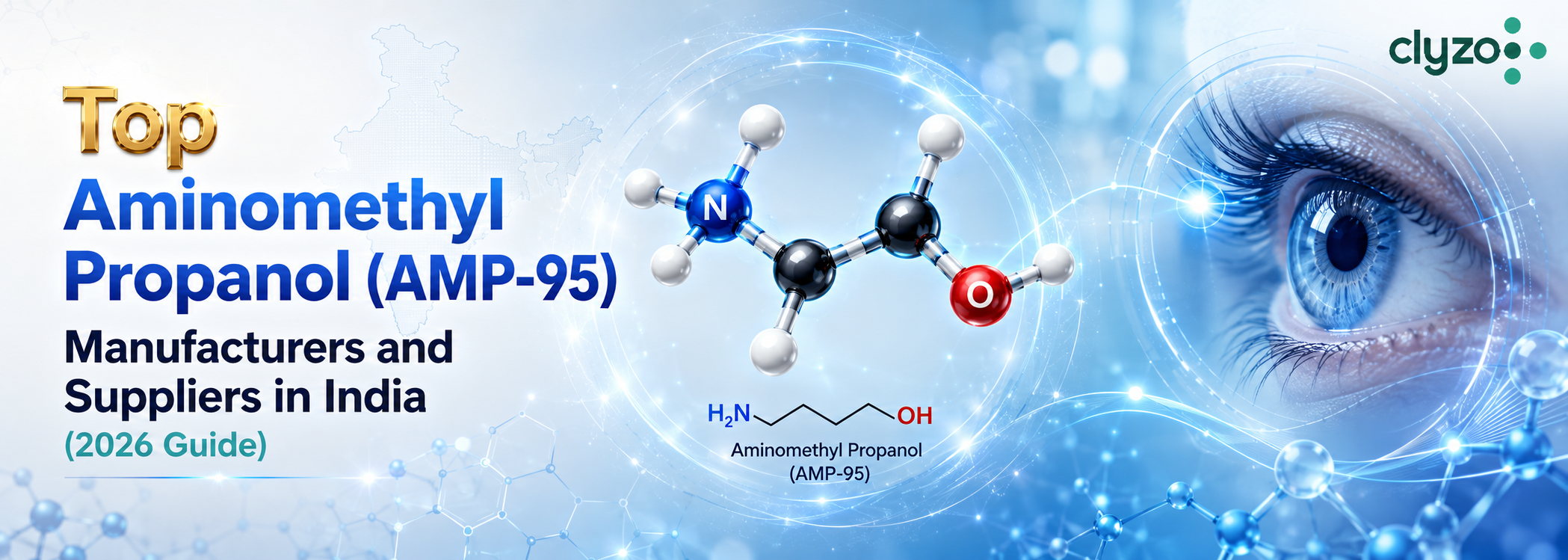
Top AMP-95 (Aminomethyl Propanol) Manufacturers an... ... Top AMP-95 (Aminomethyl Propanol) Manufacturers and Suppliers in India (2026 Guide) Read more
.jpg)
How AMP Works as a pH Buffer in Injectable, Ophtha... ... How AMP Works as a pH Buffer in Injectable, Ophthalmic, and Topical Formulations Read more
.jpg)
AMP vs Other Alkalizing Agents in Pharma Formulati... ... AMP vs Other Alkalizing Agents in Pharma Formulations: TRIS, Triethanolamine, and Sodium Hydroxide Compared Read more
AMP Excipient Safety: Toxicity, Irritation Potenti... ... AMP Excipient Safety: Toxicity, Irritation Potential, and Regulatory Status Read more
Chlorobutanol Preservative Safety: Toxicity Data, ... ... Chlorobutanol Preservative Safety: Toxicity Data, Regulatory Status, and Usage Limits Read more
Top Chlorobutanol Anhydrous Manufacturers and Supp... ... Top Chlorobutanol Anhydrous Manufacturers and Suppliers in India (2026 Guide) Read more
Chlorobutanol as a Preservative in Injectables, Ey... ... Chlorobutanol as a Preservative in Injectables, Eye Drops, and Nasal Sprays Read more
Chlorobutanol Anhydrous vs Hemihydrate: Which Grad... ... Chlorobutanol Anhydrous vs Hemihydrate: Which Grade Should You Choose? Read more
Chlorobutanol Anhydrous Pharmaceutical Excipient: ... ... Chlorobutanol Anhydrous Pharmaceutical Excipient: Uses, Grades, and Sourcing in India Read more
Benzyl Alcohol: A Pharmaceutical Excipient India S... ... Benzyl Alcohol: A Pharmaceutical Excipient India Supplier Guide for Preservative Sourcing Read more
Tyloxapol: A Specialized Pharmaceutical Excipient ... ... Tyloxapol: A Specialized Pharmaceutical Excipient Supplier in India Can Help You Source Correctly Read more
SLS (Sodium Lauryl Sulfate): A Complete Guide for ... ... SLS (Sodium Lauryl Sulfate): A Complete Guide for Pharma Excipient Buyers in India Read more
.jpg)
Polysorbate 80 (PS 80): The Pharmaceutical Excipie... ... Polysorbate 80 (PS 80): The Pharmaceutical Excipient Supplier India Trusts for Surfactant Applications Read more
Amine Fluoride 33%: Sourcing Guide for This Pharma... ... Amine Fluoride 33%: Sourcing Guide for This Pharmaceutical Excipient Supplier Ingredient Read more
6-Aminohexanoic Acid: Uses in Pharmaceutical Formu... ... 6-Aminohexanoic Acid: Uses in Pharmaceutical Formulations Read more
How to Source Pharmacopoeial-Grade 6-Aminohexanoic... ... How to Source Pharmacopoeial-Grade 6-Aminohexanoic Acid Online in India Read more
6-Aminohexanoic Acid Specifications: What Buyers S... ... 6-Aminohexanoic Acid Specifications: What Buyers Should Check Before Purchase Read more
6-Aminohexanoic Acid Supplier in India: A Complete... ... 6-Aminohexanoic Acid Supplier in India: A Complete Sourcing Guide Read more
.png)
L-Arginine Hydrochloride Excipient Supplier in Ind... ... L-Arginine Hydrochloride Excipient Supplier in India Read more



.png)

.png)