Tech-driven pharma ingredients
Ingredient sourcing platform
Regulatory compliance platform
Specialized excipients developed to maintain stability, sterility, and compatibility in injectable formulations, ensuring safety and efficacy in every dose.
Comprehensive solutions supporting every stage of biologics development—formulated for purity, process efficiency, and superior therapeutic performance.
High-purity amino acid excipients engineered to enhance formulation stability, solubility, and bioavailability across a wide range of dosage forms.
Pharma-grade excipients designed with low endotoxin levels to support consistent quality and performance throughout vaccine formulation and production.
A trusted range of plasma-derived materials, Manufactured to meet global standards of purity and compliance.
Pharmaceutical-grade excipients that adhere to leading pharmacopeial monographs, ensuring regulatory readiness and uncompromised quality for global markets.
We collaborate with R&D labs on diverse product developments, transforming innovative ideas into ingredients that meet global quality and regulatory standards.
Expand your global reach with Clyzo’s advanced technology solutions. Maximize capacity utilization, streamline tech transfers, and bring new projects to market faster and more efficiently.
23-07-2026
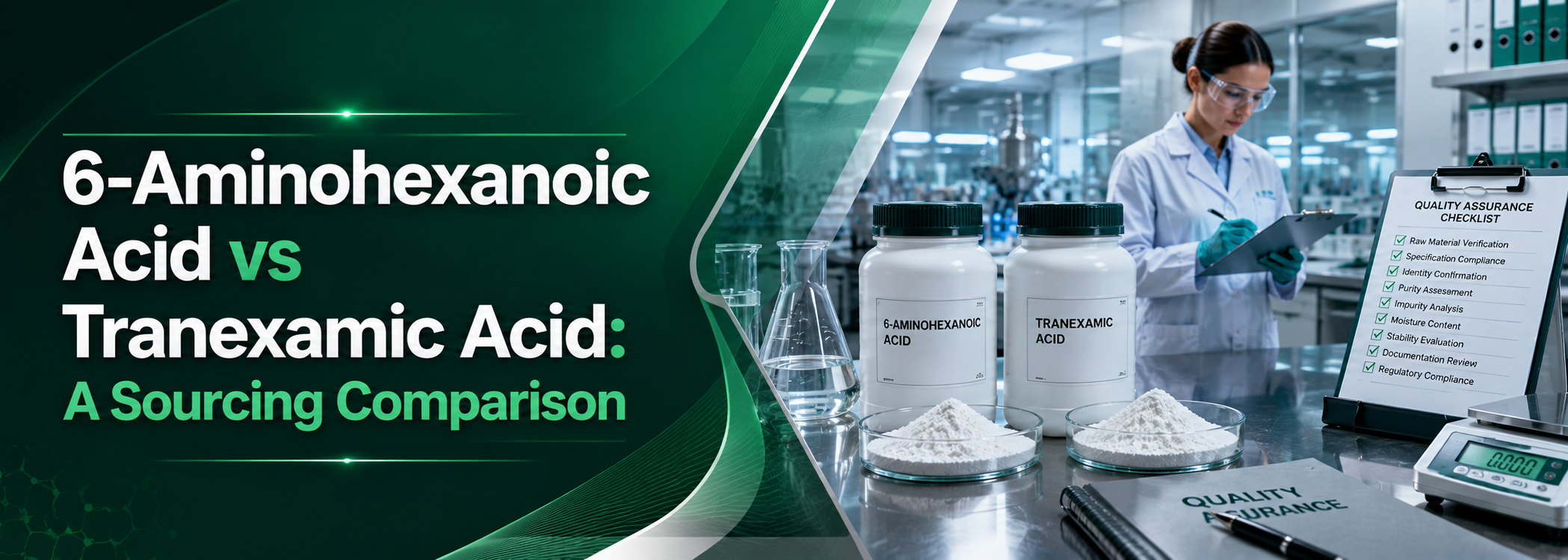
Quick answer: 6-Aminohexanoic acid (EACA) and tranexamic acid are both synthetic lysine analogues that inhibit fibrinolysis, but tranexamic acid is a cyclic structure generally considered more potent per milligram, while 6-Aminohexanoic acid is a simpler straight-chain molecule with broader industrial uses (nylon-6 production, peptide synthesis) alongside its pharmaceutical role. From a sourcing standpoint, 6-Aminohexanoic acid requires more careful grade verification since industrial-grade and pharma-grade material both circulate under the same chemical name.
Formulators working on antifibrinolytic products often compare 6-Aminohexanoic acid (e-aminocaproic acid, EACA) against tranexamic acid, since both are lysine analogues used to inhibit fibrinolysis and both appear across similar dosage forms. While the clinical decision between them belongs to drug developers and regulatory bodies, procurement teams frequently need to understand how they differ as raw materials potency, dosage form fit, industrial crossover, and sourcing complexity all factor into how each is procured.
Both compounds are synthetic derivatives related structurally to the amino acid lysine, and both work by a similar general mechanism blocking the conversion of plasminogen to plasmin, which slows the enzymatic breakdown of blood clots. The key structural difference is that 6-Aminohexanoic acid is the simpler, straight-chain (open-chain) molecule, while tranexamic acid is a cyclic analogue built around a cyclohexane ring structure.
This structural difference has downstream consequences for potency: tranexamic acid is generally considered more potent on a per-milligram basis than 6-Aminohexanoic acid, which is one reason dosage forms and product strengths differ between finished products built on each raw material. From a formulation science perspective, this also means the two compounds aren't simply substitutable at equivalent doses a reformulation from one to the other isn't a straightforward swap.
Both compounds appear across oral tablets, oral solutions, and injectable formulations, though exact product strengths and formulation approaches vary by manufacturer, market, and regulatory approval. Buyers sourcing raw material should always confirm with their formulation or regulatory affairs team which compound the finished product specification calls for the two compounds are related in mechanism but not interchangeable at the same dose or necessarily approved for the same indications in every market.
| Factor | 6-Aminohexanoic acid | Tranexamic acid |
| Structural class | Straight-chain (open-chain) lysine analogue | Cyclic lysine analogue |
| Relative potency | Lower per milligram | Generally higher per milligram |
| Other industrial uses | Nylon-6 precursor, peptide synthesis linker | Primarily pharmaceutical use |
| Grade differentiation needed | Yes — industrial vs pharma grade both exist under the same name | Less common outside pharma grade |
| Monograph coverage | USP, EP, JP | USP, EP, JP |
| Typical buyer confusion point | Confirming pharma-grade vs industrial-grade material | Less common, since demand is concentrated in pharma |
Because 6-Aminohexanoic acid has meaningful non-pharmaceutical demand particularly from nylon-6 fiber manufacturing and from peptide synthesis research buyers should be more careful to confirm they're being quoted pharmacopoeial-grade material specifically, rather than industrial-grade product sold under the same chemical name at a lower price point.
Tranexamic acid, by comparison, has a supply chain more concentrated around pharmaceutical use, which generally means less ambiguity when a supplier quotes "tranexamic acid" without further grade specification. This doesn't mean tranexamic acid buyers can skip due diligence entirely monograph compliance still needs to be confirmed but the risk of an unintentional grade mismatch is structurally lower.
Both compounds are referenced across USP, EP, and JP monographs, and buyers sourcing either for a regulated-market filing should request the same core documentation package: batch-specific Certificate of Analysis, impurity profile, heavy metals data, and where applicable DMF or CEP references supporting the specific manufacturing source. The documentation expectations don't differ meaningfully between the two compounds; what differs is the additional grade-verification step that 6-Aminohexanoic acid buyers need to build into their sourcing process.
If your formulation is already specified around one compound, this comparison is mostly academic you'll source what your regulatory filing requires, and the choice between the two was made earlier in development, not at the procurement stage. But for teams still evaluating raw material options at the development or reformulation stage, understanding that 6-Aminohexanoic acid has a broader industrial supply chain and therefore more grade variability to check for is a genuinely useful sourcing consideration that tranexamic acid buyers don't face in quite the same way.
This is also a useful factor when comparing supplier quotes: if one quote for 6-Aminohexanoic acid comes in notably cheaper than others, it's worth double-checking whether the lower price reflects industrial-grade material rather than pharmacopoeial-grade a mismatch that's easy to catch early but harder to catch after the material has already arrived.
Are 6-Aminohexanoic acid and tranexamic acid interchangeable in formulations?
No. They differ in potency and structure, and switching between them in a formulation is a reformulation decision requiring its own development and regulatory work not a simple raw material substitution.
Which one is more widely used in pharmaceutical manufacturing?
Both are established antifibrinolytic raw materials with long histories of pharmaceutical use; the choice between them for a given product depends on the original formulation and regulatory approval, not on general market preference.
Why does 6-Aminohexanoic acid need more grade verification than tranexamic acid?
Because 6-Aminohexanoic acid also serves as a raw material for nylon-6 polymer production and as a peptide synthesis linker, industrial-grade and pharma-grade material both circulate under the same chemical name. Tranexamic acid's demand is more concentrated in pharmaceutical use, reducing this particular sourcing risk.
Do both compounds require the same storage conditions?
Both are moisture-sensitive amino acid derivatives and generally require similar controlled storage conditions, though buyers should confirm specific stability data from their supplier for each compound rather than assuming identical handling requirements.
6-Aminohexanoic acid and tranexamic acid share a mechanism and a general therapeutic category, but they differ meaningfully in structure, potency, and critically for procurement teams in how much grade verification is needed at the sourcing stage. Buyers evaluating either compound should request monograph-specific documentation as standard practice, and for 6-Aminohexanoic acid in particular, should treat "grade confirmation" as a non-negotiable step given its broader industrial supply chain.
Sourcing pharmacopoeial-grade antifibrinolytic raw materials? Compare 6-Aminohexanoic acid options on Clyzo with monograph-verified specifications and batch-specific documentation.
We’d love to hear from you. Please fill out this form.
Ethanol 99% Injectable Grade: USP, Ph.Eur., BP, JP... ... Ethanol 99% Injectable Grade: USP, Ph.Eur., BP, JP & GMP Guide | Clyzo Read more
Ethanol 96% Injectable Grade in India: USP, Ph.Eur... ... Ethanol 96% Injectable Grade in India: USP, Ph.Eur., BP, JP & GMP | Clyzo Read more
Pharma Grade Ethanol: A Complete Guide to Injectab... ... Pharma Grade Ethanol: A Complete Guide to Injectable, USP, Ph.Eur., BP and IPEC Grades Read more
Online Pharma Ingredient Sourcing: A Practical Gui... ... Online Pharma Ingredient Sourcing: A Practical Guide for Buyers Read more
Pharma Raw Material Supplier in India: How to Choo... ... Pharma Raw Material Supplier in India: How to Choose the Right One Read more
Digital Pharma Sourcing in India: How B2B Buyers A... ... Digital Pharma Sourcing in India: How B2B Buyers Are Changing the Way They Source Excipients Read more
.png)
PEG 400 (Polyethylene Glycol 400) Pharmaceutical S... ... PEG 400 (Polyethylene Glycol 400) Pharmaceutical Supplier in India: Complete Guide Read more
PEG 4000 (Polyethylene Glycol 4000) Pharmaceutical... ... PEG 4000 (Polyethylene Glycol 4000) Pharmaceutical Supplier in India: Complete Guide Read more
Chicken, Liver, and Meat Flavor Pharmaceutical Exc... ... Chicken, Liver, and Meat Flavor Pharmaceutical Excipients: The Backbone of Veterinary Medicine Compliance in India Read more
Polysorbate 80 Pharmaceutical Grade Supplier India... ... Polysorbate 80 Pharmaceutical Grade Supplier India: The Complete Sourcing Guide Read more
Polysorbate 80 Pharmaceutical Grade India: 10 Fact... ... Polysorbate 80 Pharmaceutical Grade India: 10 Facts Every Buyer Should Know Read more
PS 80 Excipient Supplier India: A 10 Point Buyer C... ... PS 80 Excipient Supplier India: A 10 Point Buyer Checklist Read more
Polysorbate 80 Injectable Grade Excipient: 10 Fact... ... Polysorbate 80 Injectable Grade Excipient: 10 Facts You Need to Know Read more
Polysorbate 80 USP NF Bulk Supplier: A 10 Point So... ... Polysorbate 80 USP NF Bulk Supplier: A 10 Point Sourcing Checklist Read more
Polysorbate 80 Pharmaceutical Grade India: What Bu... ... Polysorbate 80 Pharmaceutical Grade India: What Buyers Need to Know Read more
PS 80 Excipient Supplier India: How to Choose the ... ... PS 80 Excipient Supplier India: How to Choose the Right Partner Read more
Polysorbate 80 Injectable Grade Excipient: A Sourc... ... Polysorbate 80 Injectable Grade Excipient: A Sourcing Guide for Parenteral Formulations Read more
Polysorbate 80 USP NF Bulk Supplier: What to Know ... ... Polysorbate 80 USP NF Bulk Supplier: What to Know Before You Scale Up Read more
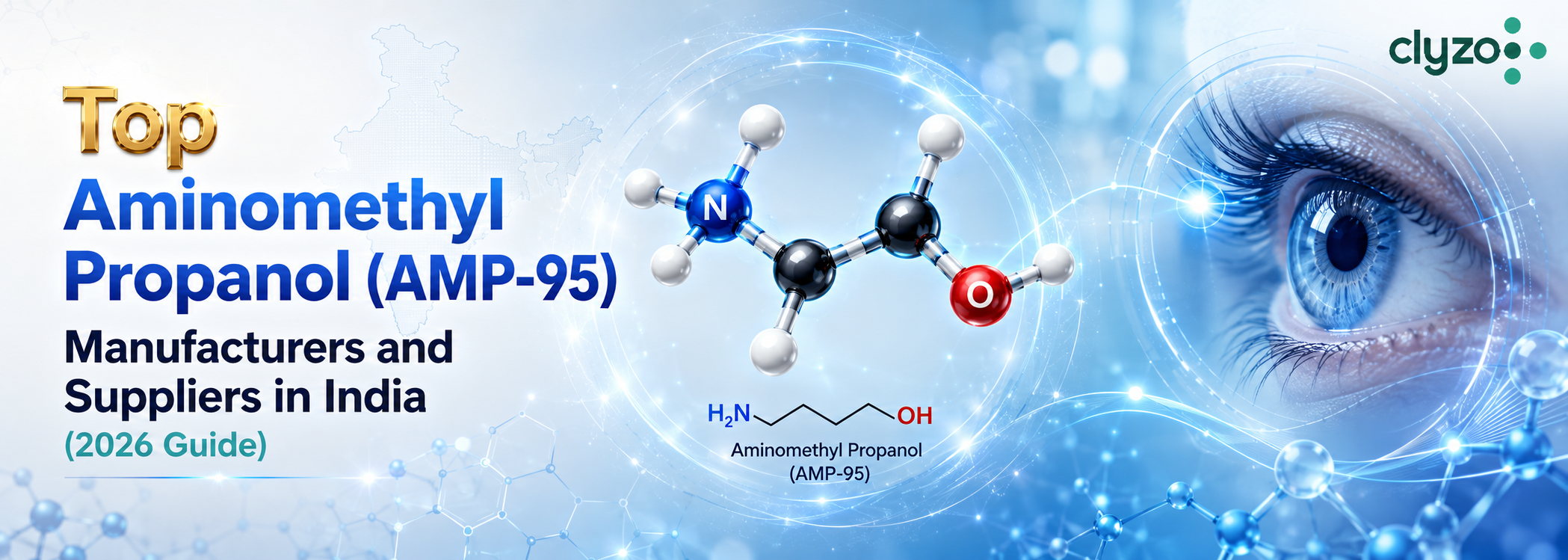
Top AMP-95 (Aminomethyl Propanol) Manufacturers an... ... Top AMP-95 (Aminomethyl Propanol) Manufacturers and Suppliers in India (2026 Guide) Read more
.jpg)
How AMP Works as a pH Buffer in Injectable, Ophtha... ... How AMP Works as a pH Buffer in Injectable, Ophthalmic, and Topical Formulations Read more
.jpg)
AMP vs Other Alkalizing Agents in Pharma Formulati... ... AMP vs Other Alkalizing Agents in Pharma Formulations: TRIS, Triethanolamine, and Sodium Hydroxide Compared Read more
AMP Excipient Safety: Toxicity, Irritation Potenti... ... AMP Excipient Safety: Toxicity, Irritation Potential, and Regulatory Status Read more
Chlorobutanol Preservative Safety: Toxicity Data, ... ... Chlorobutanol Preservative Safety: Toxicity Data, Regulatory Status, and Usage Limits Read more
Top Chlorobutanol Anhydrous Manufacturers and Supp... ... Top Chlorobutanol Anhydrous Manufacturers and Suppliers in India (2026 Guide) Read more
Chlorobutanol as a Preservative in Injectables, Ey... ... Chlorobutanol as a Preservative in Injectables, Eye Drops, and Nasal Sprays Read more
Chlorobutanol Anhydrous vs Hemihydrate: Which Grad... ... Chlorobutanol Anhydrous vs Hemihydrate: Which Grade Should You Choose? Read more
Chlorobutanol Anhydrous Pharmaceutical Excipient: ... ... Chlorobutanol Anhydrous Pharmaceutical Excipient: Uses, Grades, and Sourcing in India Read more
Benzyl Alcohol: A Pharmaceutical Excipient India S... ... Benzyl Alcohol: A Pharmaceutical Excipient India Supplier Guide for Preservative Sourcing Read more

Tyloxapol: A Specialized Pharmaceutical Excipient ... ... Tyloxapol: A Specialized Pharmaceutical Excipient Supplier in India Can Help You Source Correctly Read more
SLS (Sodium Lauryl Sulfate): A Complete Guide for ... ... SLS (Sodium Lauryl Sulfate): A Complete Guide for Pharma Excipient Buyers in India Read more
.jpg)
Polysorbate 80 (PS 80): The Pharmaceutical Excipie... ... Polysorbate 80 (PS 80): The Pharmaceutical Excipient Supplier India Trusts for Surfactant Applications Read more
Amine Fluoride 33%: Sourcing Guide for This Pharma... ... Amine Fluoride 33%: Sourcing Guide for This Pharmaceutical Excipient Supplier Ingredient Read more
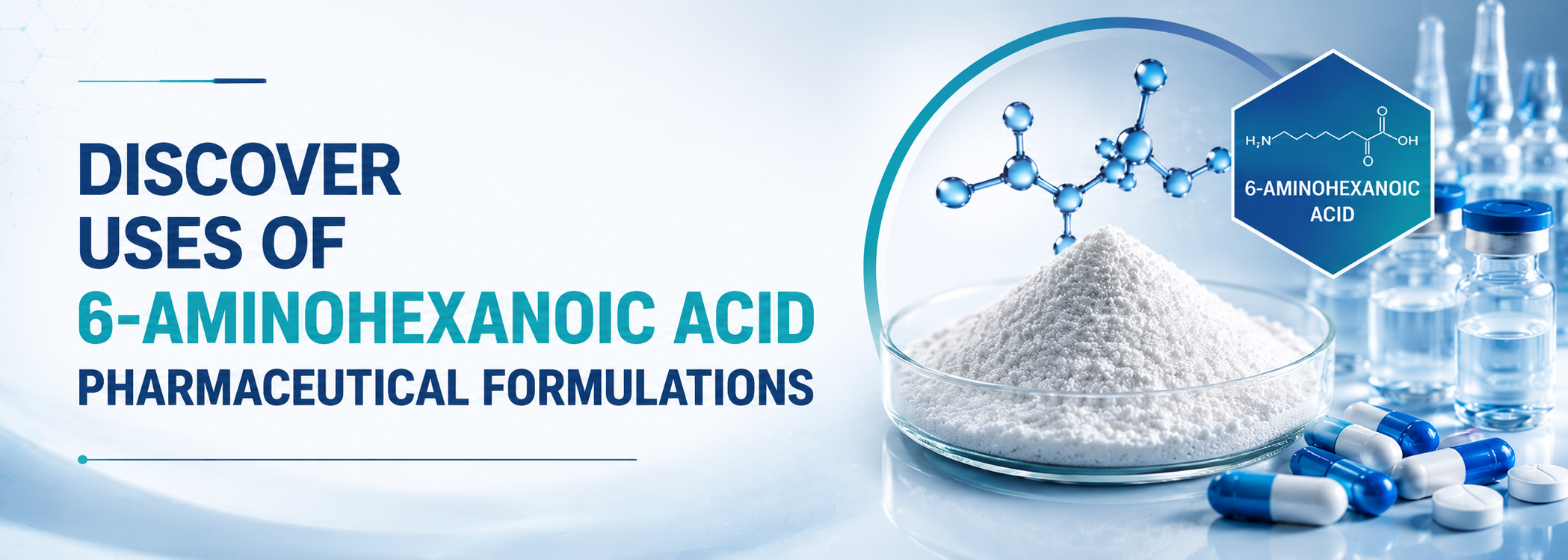
6-Aminohexanoic Acid: Uses in Pharmaceutical Formu... ... 6-Aminohexanoic Acid: Uses in Pharmaceutical Formulations Read more
How to Source Pharmacopoeial-Grade 6-Aminohexanoic... ... How to Source Pharmacopoeial-Grade 6-Aminohexanoic Acid Online in India Read more
6-Aminohexanoic Acid Specifications: What Buyers S... ... 6-Aminohexanoic Acid Specifications: What Buyers Should Check Before Purchase Read more
6-Aminohexanoic Acid Supplier in India: A Complete... ... 6-Aminohexanoic Acid Supplier in India: A Complete Sourcing Guide Read more
.png)
L-Arginine Hydrochloride Excipient Supplier in Ind... ... L-Arginine Hydrochloride Excipient Supplier in India Read more



.png)

.png)