Tech-driven pharma ingredients
Ingredient sourcing platform
Regulatory compliance platform
Specialized excipients developed to maintain stability, sterility, and compatibility in injectable formulations, ensuring safety and efficacy in every dose.
Comprehensive solutions supporting every stage of biologics development—formulated for purity, process efficiency, and superior therapeutic performance.
High-purity amino acid excipients engineered to enhance formulation stability, solubility, and bioavailability across a wide range of dosage forms.
Pharma-grade excipients designed with low endotoxin levels to support consistent quality and performance throughout vaccine formulation and production.
A trusted range of plasma-derived materials, Manufactured to meet global standards of purity and compliance.
Pharmaceutical-grade excipients that adhere to leading pharmacopeial monographs, ensuring regulatory readiness and uncompromised quality for global markets.
We collaborate with R&D labs on diverse product developments, transforming innovative ideas into ingredients that meet global quality and regulatory standards.
Expand your global reach with Clyzo’s advanced technology solutions. Maximize capacity utilization, streamline tech transfers, and bring new projects to market faster and more efficiently.
23-07-2026
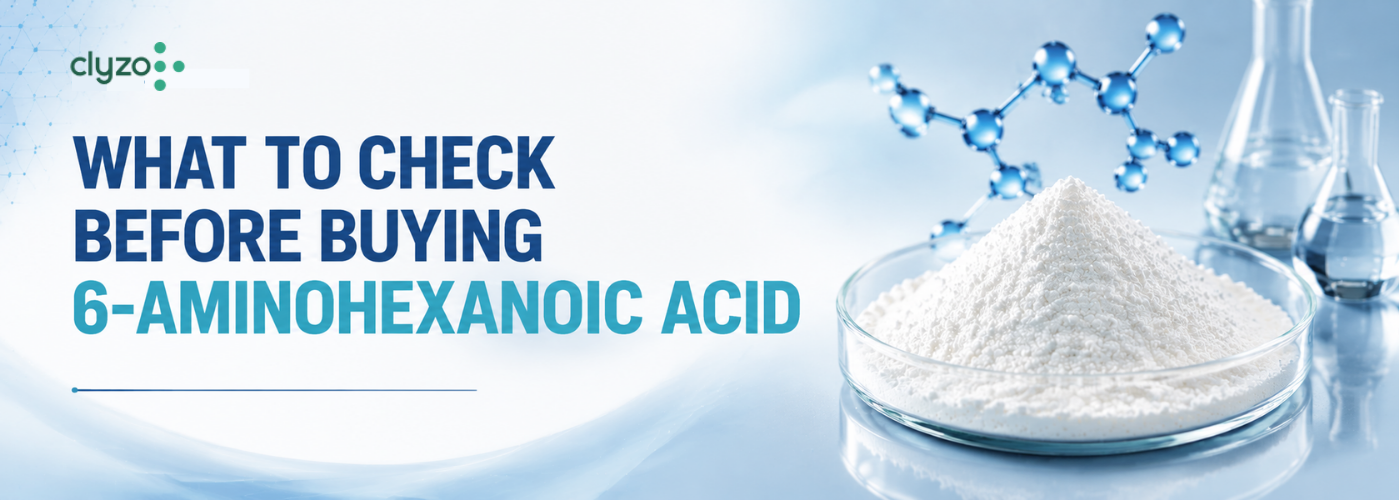
Quick answer: Pharmacopoeial-grade 6-Aminohexanoic acid should be evaluated against a named monograph (USP, EP, or JP), with batch-specific documentation covering assay, related substances, heavy metals, loss on drying, and residue on ignition. Buyers should always confirm which monograph the material is tested against, since limits differ between pharmacopoeias, and request a lot-specific Certificate of Analysis rather than a generic reference document.
For procurement teams and formulators, "pharma grade" isn't specific enough when sourcing 6-Aminohexanoic acid (e-aminocaproic acid). The right specification depends on your target market, dosage form, and regulatory filing and getting it wrong can mean re-sourcing material midway through a project. Here's what to verify before placing an order.
6-Aminohexanoic acid is referenced across multiple pharmacopoeias, and while the core purity requirements are broadly similar, the permitted limits for related substances, heavy metals, and residual solvents can differ between USP, EP, and JP monographs. These differences aren't cosmetic they reflect different regulatory expectations in different markets, and a batch that passes EP testing may not automatically satisfy USP limits, or vice versa.
If you're filing in the US, EU, or Japan respectively, request material tested against the matching monograph not just "pharma grade" without a named standard. This single question, asked early in a supplier conversation, filters out a large share of sourcing mismatches before they become a problem at the quality control or regulatory submission stage.
When reviewing a Certificate of Analysis or technical data sheet for 6-Aminohexanoic acid, these are the parameters worth confirming:
Assay (purity). Pharmacopoeial-grade material is typically expected close to 98 -102% on a dried basis, though the exact acceptance range depends on the specific monograph cited. Confirm the assay range stated on the CoA matches your monograph's requirement.
Related substances / impurity profile. This includes process-related impurities that may carry over from synthesis. A supplier who can walk you through their impurity profile rather than simply stating "passes" is generally more transparent about their manufacturing process.
Heavy metals. Pharmacopoeial monographs specify limits for heavy metal content, and this is a standard test any legitimate pharma-grade supplier should be able to provide data for.
Loss on drying. Amino acid derivatives like 6-Aminohexanoic acid are moisture-sensitive, so loss on drying data gives an indication of both current quality and how the material has been stored prior to shipment.
Residue on ignition (sulfated ash). A standard purity check that helps confirm the absence of inorganic contamination.
Appearance and solubility. Pharmacopoeial-grade material should present as a white crystalline powder, freely soluble in water deviations from expected appearance can be an early indicator of quality issues.
Beyond the CoA itself, a complete documentation package for a specialty raw material purchase should include:
Before finalizing a supplier for 6-Aminohexanoic acid, be cautious if any of the following come up during the sourcing conversation:
| Use case | Assay expectation | Extra documentation typically needed |
| Regulated-market API use | Monograph-matched (USP/EP/JP) | DMF/CEP reference, full impurity profile |
| Domestic formulation (non-regulated export) | Pharmacopoeial grade, monograph-tested | Batch CoA, MSDS |
| Peptide synthesis research | Synthesis-grade purity | Purity certificate, protecting group data if applicable |
| Industrial/polymer use | Technical grade | Technical data sheet only |
Requesting the wrong grade or discovering a documentation gap after the material has already arrived on-site is one of the most common causes of delay in excipient and raw material procurement. It's a preventable delay: confirming monograph, batch-specific CoA, and regulatory support upfront, before the purchase order is placed, avoids a second round of sourcing later in the project when timelines are usually tighter.
What's the difference between a CoA and a technical data sheet?
A Certificate of Analysis reports actual test results for a specific batch against defined specifications. A technical data sheet typically describes general product characteristics and isn't batch-specific it's not a substitute for a CoA when purchasing pharmacopoeial-grade material.
Do I need a DMF or CEP reference for every purchase?
Only if you're filing a regulatory dossier that requires referencing the raw material's manufacturing details typically relevant for regulated-market drug applications rather than domestic formulation or research use.
How often should storage conditions be reconfirmed?
It's good practice to reconfirm storage and retest-period guidance whenever sourcing from a new supplier or a new manufacturing site, even for the same named compound, since manufacturing processes and resulting stability profiles can differ.
6-Aminohexanoic acid's specification requirements aren't unusually complex, but they do require buyers to ask specific questions rather than accept generic assurances. A supplier who readily provides monograph-specific, batch-level documentation is signaling exactly the kind of quality consistency that regulated pharmaceutical manufacturing depends on.
Need batch-specific CoAs and monograph-matched grades quickly? Browse 6-Aminohexanoic acid specifications on Clyzo and request documentation instantly with your quote.
We’d love to hear from you. Please fill out this form.
Ethanol 99% Injectable Grade: USP, Ph.Eur., BP, JP... ... Ethanol 99% Injectable Grade: USP, Ph.Eur., BP, JP & GMP Guide | Clyzo Read more
Ethanol 96% Injectable Grade in India: USP, Ph.Eur... ... Ethanol 96% Injectable Grade in India: USP, Ph.Eur., BP, JP & GMP | Clyzo Read more
Pharma Grade Ethanol: A Complete Guide to Injectab... ... Pharma Grade Ethanol: A Complete Guide to Injectable, USP, Ph.Eur., BP and IPEC Grades Read more
Online Pharma Ingredient Sourcing: A Practical Gui... ... Online Pharma Ingredient Sourcing: A Practical Guide for Buyers Read more
Pharma Raw Material Supplier in India: How to Choo... ... Pharma Raw Material Supplier in India: How to Choose the Right One Read more
Digital Pharma Sourcing in India: How B2B Buyers A... ... Digital Pharma Sourcing in India: How B2B Buyers Are Changing the Way They Source Excipients Read more
.png)
PEG 400 (Polyethylene Glycol 400) Pharmaceutical S... ... PEG 400 (Polyethylene Glycol 400) Pharmaceutical Supplier in India: Complete Guide Read more
PEG 4000 (Polyethylene Glycol 4000) Pharmaceutical... ... PEG 4000 (Polyethylene Glycol 4000) Pharmaceutical Supplier in India: Complete Guide Read more
Chicken, Liver, and Meat Flavor Pharmaceutical Exc... ... Chicken, Liver, and Meat Flavor Pharmaceutical Excipients: The Backbone of Veterinary Medicine Compliance in India Read more
Polysorbate 80 Pharmaceutical Grade Supplier India... ... Polysorbate 80 Pharmaceutical Grade Supplier India: The Complete Sourcing Guide Read more
Polysorbate 80 Pharmaceutical Grade India: 10 Fact... ... Polysorbate 80 Pharmaceutical Grade India: 10 Facts Every Buyer Should Know Read more
PS 80 Excipient Supplier India: A 10 Point Buyer C... ... PS 80 Excipient Supplier India: A 10 Point Buyer Checklist Read more
Polysorbate 80 Injectable Grade Excipient: 10 Fact... ... Polysorbate 80 Injectable Grade Excipient: 10 Facts You Need to Know Read more
Polysorbate 80 USP NF Bulk Supplier: A 10 Point So... ... Polysorbate 80 USP NF Bulk Supplier: A 10 Point Sourcing Checklist Read more
Polysorbate 80 Pharmaceutical Grade India: What Bu... ... Polysorbate 80 Pharmaceutical Grade India: What Buyers Need to Know Read more
PS 80 Excipient Supplier India: How to Choose the ... ... PS 80 Excipient Supplier India: How to Choose the Right Partner Read more
Polysorbate 80 Injectable Grade Excipient: A Sourc... ... Polysorbate 80 Injectable Grade Excipient: A Sourcing Guide for Parenteral Formulations Read more
Polysorbate 80 USP NF Bulk Supplier: What to Know ... ... Polysorbate 80 USP NF Bulk Supplier: What to Know Before You Scale Up Read more
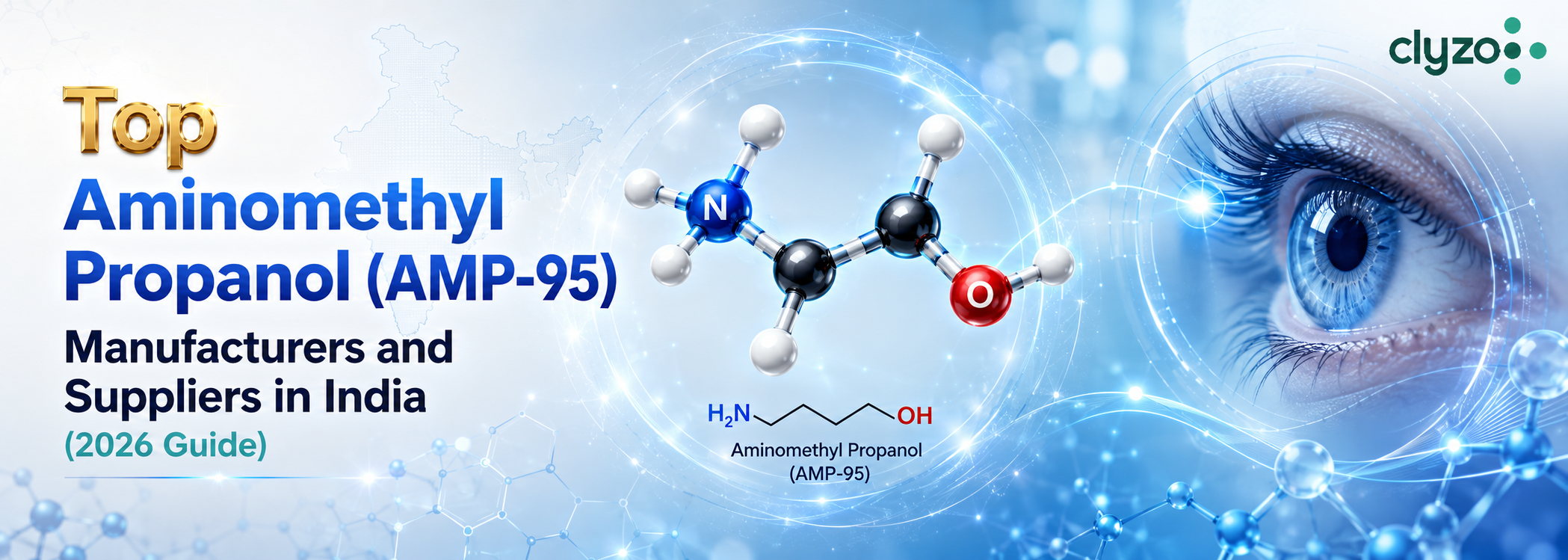
Top AMP-95 (Aminomethyl Propanol) Manufacturers an... ... Top AMP-95 (Aminomethyl Propanol) Manufacturers and Suppliers in India (2026 Guide) Read more
.jpg)
How AMP Works as a pH Buffer in Injectable, Ophtha... ... How AMP Works as a pH Buffer in Injectable, Ophthalmic, and Topical Formulations Read more
.jpg)
AMP vs Other Alkalizing Agents in Pharma Formulati... ... AMP vs Other Alkalizing Agents in Pharma Formulations: TRIS, Triethanolamine, and Sodium Hydroxide Compared Read more
AMP Excipient Safety: Toxicity, Irritation Potenti... ... AMP Excipient Safety: Toxicity, Irritation Potential, and Regulatory Status Read more
Chlorobutanol Preservative Safety: Toxicity Data, ... ... Chlorobutanol Preservative Safety: Toxicity Data, Regulatory Status, and Usage Limits Read more
Top Chlorobutanol Anhydrous Manufacturers and Supp... ... Top Chlorobutanol Anhydrous Manufacturers and Suppliers in India (2026 Guide) Read more
Chlorobutanol as a Preservative in Injectables, Ey... ... Chlorobutanol as a Preservative in Injectables, Eye Drops, and Nasal Sprays Read more
Chlorobutanol Anhydrous vs Hemihydrate: Which Grad... ... Chlorobutanol Anhydrous vs Hemihydrate: Which Grade Should You Choose? Read more
Chlorobutanol Anhydrous Pharmaceutical Excipient: ... ... Chlorobutanol Anhydrous Pharmaceutical Excipient: Uses, Grades, and Sourcing in India Read more
Benzyl Alcohol: A Pharmaceutical Excipient India S... ... Benzyl Alcohol: A Pharmaceutical Excipient India Supplier Guide for Preservative Sourcing Read more
Tyloxapol: A Specialized Pharmaceutical Excipient ... ... Tyloxapol: A Specialized Pharmaceutical Excipient Supplier in India Can Help You Source Correctly Read more
SLS (Sodium Lauryl Sulfate): A Complete Guide for ... ... SLS (Sodium Lauryl Sulfate): A Complete Guide for Pharma Excipient Buyers in India Read more
.jpg)
Polysorbate 80 (PS 80): The Pharmaceutical Excipie... ... Polysorbate 80 (PS 80): The Pharmaceutical Excipient Supplier India Trusts for Surfactant Applications Read more
Amine Fluoride 33%: Sourcing Guide for This Pharma... ... Amine Fluoride 33%: Sourcing Guide for This Pharmaceutical Excipient Supplier Ingredient Read more
6-Aminohexanoic Acid: Uses in Pharmaceutical Formu... ... 6-Aminohexanoic Acid: Uses in Pharmaceutical Formulations Read more
How to Source Pharmacopoeial-Grade 6-Aminohexanoic... ... How to Source Pharmacopoeial-Grade 6-Aminohexanoic Acid Online in India Read more
6-Aminohexanoic Acid Supplier in India: A Complete... ... 6-Aminohexanoic Acid Supplier in India: A Complete Sourcing Guide Read more
.png)
L-Arginine Hydrochloride Excipient Supplier in Ind... ... L-Arginine Hydrochloride Excipient Supplier in India Read more



.png)

.png)